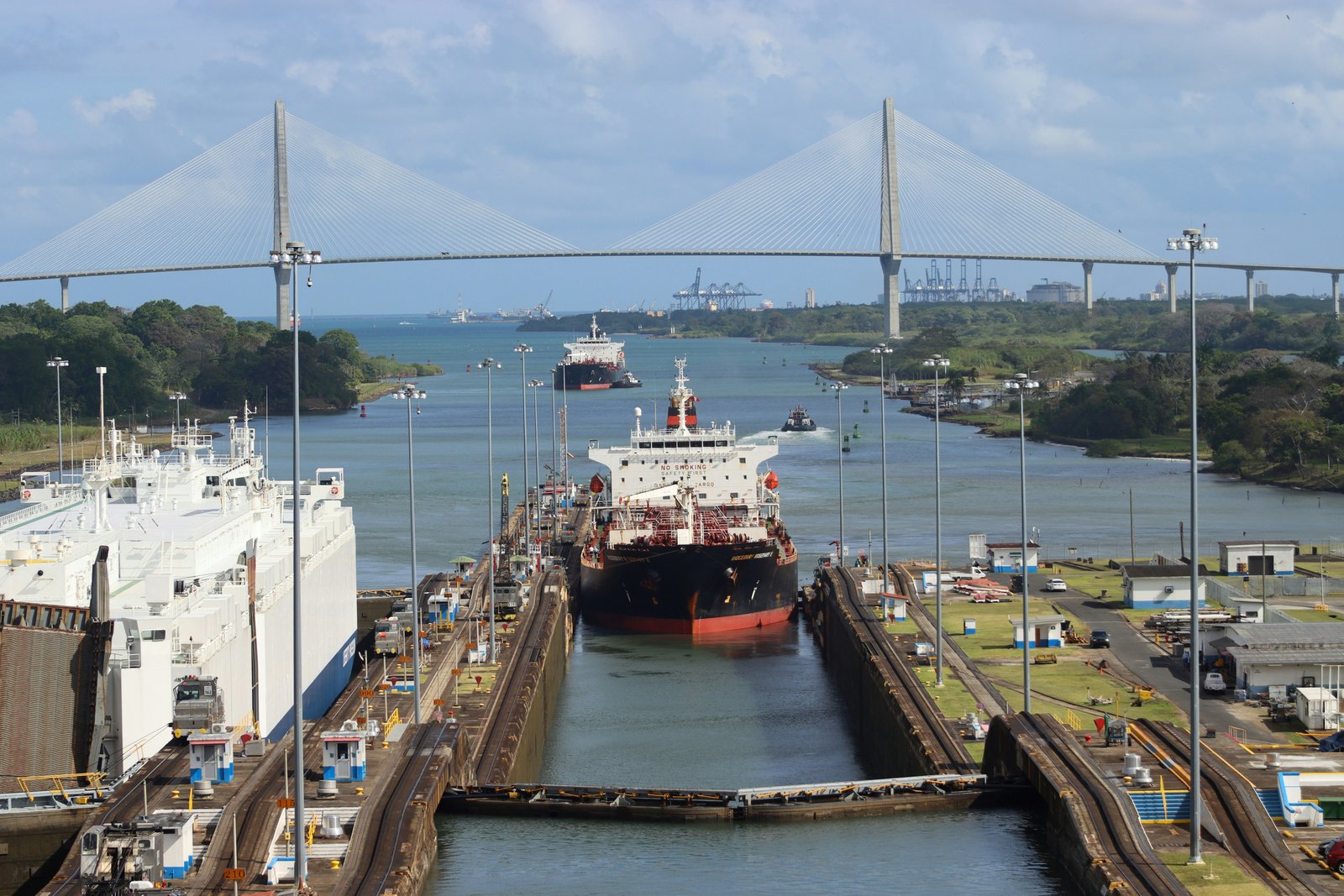
Panama City, Aug 2026 : The Panama Canal will reduce the number of vessels allowed to transit the strategically important waterway from next month as severe drought conditions linked to the El Nino weather phenomenon continue to lower water levels in the artificial lakes that supply the canal, authorities said.
The Panama Canal Authority announced that the number of daily vessel transits will be reduced from the current limit of 36 to 34 beginning September 3. The limit will be lowered further to 32 ships a day from September 15 as authorities seek to conserve dwindling water resources.
The canal connects the Atlantic and Pacific oceans and serves as a crucial route for international maritime trade. It handles approximately five per cent of global maritime commerce and around 40 per cent of US container traffic, making any restriction on its capacity potentially significant for global shipping and supply chains.
The Canal Authority said rainfall in the canal watershed between May and August was 34 per cent below the historical average. Officials warned that continuing El Nino conditions could result in even lower rainfall in the coming weeks, putting additional pressure on the water resources required to operate the canal.
The Panama Canal depends heavily on freshwater stored in artificial lakes, including Gatun Lake, to operate its lock system. Water availability has therefore become a critical factor in determining the number and size of vessels that can pass through the waterway.
Authorities have already introduced several conservation measures, including reducing the maximum allowable draft for larger vessels. The draft determines how deeply a ship sits in the water and lowering the limit allows the canal to operate safely when water levels are reduced.
The latest restrictions come after an even more severe water shortage in 2023, when authorities were forced to cut the number of daily transits from 38 to just 22. The restrictions resulted in lengthy queues and increased costs for shipping companies seeking to use the canal.
The Canal Authority said the latest reduction would particularly affect vessels travelling without advance reservations, as waiting times for those ships are expected to increase. Around nine out of every 10 vessels using the canal secure reservations in advance, while the remaining transit slots are allocated through an auction system.
The value of those auction slots can rise sharply when demand exceeds available capacity. Before the Iran war, the average winning bid was around $135,000, but in April one shipping company reportedly paid as much as $4 million to secure passage.
The authority said it could impose additional restrictions if rainfall fails to improve sufficiently. Officials are closely monitoring weather and water conditions before deciding whether further reductions in vessel traffic will be necessary.
The United States, China, Japan, Chile and South Korea are among the canal's principal users, meaning prolonged restrictions could have wider implications for international trade, shipping schedules and transportation costs.
The water shortage is also a sensitive domestic issue in Panama. The lakes supplying the canal provide drinking water to roughly half of the country's population of about 4.2 million people, creating a difficult balance between maintaining global shipping operations and ensuring adequate water supplies for residents.
El Nino typically occurs every two to seven years and can alter rainfall and weather patterns across large parts of the world. The current episode is developing into one of the strongest on record, with drought conditions affecting several parts of Central America.
On Wednesday, Honduras placed 80 per cent of its territory under a drought alert, highlighting the broader regional impact of the weather phenomenon and the growing challenges facing water-dependent economies.
(Disclaimer :The content of this article is sourced from a news agency and has not been edited by the Mavericknews30 team.)