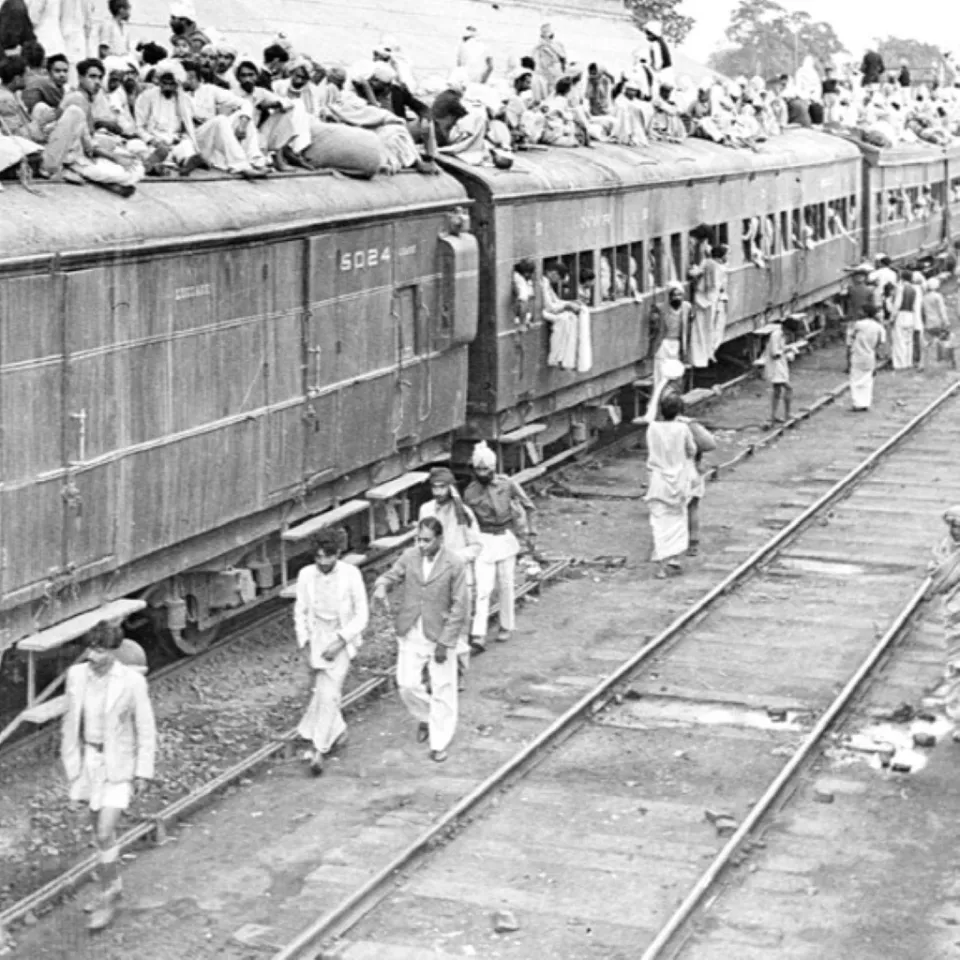
New Delhi, August 2026 : The Partition of India in 1947 remains one of the most devastating human tragedies of modern history. The division of the country triggered an unprecedented wave of communal violence, mass displacement and social upheaval. Millions of people were forced to leave their ancestral homes, while countless families were separated and thousands lost their lives amid killings, abductions, destruction and widespread suffering.
While the political circumstances surrounding Partition have been extensively documented, the personal stories of those who endured the violence often remain less visible in mainstream historical accounts. Numerous testimonies, memoirs and contemporary records, however, offer glimpses into the experiences of communities caught on either side of the newly created borders.
Among those who sought to document the suffering of displaced communities was Sikh leader Master Tara Singh, along with scholars, journalists and survivors who recorded their experiences. Accounts associated with places such as Sheikhupura, Thoha Khalsa and Muzaffarabad provide a disturbing picture of the violence that accompanied Partition, while also highlighting the courage and resilience of ordinary people.
Sheikhupura: A Community Caught in the Storm
Sheikhupura, in present-day Pakistan, was among the areas where communal tensions erupted with devastating consequences. One account attributed to Ram Nath, an advocate formerly associated with the Sheikhupura Bar, describes the demographic and social situation before Partition.
According to his testimony, Sheikhupura had not historically witnessed major communal riots and was considered an influential centre for non-Muslim communities. The last pre-Partition census cited in the account placed Muslims at around 68 per cent of the population, Sikhs at approximately 20 per cent and Hindus at around 12 per cent.
The testimony describes Sikhs as an influential community in the district. It further claims that, immediately after Partition, assurances were given to non-Muslim residents regarding the protection of their lives, property and honour.
However, according to the account, the administrative situation changed rapidly after Partition. Many non-Muslim government officials reportedly left or were replaced, while the local police force became overwhelmingly Muslim.
The testimony describes the imposition of a curfew on August 24 and alleges that violence subsequently spread through parts of the city. It claims that homes were attacked, property looted and neighbourhoods set ablaze.
One particularly disturbing account concerns residents gathered at New Ihatas, where men and women were allegedly separated. The testimony describes violence against civilians and claims that those attempting to resist were killed.
Another episode described in the account reportedly took place at a Sikh-owned rice factory, where large numbers of civilians had sought refuge. The testimony alleges that men and women were separated and that many men were subsequently killed, while women were taken away.
The account gives very high casualty figures, including a claim that thousands of men had been killed within a short period. Such figures originate from an individual historical testimony and should be examined alongside other contemporary records before being treated as independently verified totals.
Muzaffarabad: Survivors Recall a Massacre
Another testimony comes from S. Khazan Singh, a resident of Kotli village in Muzaffarabad district, then part of Jammu and Kashmir.
According to his statement, armed raiders attacked his village in October 1947, killing several people and forcing others to flee. The displaced population, he said, was subsequently intercepted while attempting to move towards safer areas.
Khazan Singh described Hindu and Sikh families from several villages and towns being brought together near Domel. According to his testimony, men were separated from women and children.
He alleged that a large number of men were subsequently killed and their bodies thrown into a river. He estimated that more than 1,000 people were killed, although this figure represents his personal testimony rather than an independently established casualty count.
Khazan Singh also described the killing of children and claimed that he was himself captured and forcibly converted. He eventually escaped after Pakistani military personnel intervened and transported him to safety.
His testimony illustrates the trauma experienced by survivors who were separated from their families and forced to flee amid rapidly deteriorating security conditions.
Thoha Khalsa and the Tragedy of Women
Among the most haunting stories associated with Partition violence is that of Thoha Khalsa, a village in Rawalpindi district.
Contemporary accounts describe the village being surrounded by armed attackers during the communal violence. Villagers reportedly attempted to defend themselves despite being heavily outnumbered.
According to accounts of the incident, the attackers demanded money in return for sparing the village. A payment was reportedly made after assurances of safety, but violence allegedly resumed the following day.
The defenders were reportedly overwhelmed, leaving women and children in an increasingly desperate situation.
Accounts state that a large group of women eventually chose to end their lives rather than risk abduction or capture. Around 90 women are said to have jumped into a well, with only a few reportedly surviving.
The episode has remained one of the most tragic and emotionally powerful stories associated with the Partition, symbolising the extreme fear and desperation faced by women during the communal violence.
Remembering Partition Without Forgetting Humanity
The Partition was much more than the drawing of a new political boundary. It transformed the lives of millions and destroyed communities that had existed for generations.
Behind every statistic were individuals who lost parents, children, spouses, homes and livelihoods. Families were uprooted overnight, refugees travelled for days or weeks in search of safety, and many survivors carried physical and psychological scars for the rest of their lives.
Remembering Partition, therefore, requires preserving the stories of those who experienced it. At the same time, historical accounts must be examined carefully, with eyewitness testimonies compared with official records, archival material and independent research.
Partition Horrors Remembrance Day, observed on August 14, provides an opportunity to remember the victims and reflect on the consequences of communal hatred.
Such remembrance should not become an instrument for revenge or renewed hostility. Instead, it should encourage historical understanding, empathy and a commitment to preventing similar tragedies.
The stories of Sheikhupura, Muzaffarabad and Thoha Khalsa represent only a small part of the enormous human suffering associated with Partition. They remind us that history is not simply about political decisions and territorial boundaries. It is also about ordinary people whose lives were irrevocably changed by those decisions.
Remembering the victims means preserving their stories, acknowledging their suffering and learning from the past.
History cannot be changed, but the lessons drawn from it can shape the future.
(The content of this article is sourced from a news agency and has not been edited by the Mavericknews30 team.)