Moscow; August 2026: Today (Friday – 21st August 2026; 04:30 hours IST), the Ukrainian Air Force reported that Russian forces launched an unspecified number of ballistic and quasi-ballistic missiles; surface-to-surface and air-to-surface cruise missiles; ship-launched cruise missiles; Banderol-type loitering munitions; Shahed-type strike drones; and Gerbera, and Parodiya-type decoy drones on the night of August 19 to 20. The Ukrainian Air Force reported that Ukrainian forces shot down a majority of the drones and cruise missiles, that unspecified air targets struck 28 locations, and that debris had fallen at two locations. Ukrainian forces intercepted about 88.6% of the Russian cruise missiles, and Ukrainian President Volodymyr Zelensky reported that Ukrainian forces generally intercept 93% of cruise missiles.
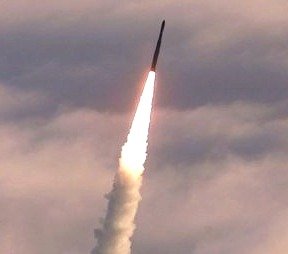
Meanwhile, Ukraine's intelligence has confirmed the transfer of about 50 ballistic missiles of the KN-23, KN-24, and upgraded KN-30 (Hwansong-11C) typesto Russia. The KN-30 is an upgraded version of the KN-23 ballistic missile and is capable of carrying a warhead weighing up to 2,500 kilograms.Russia has already begun deploying 06 launchers for North Korean missiles in the Voronezh region, and these launchers will be able to launch a total of 120 missiles.
North Korean missiles can strike the Sumy, Kharkiv, Chernihiv, Poltava, Kyiv, Dnipropetrovsk, and Zaporizhzhia regions from the Voronezh region.
Russian ballistic missile strikes damaged residential buildings, a children’s hospital, a school, industrial facilities, and fuel infrastructure in Kyiv City and Kyiv Oblast, killing at least 12 and injuring at least 40 in Kyiv City alone. Ukrainian Prime Minister Serhiy Koretskyi reported that Russian strikes against Kyiv City lasted for almost nine hours and noted that Russian forces also struck Red Cross facilities and food warehouses near Boryspil, Kyiv Oblast. Ukrainian officials also reported that Russian forces struck civilian, critical, and energy infrastructure in Chernihiv, Cherkasy, Odesa, and Mykolaiv oblasts, a gas station in Kharkiv Oblast, and logistics infrastructure in Zhytomyr Oblast.
Zhytomyr Oblast Military Administration Head Vitaliy Bunechko has reported on August 19 that Russian forces conducted a jet-powered drone strike against a police department in Zhytomyr City, Zhytomyr Oblast during the day, and the Ukrainian State Emergency Service noted that the strike killed 03, including 02 police officers, and injured 53 people. Russian strikes continue inflicting substantial damage in ways that disproportionately impact civilians, despite a high Ukrainian interception rate of all projectiles except for ballistic and quasi-ballistic missiles. Russian forces continue launching prolonged waves of ballistic and cruise missiles and long-range drones to overwhelm Ukrainian air defence systems and to exhaust air defenders and civilians.
Russia continues to set conditions to augment strike packages with North Korean missiles, including with upgraded KN-30 ballistic missiles. Russian aerial drones penetrated Moldovan and Romanian airspace, and a Russian naval drone was destroyed close to a Romanian natural gas platform on August 20, demonstrating that the Russia has accepted the risk that its war against Ukraine will cause damage to other states, including NATO states. The Moldovan Ministry of Defence reported that a likely Russian Shahed-136/Geran-2-type drone entered Moldova airspace near Kotlovyna, Odesa Oblast, flew in Moldovan airspace for six minutes, then departed for Ukrainian airspace near Etilua, Gagauzia which is roughly 06 kilometres from the Ukrainian border yesterday (August 20th) morning.
The Romanian Ministry of National Defence reported that a drone of unspecified origin crashed in an uninhabited area 04 kilometres northeast of Grindu, Tulcea County, which is roughly 05 kilometres from the Ukrainian border yesterday morning, causing a fire. The Romanian Ministry of National Defence reported that a Romanian F-16 fighter jet destroyed a naval drone about 80 miles east of Constanta (along the Black Sea coast roughly 116 kilometres from the Ukrainian border) near the Neptune Deep natural gas platform on the morning of August 20. Romanian authorities although has not specified the origin of the naval drone, but Romanian Defence Minister Radu-Dinel Miruță stated that the naval drone was not Ukrainian. Such incidents are likely to be an intended consequence of Russian strike packages that now take Russian unmanned systems so close to the airspace or waters of NATO states and Moldova that the drones regularly cross these boundaries.
Moldovan President Maia Sandu stated on August 18 that Russia deliberately launches some of its drones into Moldovan and NATO airspace and that authorities can assess intent based on the trajectory of the drones. Russian forces could prevent such violations of other states’ sovereign airspace and waters by redesigning their strike packages and moving strike vehicle trajectories away from NATO and Moldovan territory. That Russian forces have not adjusted their strike campaigns, along with the increasing frequency of these incidents, indicates that the Kremlin intends to normalize these violations against NATO.
Russia is likely to cause a significant number of Russian combat veterans of the war in Ukraine to be elected to the Russian State Duma in the September 2026 elections, particularly as members of the United Russia Party, as part of a concerted effort to militarize Russian society and cohere a pro-war and ultranationalist elite.
Russian President Vladimir Putin have stated on August 19th, that Russia must prepare in advance for the return of Russian service-members from the frontline in Ukraine when the war ends and must facilitate their reintegration into the Russian labor force and society. The Russian State Duma consists of 450 deputies elected for five-year terms and currently includes 310 deputies from the ruling United Russia Party.
Russia appears to be aiming to have combat veterans make up as much as roughly 22% of the newly elected Duma, suggesting that the country intends to further militarise the Russian government and build up a cadre of loyal ultranationalist veterans who will support the Kremlin’s aggressive policies.
United Russia Party General Council Secretary Vladimir Yakushev had stated on 08th June this year that 20 graduates of the Time of Heroes program — a Russian government initiative that places Russian veterans of the war in Ukraine into local, regional, and federal positions of power — have won the United Russia preliminary vote. Yakushev stated that 10 of the veterans will run on party lists in the September 2026 Duma elections while the other 10 will compete in single-mandate constituencies. Another prominent Kremlin-affiliated milblogger claimed on August 20 that the Kremlin is increasingly promoting Russian veterans into the Russian government because a Duma deputy with combat experience wields a “special kind of legitimacy that is difficult to publicly challenge”.
Team Maverick.