Raipur, August 2026: Bastar, once widely associated with Naxal violence, is now scripting a new story of development and transformation. The Shaheed Veer Gundadhur Seva Dera Jan Suvidha Kendra, established in Netanar Gram Panchayat of Bastar district, is emerging as a platform for rural residents, particularly women, to develop skills and become economically self-reliant.
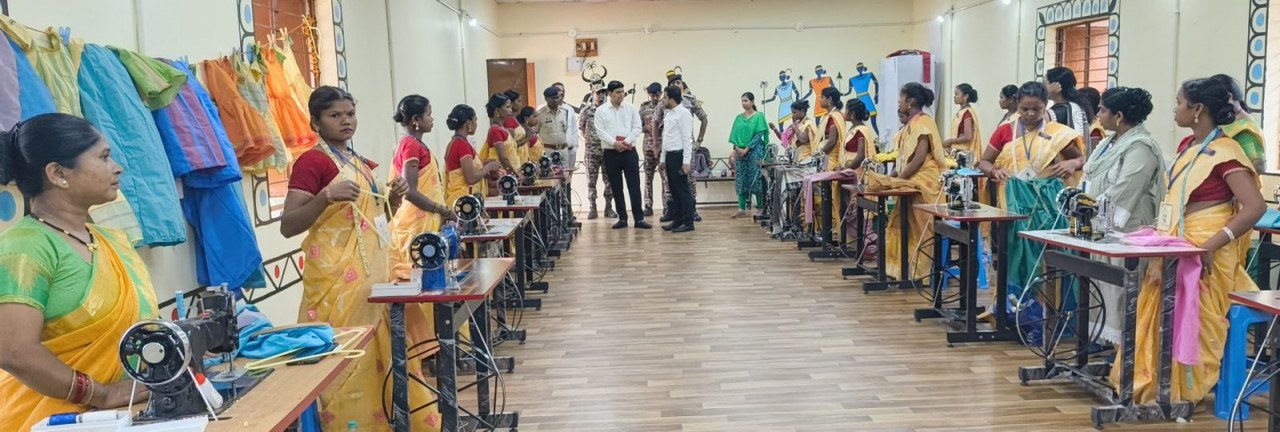
During a visit to the Seva Dera operating at the CRPF camp in Netanar Gram Panchayat, District Panchayat CEO Tanmay Khanna reviewed various activities, including sewing machine training, traditional rice processing using a dheki and tamarind roti production.
Encouraging the women associated with self-help groups, Khanna said their efforts were inspiring and had the potential to strengthen the rural economy. He emphasised the need to expand and make these activities more effective.
He directed officials to initiate the establishment of a production unit for women undergoing sewing training, which would provide trained women with better opportunities for self-employment and a regular source of income at the local level.
He also stressed the importance of group-based production, improvement in product quality and effective marketing of products to ensure that women can derive greater economic benefits from their skills.
The District Panchayat CEO subsequently inspected the Seva Dera facility located within the camp premises at Kamanar Gram Panchayat. During the visit, he held detailed discussions with local residents and members of self-help groups regarding the proposed establishment of a Seva Dera and directed officials to prepare and submit a comprehensive action plan.
Khanna said the Seva Dera would serve as a convenient platform where rural residents could access various government schemes and public services at a single location. Such centres, he said, could help improve access to government programmes and strengthen the connection between rural communities and public welfare initiatives.
During the inspection, women from self-help groups submitted a memorandum seeking the establishment of tamarind processing and mahua ladoo processing units in the area.
The women explained that setting up these processing units would enable better utilisation of locally available resources, create new employment opportunities and significantly increase their household incomes.
Khanna responded positively to the proposals and assured the women that necessary action would be taken to examine and implement the initiatives.
The Seva Dera initiative reflects the changing socio-economic landscape of Bastar, where community-based programmes are increasingly being used to promote livelihood opportunities, skill development and women's empowerment. By combining access to government services with local skill development and value addition to forest and agricultural produce, the initiative is aimed at creating sustainable livelihood opportunities for rural communities.
For women in Bastar, such platforms are opening new avenues for entrepreneurship and self-employment while helping transform locally available resources into marketable products. The initiative is also expected to strengthen the role of self-help groups in driving economic activity and supporting the broader development of rural areas.