By Dr S. K. Gopal
Lucknow, Oct 2026 : When the Gomti swells in flood, its waters also enter the collective memory of the city. One such memory from Lucknow’s Ghaila and Faizullaganj areas dates back to the floods of 1971. At the time, D. P. Bora was the MLA from Lucknow West. According to local accounts, he reached the affected area to help people trapped by the floodwaters and jumped into the water to rescue drowning children. Nearly five decades later, Faizullaganj continues to grapple with the challenges of Gomti floods and waterlogging.
The present crisis in Faizullaganj is not merely a consequence of river flooding. As Lucknow expanded, the demand for housing increased, and relatively inexpensive land transformed the area into a rapidly developing residential locality. However, amid private plotting and the expansion of settlements, proper planning, drainage systems and flood protection infrastructure failed to keep pace with the growth. As rainfall intensified and the Gomti’s water level rose, several neighbourhoods repeatedly faced waterlogging. The problem, therefore, is not just about drainage but also about balancing unplanned urban expansion with the river’s natural course.
Under the earlier drainage system, a nearly nine-kilometre-long natural or unpaved drain connecting IIM Road to the Gomti played an important role. As the population grew, the system became increasingly inadequate. Over the past decade, several initiatives related to roads, drains, electricity and other civic amenities have progressed through the efforts of local MLA Dr Neeraj Bora. The construction of a nine-kilometre-long reinforced cement concrete (RCC) drain at a cost of around Rs 45 crore was a significant step in this direction. However, while the drain can carry away rainwater, a separate protective structure is needed to prevent the Gomti’s rising waters from entering residential areas.
In view of this requirement, a proposal has emerged to construct an embankment along the Gomti’s left bank, extending from IIM Road to Harding Bridge, also known as Pakka Pul. The Lucknow Development Authority has submitted a project proposal, estimated to cost around Rs 182 crore, to the state government. Dr Neeraj Bora has urged the Chief Minister to expedite action on the proposal. If implemented, the project could provide the foundation for long-term flood protection for the surrounding areas.
Looking at the changes in Faizullaganj over the years solely through the lens of flooding would present an incomplete picture. Projects addressing basic needs include roads, drainage, an electricity substation, power infrastructure expansion, a community welfare centre, a 50-bed hospital, a government girls’ intermediate college and a permanent bridge. Progress towards replacing the pontoon bridge with a permanent structure is also important for improving connectivity. In a rapidly growing residential area, all these essential facilities must develop together.
In this context, the Prabandh Nagar scheme represents a major opportunity for the future. The proposed residential project, spread across approximately 2,000 acres around IIM Road, had been awaited for a long time, and the process of moving it forward has now begun. Planned residential development is particularly important because Lucknow’s growing population will require areas where roads, drainage, housing and public amenities are incorporated into the planning process from the outset. Faizullaganj’s experience demonstrates the need to build infrastructure that anticipates future requirements.
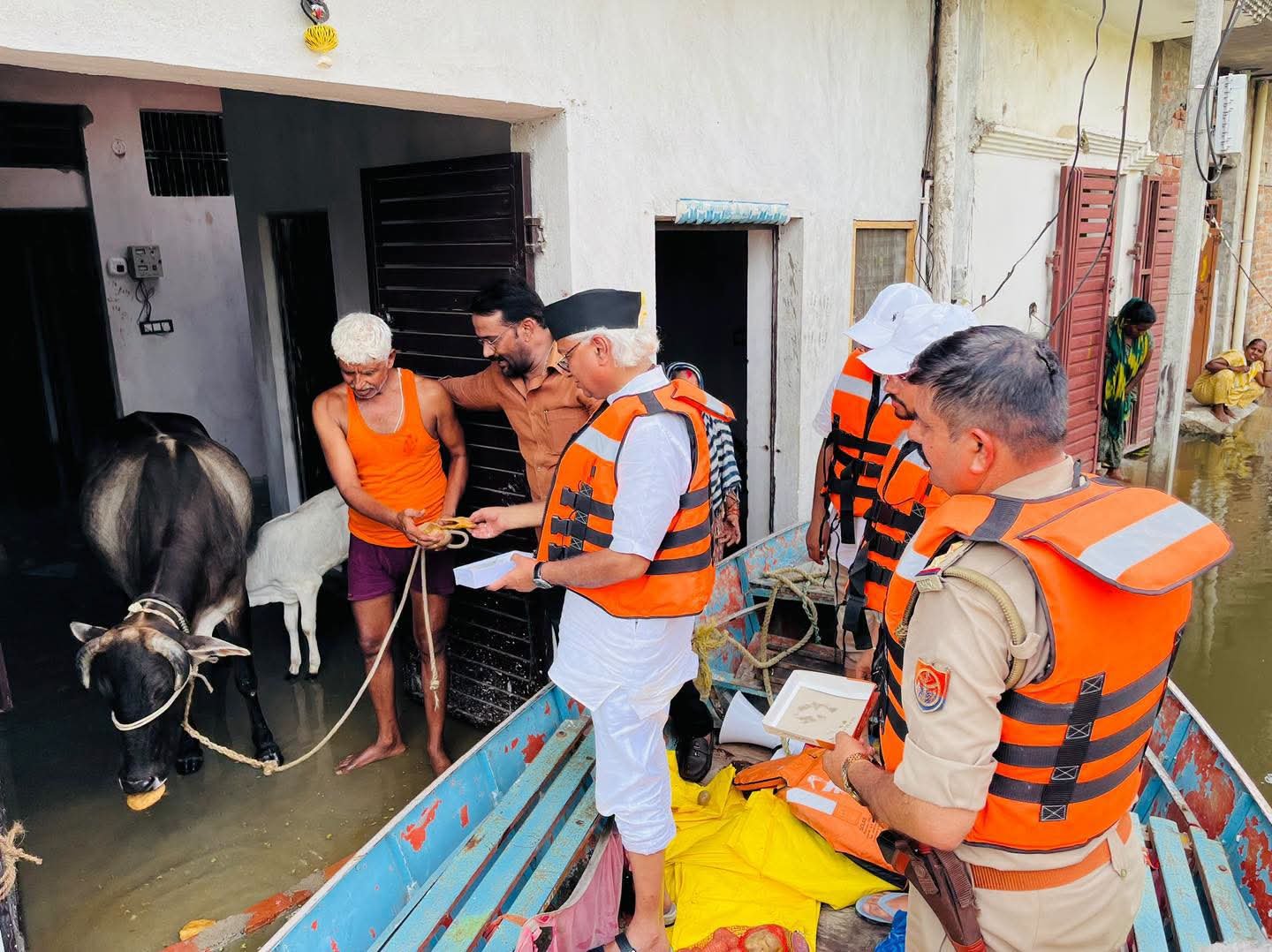
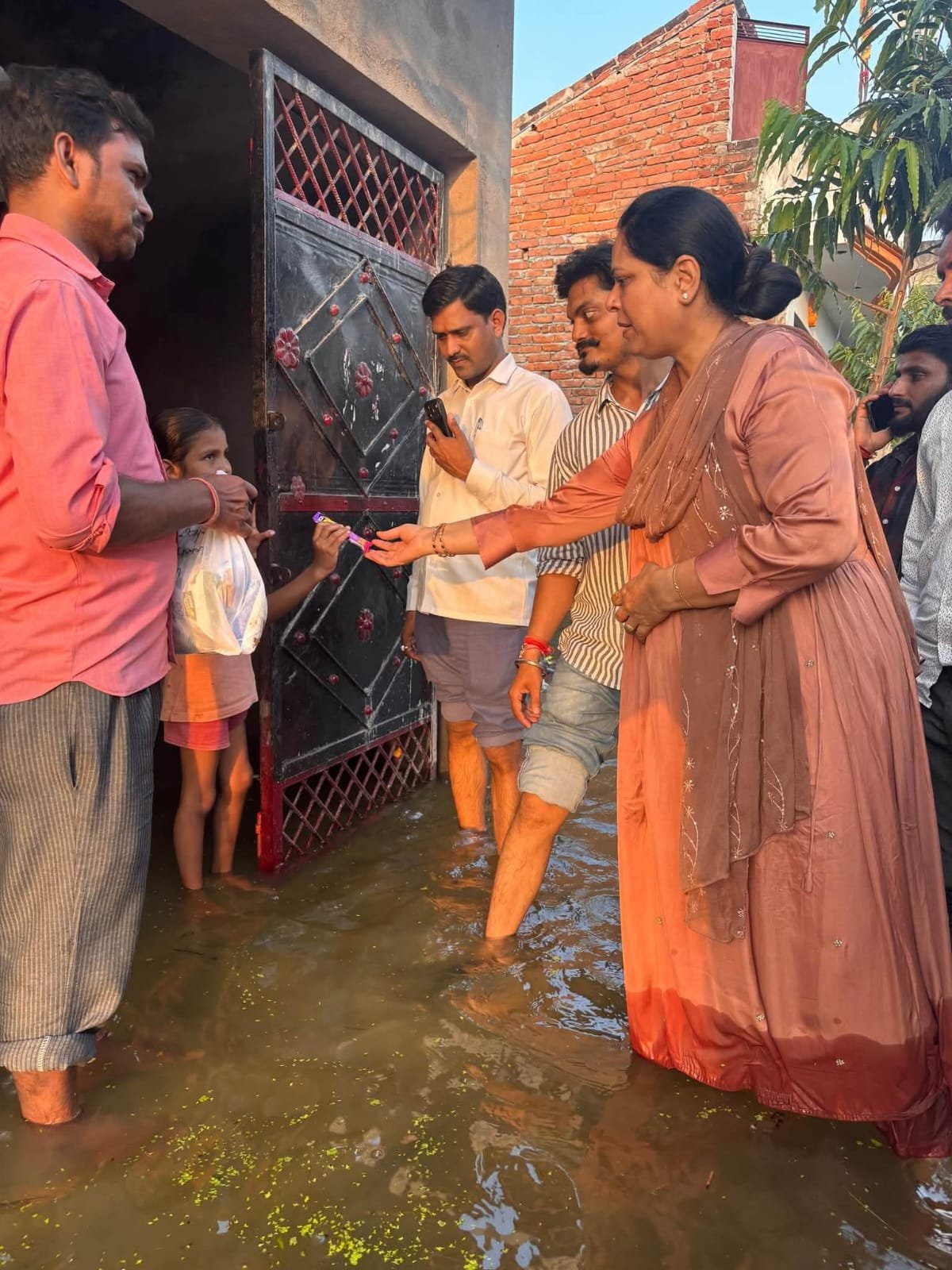
The current flooding has once again brought the entire situation into focus. As the Gomti’s water level rose, several areas, including Daudnagar and Mama Colony, were affected. Dr Neeraj Bora has been visiting the affected localities and monitoring relief and rescue operations. In recent days, he has also travelled by boat from house to house to distribute relief materials to flood-hit residents. His wife, social worker Bindu Bora, has likewise visited affected families to extend assistance. These efforts connect the present situation with memories of D. P. Bora’s public service.
The question facing Faizullaganj is no longer simply how to drain the water from the current flood. The real question is whether permanent protection will be in place before the next flood arrives. Existing settlements need stronger embankments, improved drainage and better basic infrastructure, while schemes such as Prabandh Nagar must advance as examples of planned urban development.
From the memory of the 1971 floods to the flooding of 2026, Faizullaganj has travelled a long road. The time has now come for the next phase of this journey to bring in a system that ensures people living along the Gomti no longer have to live under the annual threat of flooding.
The author is an independent journalist. The views expressed are personal.