Key Highlights
Trump said China agreed to hold nuclear-risk talks with the US and Russia, but no timetable or arms-reduction commitments were announced.
He cited India’s reported 7% economic growth and lower interest rates to argue for US rate cuts.
Quad companies from India, the US, Japan and Australia are expected to meet in early 2027 to explore commercial opportunities.
Trump said he wanted most advanced AI development to remain in the US, despite the Quad’s new cooperation initiative.
He claimed Russian President Vladimir Putin wanted to end the Ukraine war but announced no ceasefire or negotiation date.
Trade discussions with Thailand, the Philippines, Mexico and Canada featured prominently in his remarks.
Trump defended his decision on Iran despite acknowledging that the conflict had increased fuel prices.
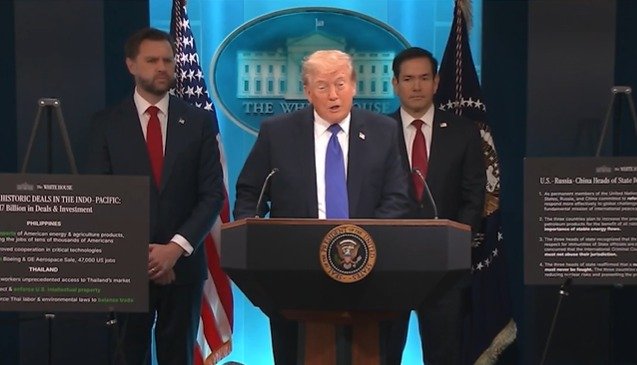
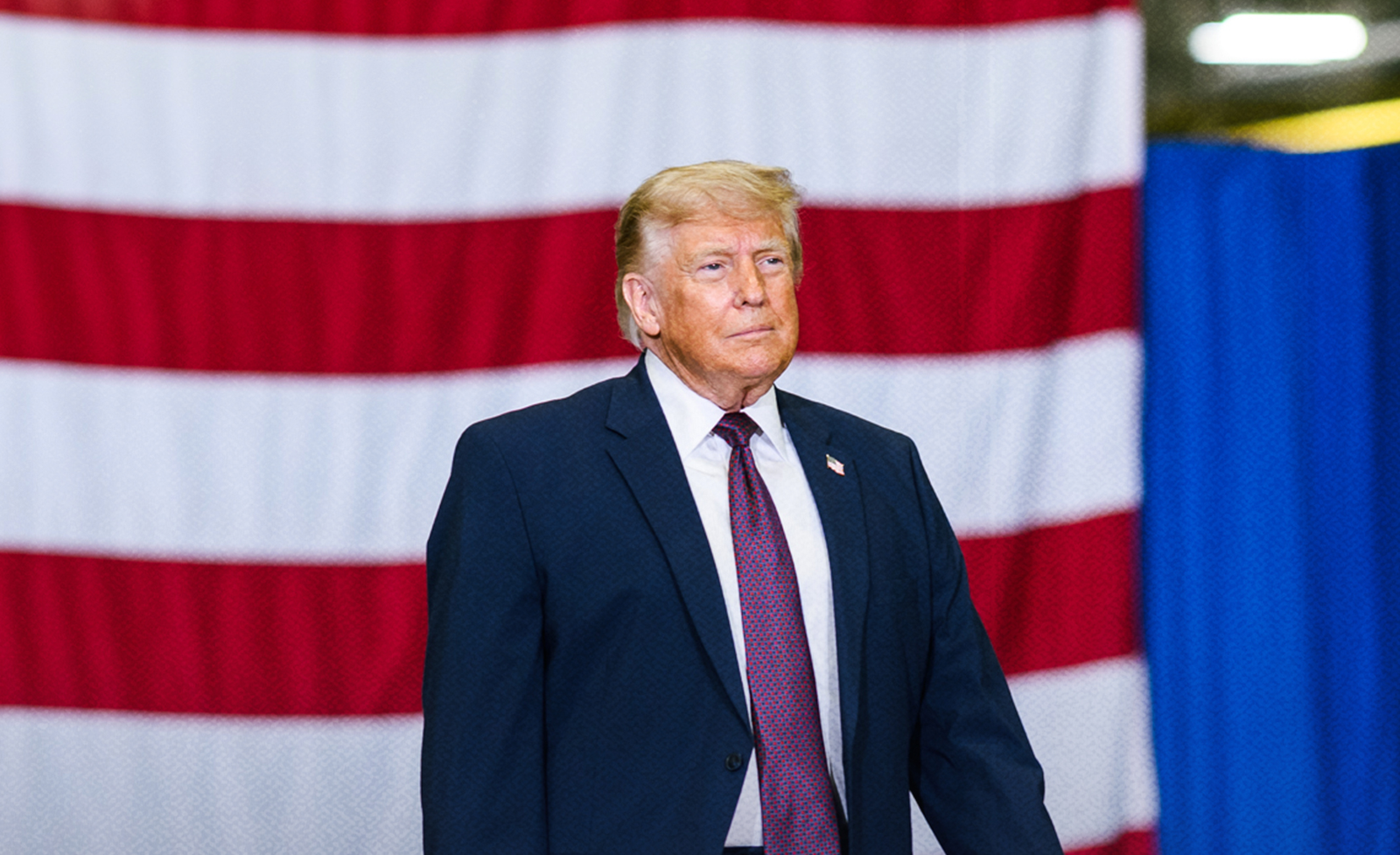
Washington, Nov 2026 : US President Donald Trump has outlined a series of diplomatic, economic and trade priorities following his recent Asia tour, claiming that China has agreed to discussions on reducing nuclear risks with Washington and Moscow, while citing India's economic growth to strengthen his argument for lower US interest rates.
Speaking at a news conference on Friday after returning from Asia, Trump also discussed the future of the Quad, artificial intelligence cooperation, the Ukraine conflict, trade negotiations and the war involving Iran.
On nuclear security, Trump said Chinese President Xi Jinping had agreed during their meeting in Shenzhen to discuss reducing nuclear risks with the United States and Russia. According to Trump, the three leaders had agreed that a nuclear conflict must never be allowed to occur.
However, no timetable for the proposed discussions or specific commitments to reduce nuclear arsenals were announced. Trump acknowledged that he would find it difficult to agree to halving the US nuclear arsenal.
India featured prominently in Trump's comments on monetary policy. Referring to what he described as India's relatively low interest rates and economic growth of around 7 per cent, he argued that the Federal Reserve should reduce borrowing costs to support faster expansion in the American economy.
Trump suggested that lower interest rates could help the US achieve growth of 14 or 15 per cent, and potentially even 20 per cent. He did not provide calculations or an economic assessment to support those projections.
The Quad's economic and technological agenda was another major subject. US Secretary of State Marco Rubio said leading companies from India, the United States, Japan and Australia would meet in early 2027 to explore commercial agreements and investment opportunities. Prime Minister Narendra Modi attended the Quad summit in Manila, where leaders also agreed to strengthen cooperation on supply chains and maritime surveillance.
On artificial intelligence, Trump said the Quad had launched an initiative focused on advanced AI but made clear that he wanted most development work to remain in the United States. He also threatened to impose a substantial tax on American companies that build data centres overseas. Separately, he said he and Xi had agreed to work together on AI safeguards.
Trump also spoke about Nvidia and its chief executive Jensen Huang. He said he would like Huang to apologise and return to the company, although he had earlier recommended Apple chief executive Tim Cook for the position. Trump credited Huang with developing Nvidia's Blackwell chips and maintained that any American chips sold to China should be older models.
On Ukraine, Trump said Russian President Vladimir Putin had expressed a desire to end the war during their meeting in Shenzhen. Asked about a fresh Russian attack, he maintained that both leaders wanted the fighting to stop. He did not announce a ceasefire arrangement or a date for negotiations.
Trade featured prominently in discussions with Asian partners. Trump said Thailand had agreed to eliminate tariffs on US goods and was interested in purchasing around $2.6 billion worth of American agricultural products annually, describing the figure as preliminary. Under a separate framework with the Philippines, he said he had pressed Manila to source all its agricultural and energy imports from the United States.
Trump also said a trade agreement with Mexico was close following his meeting with President Claudia Sheinbaum. Regarding Canada, he welcomed Prime Minister Mark Carney's interest in the Keystone pipeline but insisted that the US trade deficit with Canada, which he estimated at approximately $80 billion, should be brought down to zero.
On Iran, Trump defended his decision to pursue military action, acknowledging that the conflict had contributed to higher fuel prices but arguing that preventing Tehran from acquiring nuclear weapons justified the decision. Vice President J.D. Vance backed the stated objective, saying the decision rested with Trump.
The President also said Democrats had contacted him about immigration and healthcare. He expected discussions on the future of people who entered the US unlawfully years ago but had since established lives and employment in the country. Trump made no commitment on whether they would be permitted to remain.
Disclaimer: This review is based on the reviewer’s individual perspective. Audience opinions may vary.