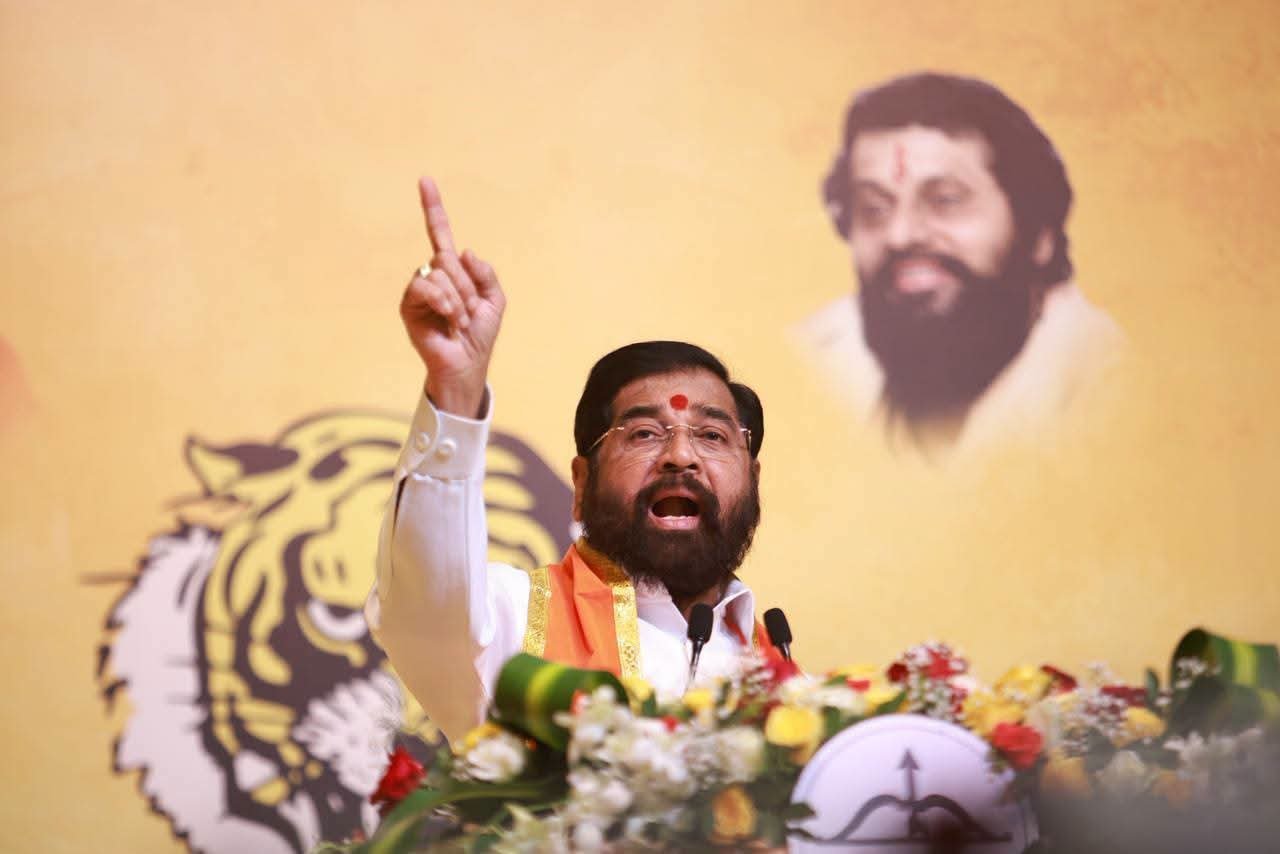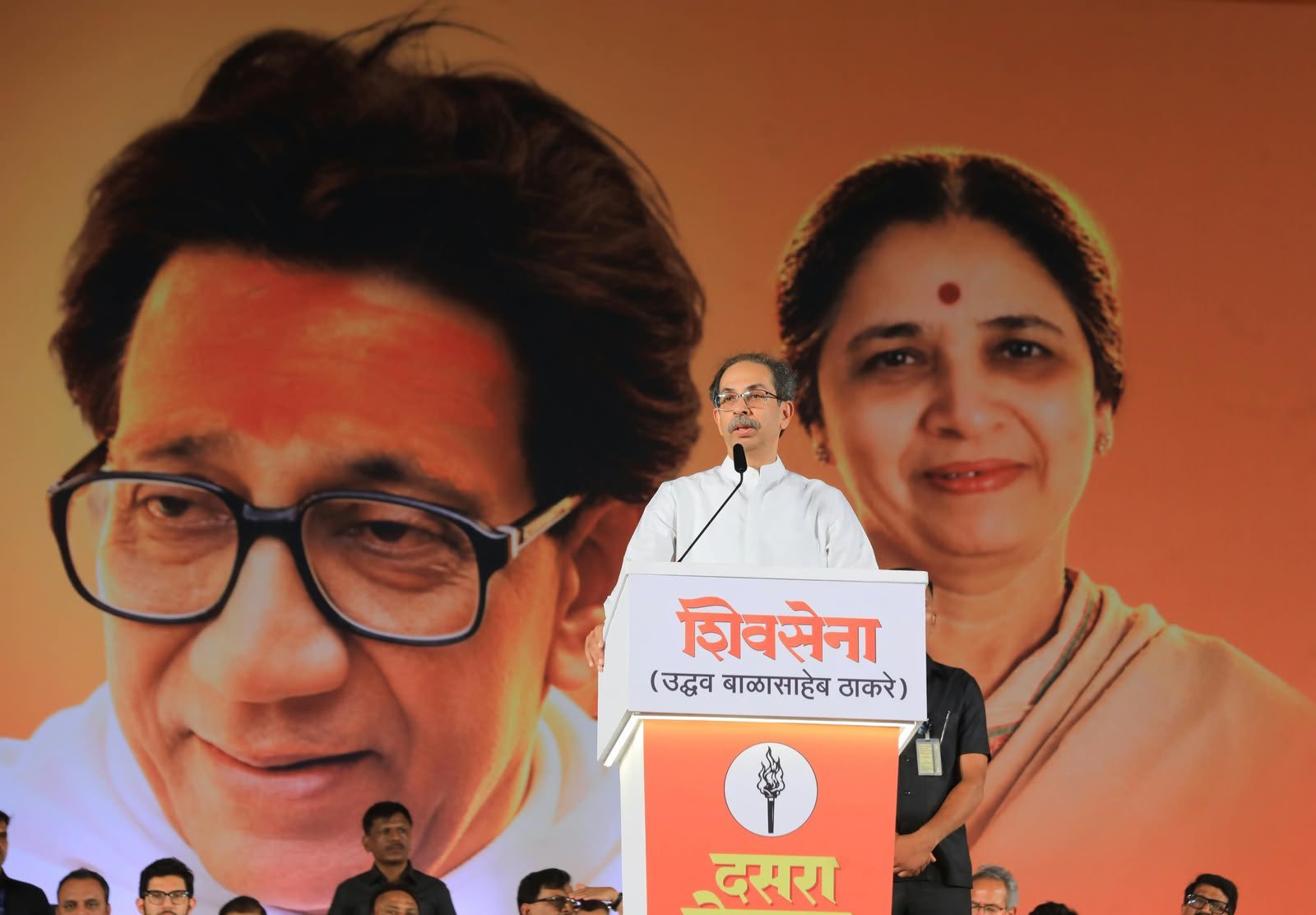
Mumbai, Oct 2026 : Shiv Sena (UBT) chief Uddhav Thackeray launched a sharp attack on the BJP-led government and the Centre during the party’s traditional Dussehra rally, accusing those in power of electoral irregularities, suppressing student protests and undermining Maharashtra’s Marathi identity. Challenging the ruling establishment to demonstrate its confidence in the electoral process, he demanded that elections be conducted using ballot papers instead of Electronic Voting Machines (EVMs).
“If you have the courage, set aside the EVMs and hold elections using ballot papers,” Thackeray said, alleging that those in power had secured their positions by stealing votes. His speech covered a range of politically contentious issues, including alleged examination paper leaks, police action against protesters, the role of the Chief Election Commissioner, the status of Marathi in Mumbai and the removal of books associated with social reformers Dr B.R. Ambedkar and Mahatma Jyotiba Phule.
Attack on Modi, Shah and Chief Election Commissioner
Targeting Prime Minister Narendra Modi and Union Home Minister Amit Shah, Thackeray drew a comparison with the Ramayana, alleging that their political interests were closely linked to Chief Election Commissioner Gyanesh Kumar.
Referring to the episode in which Vibhishana revealed Ravana’s vulnerability to Lord Rama, he claimed that the ruling leadership’s political fortunes depended on the Election Commission’s functioning. His remarks formed part of his broader allegations concerning the conduct of elections and the independence of constitutional institutions.
Thackeray’s demand for ballot-paper elections came amid continuing political disagreements over the reliability of EVMs and the transparency of the electoral process. The opposition has repeatedly raised concerns about electoral procedures, while the authorities have maintained that established safeguards govern elections.
Student Protests and Alleged Paper Leaks
The Shiv Sena (UBT) chief also expressed solidarity with students protesting against alleged examination paper leaks and other recruitment-related irregularities. Referring to videos purportedly showing police action against demonstrators in Delhi, he claimed that several young protesters had sustained injuries during the crackdown.
Thackeray argued that the demonstrations represented wider frustration among young people who had faced uncertainty and difficulties over competitive examinations and recruitment processes for years.
He criticised attempts to portray protesting students as criminals or ideological extremists, saying their grievances deserved to be heard rather than dismissed. According to him, parents were also joining their children on the streets because of concerns about their future.
To underline the role of young people in public movements, Thackeray invoked the memory of Indian freedom fighters, including Bhagat Singh, the Chapekar brothers and Anant Kanhere. He pointed out that many revolutionaries had been in their twenties when they participated in the struggle against British rule.
He also referred to Chhatrapati Shivaji Maharaj, recalling that the Maratha ruler had demonstrated extraordinary courage at a young age. Thackeray questioned why young protesters raising concerns about their future were being subjected to derogatory labels instead of having their demands addressed.
Warning to Police Against Political Pressure
Thackeray criticised what he described as the selective use of police powers against ordinary citizens and political protesters. He said people generally did not want to take to the streets or expose themselves and their families to legal difficulties, but felt compelled to protest when their grievances went unanswered.
Appealing to police personnel, he urged them not to act under political pressure and cautioned against using force indiscriminately against demonstrators.
He alleged that citizens participating in Tiranga rallies were being served notices, while individuals accused of serious crimes were able to move around freely and engage in violent acts in public places. He questioned the apparent disparity in enforcement and called for greater accountability from the authorities.
His remarks reflected the opposition party’s broader criticism of the state’s law-and-order machinery and its handling of demonstrations. The allegations were part of Thackeray’s political address and were not independently established in the account of the rally.
Mumbai’s Marathi Identity at the Centre of His Speech
The former Maharashtra chief minister devoted a substantial portion of his address to Mumbai’s linguistic and cultural identity, asserting that Marathi language and heritage must remain central to the city’s character.
Reacting to statements suggesting that Gujarati was the language of areas such as Ghatkopar, Thackeray argued that Maharashtra’s multilingual character should not be used to diminish the historical place of Marathi-speaking people.
He accused sections of the ruling political establishment of remaining silent on questions concerning Marathi identity because of their political interests. He also recalled the historical movement to retain Mumbai within Maharashtra, asserting that the determination of Marathi-speaking people had played a decisive role in that struggle.
Thackeray warned that attempts to weaken the city’s Marathi character or separate its identity from Maharashtra would face strong resistance. He maintained that the Shiv Sena’s political legacy was closely linked to protecting the cultural rights and dignity of Marathi-speaking citizens.
His comments came against the backdrop of continuing political debates over language, migration, regional identity and the cultural character of Mumbai, one of India’s most diverse metropolitan centres.
Ambedkar and Phule’s Books Become a Flashpoint
Thackeray also raised concerns over the reported removal of books associated with Dr B.R. Ambedkar and Mahatma Jyotiba Phule from university libraries and academic curricula.
He alleged that attempts were being made to portray the writings and ideas of the two social reformers as objectionable and to remove their works from educational institutions. He criticised what he described as the authorities’ willingness to respond to demands circulated through social media without adequately considering their implications.
Emphasising the importance of intellectual freedom and social reform, Thackeray argued that a country could not achieve meaningful freedom unless society progressed and inequalities were addressed.
He invoked the legacy of Shiv Sena founder Bal Thackeray, saying that the organisation’s political philosophy had combined religious identity with social responsibility. According to Uddhav Thackeray, the movement’s original objective was to instil confidence among Marathi-speaking people and Hindus while promoting social concerns.
He cited the social reform traditions associated with figures such as Gadge Baba to argue that the party’s understanding of Hindutva was not confined to religious symbols or ritual practices.
Defines Shiv Sena’s Hindutva
Taking aim at the BJP’s claims to represent Hindutva, Thackeray questioned the role played by some of its leaders during the demolition of the Babri Masjid in December 1992. He alleged that those now presenting themselves as the principal defenders of Hindutva had not demonstrated the same commitment at the time.
Thackeray maintained that his party’s interpretation of Hindutva was rooted in patriotism, social responsibility and national unity rather than religious exclusivity.
He argued that slogans invoking Lord Ram could not substitute for employment, economic security and opportunities for young people. In his view, a genuine expression of faith should coexist with work, dignity and the ability of citizens to support their families.
He also stressed that India's national identity transcended differences of religion, caste and community. Referring to Muslims, Dalits and other social groups, he said that people might identify with different colours and traditions, but the national Tricolour remained the common symbol of the country.
Political Message Ahead
Thackeray’s Dussehra address combined electoral concerns, student grievances, linguistic identity, social reform and competing interpretations of Hindutva into a broader challenge to the BJP-led political establishment.
By demanding ballot-paper elections and criticising the functioning of constitutional institutions, he sought to place electoral transparency at the centre of the political debate. His remarks on Mumbai’s Marathi identity and the legacy of Ambedkar and Phule also underlined the issues his party intends to emphasise in Maharashtra’s political discourse.
The speech reinforced the Shiv Sena (UBT) chief’s effort to distinguish his party’s political and ideological position from that of the BJP, particularly on Hindutva, regional identity and social justice. His allegations against the government and electoral authorities are likely to remain subjects of political debate, as the opposition continues to demand greater transparency and accountability in public institutions.
(Disclaimer :The content of this article is sourced from a news agency and has not been edited by the Mavericknews30 team.)