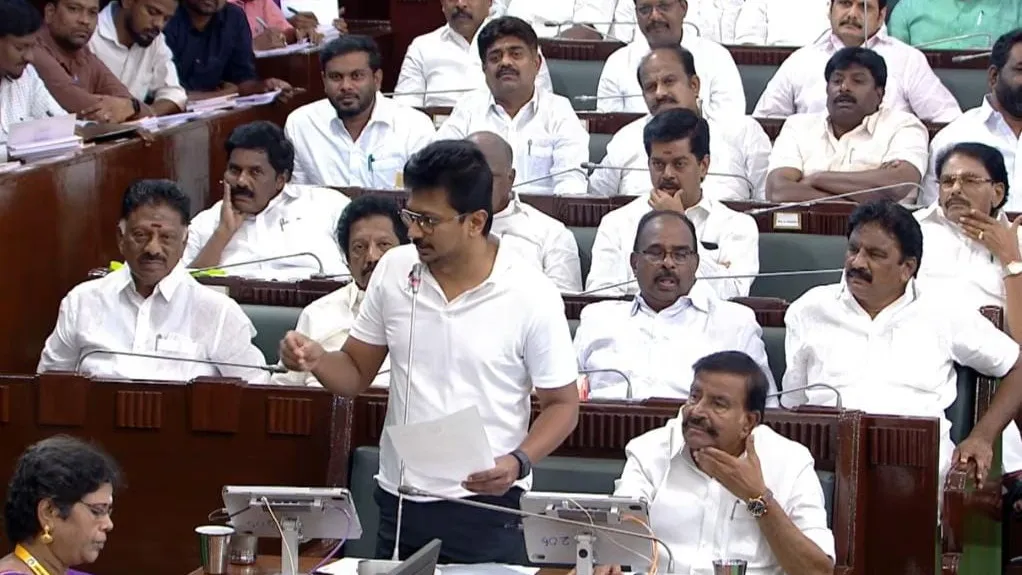
Chennai, Aug 2026 : Tamil Nadu Leader of Opposition Udhayanidhi Stalin has criticised the state government's decision to provide official vehicles and monthly allowances to all 234 MLAs, urging the government to restrict the benefits to legislators who are financially disadvantaged.
Speaking in the Tamil Nadu Assembly, Udhayanidhi said the proposal needed to be reconsidered in view of the state's financial position and growing debt burden. He argued that public funds should be used cautiously and that government expenditure should focus on areas of genuine need.
“The government has announced that new vehicles will be purchased for all 234 MLAs. I would like to place our party’s position on record in this Assembly,” Udhayanidhi said.
He pointed out that the state government had itself acknowledged the financial pressures facing Tamil Nadu and argued that providing the same facilities to every MLA may not be necessary.
“At a time when the Tamil Nadu government is already facing a debt burden, as the Chief Minister himself has repeatedly stated, we have decided, under the guidance of our party president M.K. Stalin, that vehicles should be provided only to MLAs who are financially disadvantaged,” he said.
Udhayanidhi appealed to the government to consider a more targeted approach rather than extending the proposed benefits universally.
“I request the government to consider this and provide vehicles only to those MLAs who genuinely need them, especially while the government is trying to reduce unnecessary expenditure,” he added.
The controversy follows Chief Minister C. Joseph Vijay's announcement in the Assembly on August 19. In a suo motu statement under Rule 110, the Chief Minister announced that all 234 MLAs would be provided official government vehicles.
Under the proposal, legislators would also receive a monthly allowance of Rs 75,000 towards fuel, vehicle maintenance and the services of a driver. In addition, each MLA would be entitled to Rs 25,000 per month for hiring an office assistant.
Together, the proposed monthly allowances would amount to Rs 1 lakh per MLA, apart from the cost of providing official government vehicles.
The announcement has triggered debate over whether the benefits should be extended uniformly to all elected representatives or targeted at those who can demonstrate a genuine financial need.
Udhayanidhi's intervention has placed the focus on the broader question of balancing the operational requirements of elected representatives with financial discipline and responsible use of public money.
Supporters of providing official vehicles could argue that MLAs require adequate resources to discharge their responsibilities, particularly when they have to travel extensively within their constituencies and attend official engagements. However, the Opposition has questioned whether every legislator requires the same level of financial assistance.
Udhayanidhi maintained that the government should first identify MLAs who genuinely require such support and provide the facilities accordingly.
The issue is therefore likely to remain part of the wider discussion on government expenditure, with the Opposition pressing for a review of the proposal and calling for a more selective system.
The demand effectively seeks to replace the proposed universal benefit with a need-based mechanism, under which vehicles and associated allowances would be provided only to legislators facing genuine financial constraints.