
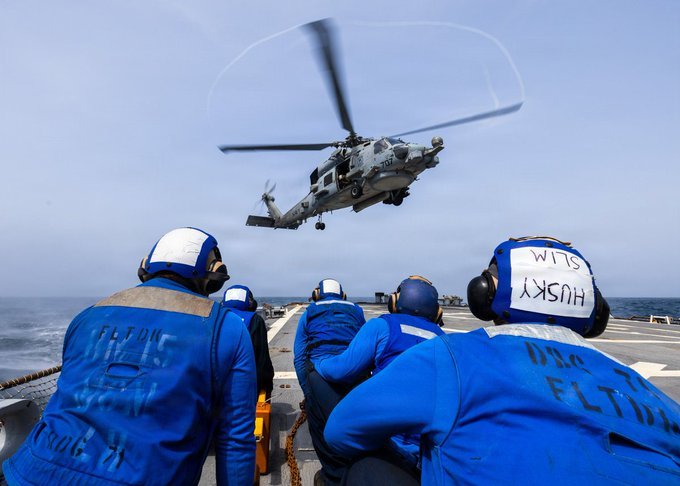
Washington, Aug 2026 : The US military has helped facilitate the movement of more than 15 million barrels of oil and petroleum products through the strategically vital Strait of Hormuz, US Energy Secretary Chris Wright said, providing the clearest indication yet of a recovery in energy shipments through the waterway following months of disruption.
Wright said that when oil transported through regional pipelines was also taken into account, the total volume of petroleum leaving the Gulf region was closer to 20 million barrels. He added that the seven-day average of oil moving through the Strait of Hormuz had risen above eight million barrels per day.
“Make no mistake, thanks to the U.S. Navy, oil is flowing through the Strait of Hormuz,” Wright said in a social media post.
The figures indicate a significant improvement from the second quarter, when conflict involving Iran and restrictions on commercial shipping sharply reduced oil traffic through the strategic waterway. According to the US Energy Information Administration (EIA), average oil flows through Hormuz during that period fell to around 4.9 million barrels per day.
Despite the recovery, current traffic remains substantially below levels recorded before the conflict. Approximately 21.6 million barrels of crude oil, condensate and refined petroleum products passed through the Strait each day during the final quarter of 2025, highlighting the scale of the disruption.
Wright's reference to more than 15 million barrels related specifically to oil transported on Tuesday rather than the current daily average. His separate estimate of more than eight million barrels per day over a seven-day period provides a clearer indication of the sustained increase in maritime traffic.
Shipping activity has also increased with direct US military assistance. United Against Nuclear Iran (UANI), which monitors maritime movements in the region, said the Joint Maritime Information Center recorded 71 “U.S. facilitated” transits during the 48-hour period covering August 18 and 19.
According to UANI's assessment, 1,081 facilitated transits had been recorded since June 20. The organisation said the number of daily facilitated transits had risen from approximately 4.5 to 35.5 during the month ending August 19.
The US Navy has been assisting commercial vessels that comply with established requirements while they navigate the southern shipping corridor. Some ships have reportedly limited or switched off their automatic identification system broadcasts because of security concerns, making their movements more difficult to track publicly.
At the same time, the Trump administration has maintained a blockade involving vessels travelling to or from Iranian ports and coastal areas. UANI said US forces had redirected 67 commercial vessels attempting to breach the blockade as of Thursday. It also reported that three vessels had been disabled after failing to comply and that two had been boarded.
Despite the improvement in oil flows, maritime security remains highly volatile. UANI said two vessels were attacked in separate incidents on August 18, following the expiration of an earlier memorandum of understanding.
One seafarer was killed in the incidents, bringing the reported number of crew casualties during the conflict to 19, according to figures cited from the International Maritime Organization.
Commercial shipping through the strait has consequently remained uneven. Before the conflict, around 138 vessels passed through the waterway each day. Following the escalation, numerous commercial vessels remained anchored or waited on either side of the passage because of security threats, rising insurance costs and uncertainty over the safety of transit.
The Strait of Hormuz is one of the world's most important energy corridors, connecting the oil-producing Gulf region with international markets. Any prolonged disruption to the waterway can have a direct impact on global oil prices, energy security and supply chains.
A Congressional Research Service report has described the strait as a central route for global oil and natural gas supplies, while noting that alternative pipeline routes are capable of carrying only a fraction of the volumes normally transported through Hormuz.
The EIA estimates that Saudi Arabia and the United Arab Emirates together have pipeline capacity allowing them to bypass the strait by roughly 4.7 million barrels per day. That figure remains far below the approximately 21 million barrels of oil and petroleum products that moved through Hormuz each day before the conflict.
The latest increase in traffic therefore represents a significant recovery, but energy markets continue to watch the situation closely as the US military works to maintain maritime access while security risks remain elevated.
(Disclaimer :The content of this article is sourced from a news agency and has not been edited by the Mavericknews30 team.)