
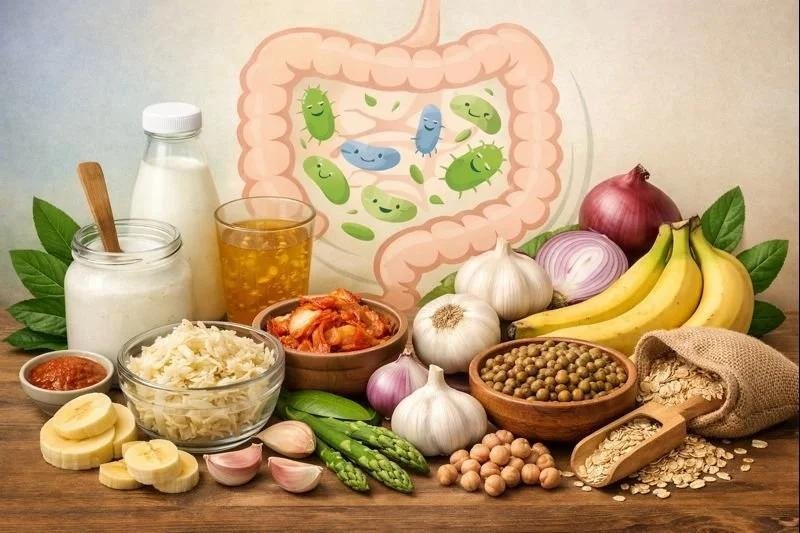
Your gut does far more than digest the food you eat. It is home to trillions of microorganisms, including bacteria, fungi and other microbes, that form what is known as the gut microbiome. This complex ecosystem plays an important role in digestion, immunity and metabolism and can influence blood sugar regulation, liver function and even aspects of mental wellbeing.
Maintaining good gut health is largely about supporting a diverse and balanced community of beneficial microorganisms. The foods you eat every day can either nourish these microbes or, when consumed excessively, disrupt the balance.
The good news is that improving your gut health does not necessarily require complicated diets. Simple, consistent food choices can make a meaningful difference.
The Best Foods for Your Gut
| Food | Why It Helps | Easy Ways to Include It |
|---|---|---|
| Yoghurt & Kefir | Provide beneficial probiotic bacteria | Breakfast, smoothies |
| Kimchi & Sauerkraut | Fermented foods that support microbial diversity | With meals or salads |
| Bananas | Provide prebiotic fibre, including inulin | Snack, breakfast |
| Leafy Greens | Rich in fibre and plant compounds | Curries, salads, soups |
| Whole Grains | Feed beneficial gut bacteria through fibre | Oats, brown rice, millets |
| Berries & Apples | Rich in polyphenols and fibre | Snacks, breakfast |
| Green Tea | Provides polyphenols with antioxidant properties | Beverage |
1. Fermented Foods: Natural Probiotics
Fermented foods are among the most popular choices for supporting gut health because some contain probiotics — live microorganisms that can provide health benefits when consumed in adequate amounts.
Good options include yoghurt, kefir, kimchi and sauerkraut. Including fermented foods as part of a balanced diet may support microbial diversity and digestion.
However, not every fermented product necessarily contains live cultures. Processing and pasteurisation can affect the microorganisms present, so checking food labels can be useful.
2. Bananas: A Simple Prebiotic Choice
Bananas are inexpensive, convenient and easy to add to almost any diet. They contain fibre and, particularly when less ripe, resistant starch and other compounds that can serve as fuel for beneficial gut microbes.
Try adding sliced banana to oats or yoghurt, or simply have one as a snack.
3. Leafy Greens: Fibre for Your Microbes
Spinach, fenugreek or methi, mustard greens and kale provide fibre and a range of plant compounds.
Dietary fibre passes through parts of the digestive system without being completely broken down. Once it reaches the large intestine, gut bacteria can ferment some types of fibre and produce short-chain fatty acids, compounds associated with the health of the intestinal lining.
4. Whole Grains: Feed the Good Bacteria
Oats, brown rice, whole wheat, barley and millets are excellent sources of dietary fibre.
A diet containing a variety of fibre-rich foods can help support a diverse gut microbiome. Increasing fibre gradually is important, particularly for people who are not accustomed to eating large amounts, because a sudden increase may cause bloating or gas.
5. Polyphenol-Rich Foods
Polyphenols are naturally occurring plant compounds found in foods such as berries, apples, colourful vegetables, green tea and coffee. They have antioxidant properties and may interact with gut microorganisms.
Green tea, for example, contains polyphenols that researchers are studying for their effects on microbial balance and inflammation.
Foods to Limit for Better Gut Health
Not every food needs to be completely eliminated. The bigger goal is to limit excessive consumption of foods that may negatively affect digestive and metabolic health.
| Food or Drink | Potential Concern | Smarter Approach |
| Large amounts of red meat | May alter gut microbial patterns when consumed excessively | Choose moderate portions; include fish, pulses and beans |
| Deep-fried foods | Often high in unhealthy fats and calories | Prefer grilled, baked or steamed foods |
| Excessive alcohol | Can disrupt the gut microbial environment | Avoid excessive consumption |
| Too much caffeine | May trigger digestive discomfort in some people | Reduce intake if it causes symptoms |
| Unnecessary antibiotics | Can disrupt beneficial bacteria | Use only when prescribed |
1. Red Meat — Moderation Matters
Eating large quantities of red meat may influence the composition of gut bacteria and has also been associated with other long-term health concerns when consumed excessively.
Rather than eliminating it completely, consider moderation and include more fish, lentils, beans, peas and tofu in your meals.
2. Fried Foods
Deep-fried foods are generally high in calories and unhealthy fats. Some research, including animal studies, has raised concerns about the effects of repeatedly heated cooking oils on the gut microbiome.
More human research is needed, but limiting deep-fried foods is already a sensible choice for overall health.
3. Unnecessary Antibiotic Exposure
Antibiotics can be life-saving medicines, but they do not distinguish perfectly between harmful and beneficial bacteria. Antibiotic treatment can temporarily alter the gut microbiome.
The key message is simple: never avoid medically necessary antibiotics, but never use them without appropriate medical advice either.
4. Excessive Alcohol
Heavy alcohol consumption can disturb the intestinal environment and affect the balance of gut microorganisms. Limiting alcohol is therefore beneficial not only for gut health but also for overall wellbeing.
5. Too Much Caffeine
Tea and coffee can fit comfortably into a healthy diet for many people. However, excessive caffeine may cause stomach discomfort, loose stools or diarrhoea in some individuals.
If coffee or strong tea regularly upsets your stomach, reducing the quantity or avoiding it on an empty stomach may help.
The Gut-Friendly Plate
A simple rule can make healthy eating easier:
More fibre + more plant variety + fermented foods + adequate water − excessive ultra-processed and fried foods = a better environment for your gut microbes.
Aim to include different vegetables, fruits, whole grains, pulses, nuts and seeds across the week rather than relying on a single “superfood”.
The Bottom Line
A healthy gut is built through consistent eating habits, not overnight fixes. Adding fibre-rich plant foods, whole grains and suitable fermented foods while limiting excessive fried foods, alcohol and highly processed choices can help support a healthier gut environment.
And remember: everyone’s digestive system is different. If you experience persistent bloating, abdominal pain, diarrhoea, constipation, unexplained weight loss or blood in the stool, dietary changes should not replace medical evaluation.
Your gut works every day to support your body. Give it the variety, fibre and nourishment it needs.
Disclaimer: Maverick News is not responsible for claims or statements made by external sources or individuals mentioned in this article.
(ADVERTORIAL DISCLAIMER : The content of this article is sourced from a news agency and has not been edited by the Mavericknews30 team.)