Army’s enhanced armour requirements could push induction to 2028-29 as developers seek to balance survivability with the 25-tonne weight limit for high-altitude operations
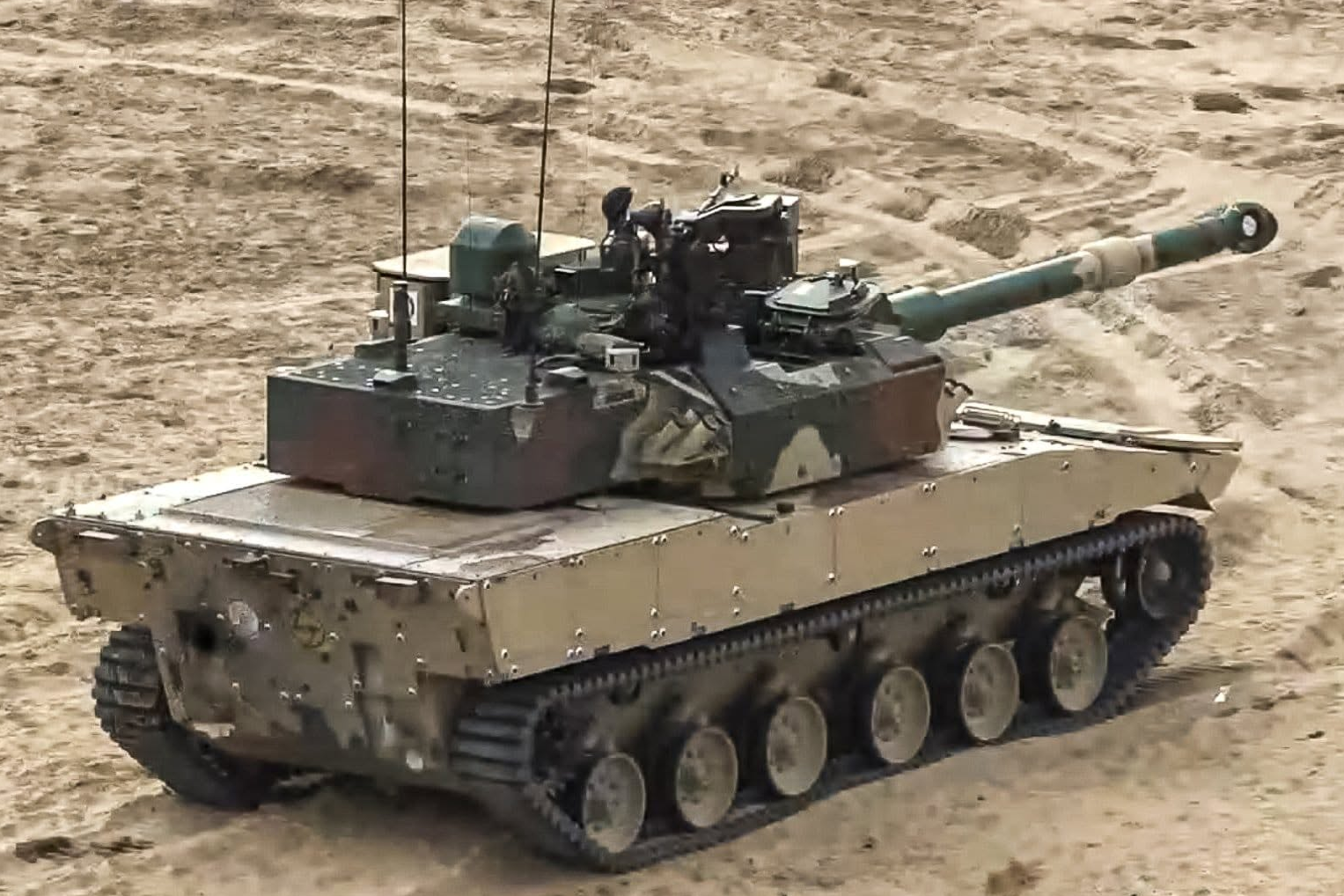
New Delhi, September 2026: India’s indigenous Zorawar light tank programme, jointly developed by the Defence Research and Development Organisation (DRDO) and Larsen & Toubro (L&T), is facing a possible delay of up to two years following the Indian Army’s demand for higher protection levels, according to a Times of India report.
The Army’s requirement for protection beyond NATO’s STANAG Level 4 has created a significant engineering challenge: strengthening the tank’s armour without compromising the 25-tonne weight class considered important for mobility and rapid deployment in high-altitude areas.
The enhanced protection requirement could push the tank’s induction timeline from the earlier target of 2027 to 2028 or 2029. Engineers are working to incorporate additional protection while retaining the platform’s mobility, which is a key requirement for operations in mountainous terrain such as Ladakh.
Balancing Protection and Mobility
STANAG standards are used to classify the protection offered by armoured vehicles against battlefield threats, including small-arms fire, artillery fragments, mines and heavier weapons. Moving to higher protection levels generally requires additional armour and structural reinforcement, which increases weight and can affect mobility, transportability and operating range.
For Zorawar, maintaining a low weight is particularly important because the tank was conceived specifically for high-altitude warfare. The Indian government has described the platform as a 25-tonne-class armoured vehicle designed for high-altitude applications, and the tank has successfully undergone trials at altitudes exceeding 4,200 metres.
The programme was initiated following the 2020 Ladakh standoff, during which China's deployment of Type-15 light tanks highlighted the requirement for a lighter armoured platform capable of operating in difficult Himalayan terrain.
Indigenous High-Altitude Tank
Zorawar is being developed by DRDO’s Combat Vehicles Research & Development Establishment (CVRDE) in collaboration with L&T. DRDO successfully conducted preliminary field-firing and automotive trials in 2024, while subsequent high-altitude trials demonstrated the tank’s ability to fire accurately at elevations above 4,200 metres.
The tank is equipped with a 105-mm gun mounted on a John Cockerill 3105 turret, along with secondary weapon systems. Reports have described the platform as capable of reaching speeds of around 70 kmph and having an operational range of approximately 450 km.
The Army has a requirement for 354 light tanks, with an initial batch of 59 planned under the programme. Recent reporting has also indicated that Tata Advanced Systems Ltd has emerged as the lowest bidder in a separate competition related to the larger light battle tank requirement, highlighting the growing industrial interest in the segment.
Air Mobility
One of Zorawar’s major advantages is its relatively low weight, which facilitates air transport and rapid deployment to remote areas. The Indian Air Force has already demonstrated the airlift capability of the light tank during its development.
Any substantial increase in weight could reduce the number of transport aircraft capable of carrying the platform and complicate its deployment to forward areas. This creates a difficult design trade-off between survivability and mobility.
The Army’s demand for enhanced protection comes amid the growing battlefield threat posed by anti-tank guided missiles, autocannons, loitering munitions and armed drones. Developers could use the additional development period to examine advanced composite armour, modular protection and active protection technologies.
While the delay could affect the original induction schedule, the effort to strengthen Zorawar reflects the Army’s emphasis on survivability while retaining the mobility required for high-altitude warfare. The eventual configuration will have to balance protection, firepower, weight and transportability to meet the operational demands of India’s mountainous frontier.
(Disclaimer :The content of this article is sourced from a news agency and has not been edited by the Mavericknews30 team.)