How Mines Laid Along The Strait Of Hormuz Reopen The MCM Capability Question.

Tehran/Washington DC; April 2026: The US-led mine clearance mission in the Strait of Hormuz is a reminder of a long-overdue reckoning among Western navies. With ageing Mine Countermeasures (MCM) fleets and uncrewed systems still maturing, the gap between rhetoric and investment is becoming increasingly difficult to ignore.
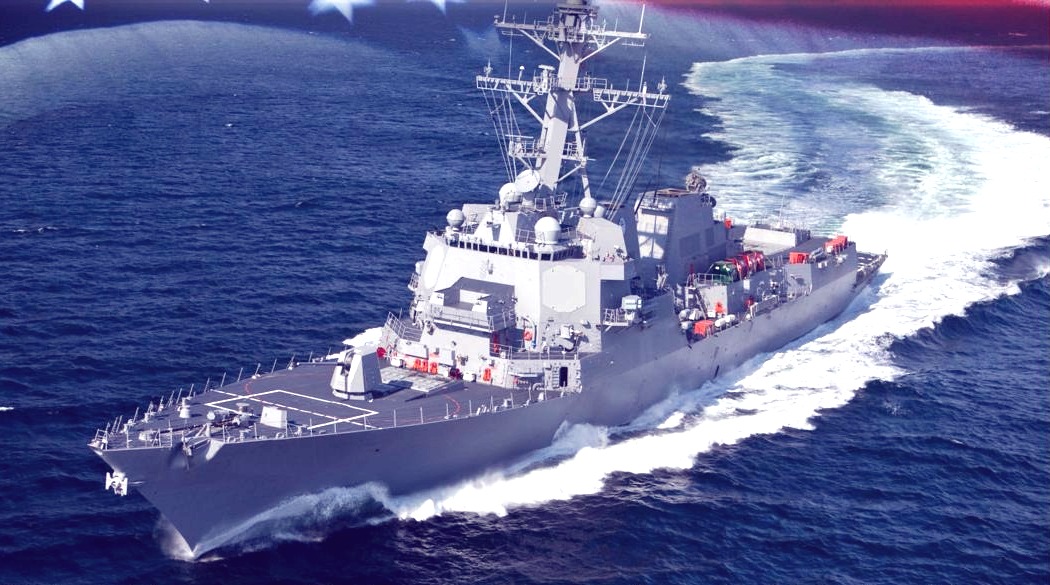
On 11 April 2026, US Central Command (CENTCOM) announced that USS Frank E. Peterson (DDG 121) and USS Michael Murphy (DDG 112) had transited the Strait of Hormuz to begin setting the conditions for a mine clearance operation – one of the most consequential maritime clearance missions since the 1991 Gulf War. The mines were laid by Iran’s Islamic Revolutionary Guards Corps (IRGC). The waterway through which roughly 20% of the world’s oil transits was, in practical terms, closed.
But what the announcement did not say was how long clearance would take or how many assets would be needed. According to a House of Saud article, analysts tracking the operation have revised clearance timelines from the original 51-day benchmark drawn from the 1991 Kuwait experience to between 60 and 90 days for partial throughput restoration, and that estimate, as the article noted, assumes Iran stops laying mines.
Naval mines are not a new problem. They are not even a newly recognised one. The Stimson Center, writing in March 2026 during the current crisis, described Tehran’s mining threat as “designed to impose maximum costs by halting commercial traffic, raising oil prices, and forcing the United States into a slow, hazardous, and politically fraught clearance campaign”. The point was not lost on those gathered at UDT 2026 in London this month. Speaking to Shephard on the margins of the conference, Retired Rear Admiral Jon Pentreath CB OBE, who navigated a minehunter during his Royal Navy (RN) career, framed the economics.
“For an adversary, mine warfare is a relatively cheap, relatively effective way of causing significant disruption to both military operations and, as we’re seeing, commercial operations. So much of the world’s trade goes by sea. If you can close a choke point, you have a pretty immediate and pretty dramatic impact. And mines are a supremely good way of doing that”, Pentreath said.
Pentreath’s co-discussant, Retired Captain Adrian Pierce, who had commanded minehunters as well as anti-submarine warfare frigates during his Royal Navy career – pointed to the cost not just in hardware but in institutional knowledge. “You’ve got to train people. You’ve got to build all those techniques around manipulating the data and how you’re going to find, fix and then deal with whatever it is you find. You can’t just turn it on. If you wanted to deal with that problem now, that’s an investment you should have been making so many years ago”.
The Royal Navy’s recently retired Hunt-class mine countermeasures vessels (MCMVs) were built around 40 years ago. The Sandown-class, broadly considered more capable, entered service between 25 and 30 years ago. The Sandown-class is now operating well past its designed service life, with obsolescence costs climbing as spare parts thin and upgrades become increasingly bespoke.
The United Kingdom is not alone. Australia has suggested that it will not directly replace its existing mine countermeasures (MCM) programme, a decision Pierce drew a direct comparison to British procurement drift. “You can see that in navies around the world, they’ve decided not to”, he said, referencing the broader international retreat from MCM investment. “It’s not just in Europe”.
Western navies have, with varying degrees of enthusiasm, oriented their MCM strategies towards the eventual deployment of autonomous and remotely operated systems. The Belgian and Dutch navies are jointly developing a replacement MCM fleet. France and the UK are pursuing a comparable programme. Germany has been working with remotely controlled mine warfare vessels for some years. These programmes represent the right direction of travel, but the technology is not yet fully mature.
“The shift into autonomy for mine sweeping, mine hunting, mine warfare is driven by two things”, Pentreath said.
- One is an assumption, probably a flawed assumption, that it’s going to be cheaper, because getting away from crewed platforms, which have quite a big crew, you sort of assume an autonomous platform is going to be cheaper.
- The other is that mine warfare is dangerous, and removing the human from that danger zone has got to be advantageous.
Pierce has measured on; whether the aspiration had yet translated into deployable capability. “Whether any of them are truly fly-away is another question”, he said of the remotely controlled MCM programmes. “There is a footprint with this stuff”. The goal of containerised, rapidly deployable MCM packages, launched from vessels taken up from trade remains an aspiration rather than a fielded solution.
For industry, the Hormuz operation is functioning as a demand signal, and not in the transactional sense of triggering an immediate procurement competition, but as the kind of high-visibility strategic event that reshapes how defence ministries and procurement officials frame their MCM requirements.
“If you’re a small or medium-sized enterprise who has some particular bit of technology and you’ve struggled a little bit to land it over the last few years because mine countermeasures hasn’t been the thing at the moment, that will clearly be much easier now”, Pentreath said. “It will reinforce their message”.
Pierce pointed to the crossover between defence and commercial subsea technology as a route through which new entrants have already been contributing to MCM capability. “A lot of the work done on remotely operated vehicles and autonomous vehicles has been in support of oil and gas and other elements of energy and underwater infrastructure. The defence industry has been taking ideas from that, and vice versa, for many years”.
Both Pentreath and Pierce noted a tangible shift in tone at UDT 2026 itself. “The number of conversations in the last few days here at UDT on mine warfare – we haven’t really had those the last few years,” Pentreath said. Pierce added that ongoing programmes: the UK-French initiative, the Belgian-Dutch programme and others, would now be under pressure to accelerate delivery. “They will no doubt be asking themselves how quickly they can speed them up”, Pentreath interjected.
MCM fleets are small, old and have been politically easy to cut. The Strait of Hormuz has just made them considerably harder to ignore.
Team Maverick.







Netanyahu Meets Trump at White House for Eighth Bilateral Talks Amid Regional Tensions
Jerusalem/Washington, July 2026 : Israeli Prime Minister Benjamin Netanyahu arrived at the…

Netanyahu Meets Trump at White House for Eighth Bilateral Talks Amid Regional Tensions
Jerusalem/Washington, July 2026 : Israeli Prime Minister Benjamin Netanyahu arrived at the White House …