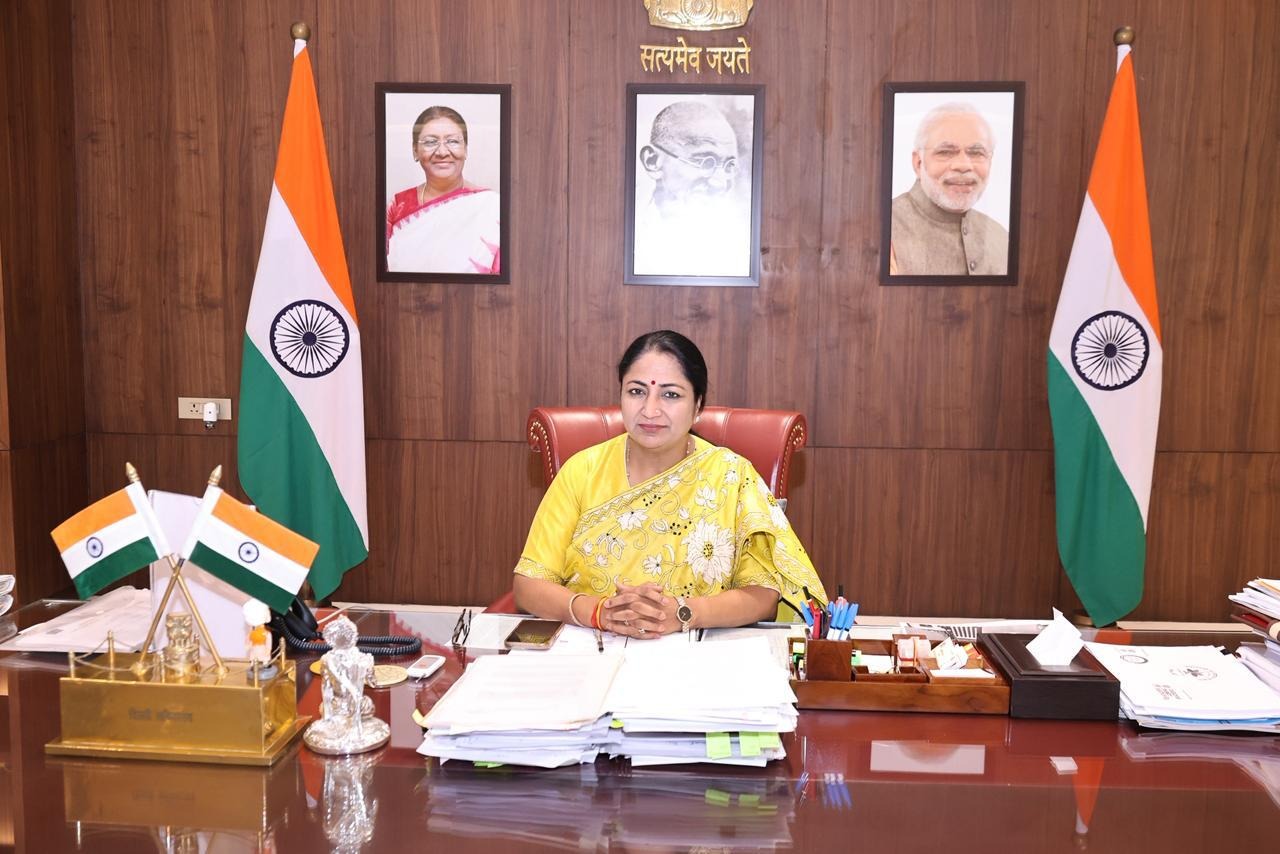
Delhi Govt Tightens Heat Wave Action Plan to Boost Effectiveness

Special Focus on ‘Thermal Hotspots’, CM Rekha Gupta Directs Implementation of Scientific Strategy
If Necessary, School children to be Sent Home After Being Administered ORS Solution; Workers to be Provided with Caps and Gamchas
Departments told to ensure water for birds and animals
Cool Roofs, Misting Systems, and a 24×7 Helpline to Provide Relief: Chief Minister Rekha Gupta
Power Demand May Touch 9,000 MW; Extensive Measures to Ensure Uninterrupted Supply
New Delhi, April 2026 : With temperatures soaring and heatwave conditions intensifying, Delhi Chief Minister Smt. Rekha Gupta has directed officials to strictly implement the Heat Wave Action Plan 2026 on the ground. After a detailed review, she said the government’s approach this year is more scientific and robust than in previous years. The plan places special emphasis on protecting vulnerable groups such as school children and construction workers, while also extending support to animals and birds by ensuring access to water. Dedicated teams are being deployed to respond to heatwave-related emergencies.
Scientific mapping of ‘thermal hotspots’
Highlighting the growing severity of heat conditions, the Chief Minister pointed out a worrying trend, Delhi has seen temperatures exceeding 40°C for nearly 40 consecutive days over the past two to three years. This year, the government has carried out a detailed scientific assessment of the entire city using satellite data to identify high-risk zones. Among the most sensitive areas is Ayanagar in South Delhi, which has previously recorded temperatures as high as 45.5°C. Najafgarh (43.7°C in 2025) and Safdarjung (46.8°C in 2023) have also seen extreme highs. Other emerging thermal hotspots include Wazirpur, Jahangirpuri, Khayala, Shastri Park, Vishwas Nagar, Harkesh Nagar, Hari Nagar and Delhi Gate.
In addition, densely populated fringe areas such as Sawda, Mubarakpur Dabas, Bhalswa, Nand Nagri, Gokulpuri and Bakkarwala are experiencing pronounced ‘heat island’ effects. Special protection measures have been designed for these zones, including increased ORS stock at health centres, deployment of Quick Response Teams, and additional water tankers.
Support for animals and birds
In a notable directive, the Chief Minister asked departments particularly DDA, the Education Department and the Delhi Jal Board to ensure water and shade not just for people but also for animals and birds. Water containers for birds and dedicated water points for stray animals are being installed across parks, bus depots and school campuses.
Safety net for children and workers
To protect school children, the government may administer an ORS solution before they leave school, if required, to reduce the risk of dehydration during their commute. For construction workers, strict measures will be enforced during peak heat hours. Outdoor work may be halted between 12 noon and 3 pm during severe heatwave conditions. Workers will also be provided with drinking water, caps and Gamchas coverings for protection against the sun. First-aid kits and ice packs will be made available at worksites when needed.
Cool roofs and misting systems
Delhi is also moving towards a ‘Cool Roof Policy 2026’. Reflective coating has already been applied over nearly 28,674 sq ft at the Kashmere Gate ISBT, helping reduce indoor temperatures. To further combat heat, high-pressure misting systems will be installed at bus stops, while anti-smog guns will be used to cool densely built-up areas.
Emergency preparedness and helplines
The Health Department has placed over 339 health centres across all 13 districts on alert. More than 30 hospitals have set up dedicated five-bed ‘cool rooms’ for heatwave patients. Residents can seek help through the 24×7 helpline numbers 1077, 1070 or 112. Additionally, 39 Quick Response Teams and trained ASHA workers are on standby. Arrangements for cold drinking water and ORS will be made at busy public locations, including bus stops and terminals.
Ensuring uninterrupted power supply
Reiterating the government’s firm commitment regarding power supply, Chief Minister Smt. Rekha Gupta stated that electricity demand in the capital could set a new record during the summer season this year. It is estimated that Delhi’s peak power demand will exceed the 9,000 MW mark this season, a figure significantly higher than last year’s maximum demand of 8,442 MW. In light of this massive demand, we have issued strict directives to the power distribution companies, making it clear that any cuts in supply will not be tolerated.
According to the Chief Minister, a special priority protocol has been implemented to ensure uninterrupted 24×7 power supply to critical facilities such as hospitals, Water Treatment Plants (WTPs) and mobile towers. The power companies have also been directed to keep additional Quick Response Teams and mobile transformers on standby to address issues related to transformers and technical faults, thereby ensuring that supply can be restored immediately in the event of any emergency.




Revenue Minister Reviews Disaster Preparedness as Deep Depression Nears
Bhubaneswar, July 2026: Revenue and Disaster Management Minister Shri Suresh Pujari today …

Revenue Minister Reviews Disaster Preparedness as Deep Depression Nears
Bhubaneswar, July 2026: Revenue and Disaster Management Minister Shri Suresh Pujari today chaired a …