Tamil Nadu Breaks 59-Year Pattern as TVK Emerges Single Largest Party

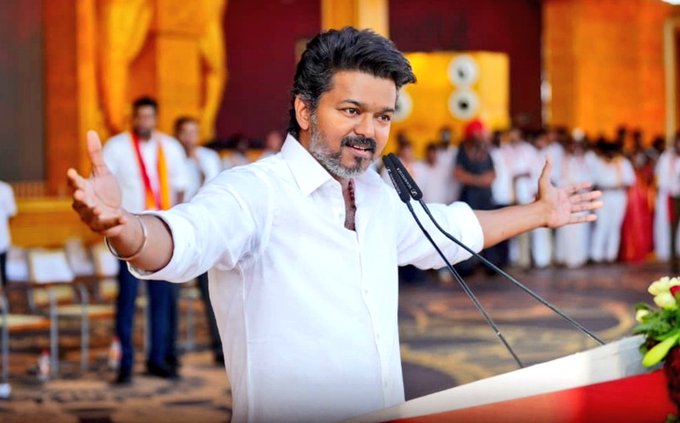
Chennai, May 2026 : In a landmark political shift that marks the most significant transformation in Tamil Nadu since 1967, the state is now poised to witness the possibility of a government led by a non-Dravidian party for the first time in nearly six decades. The 2026 Assembly election has delivered a fractured but historic mandate, with actor-turned-politician C. Joseph Vijay’s Tamilaga Vettri Kazhagam (TVK) emerging as the single largest party, while falling short of the majority required to form a government independently.
A watershed election in Tamil Nadu’s political history
Since the rise of the Dravidian movement in 1967, Tamil Nadu politics has been dominated by two regional giants—the Dravida Munnetra Kazhagam (DMK) and the All India Anna Dravida Munnetra Kazhagam (AIADMK). For nearly 59 years, governance in the state alternated between these two parties, shaping a deeply entrenched bipolar political structure.
The 2026 election has disrupted this long-standing pattern. TVK, launched just two years ago, has not only entered the Assembly in its first attempt but has also emerged as the single largest party, fundamentally altering the state’s political equation.
Across all 234 constituencies, counting began at 8 a.m. on May 4, starting with postal ballots. In several constituencies, counting extended up to 25 rounds due to tight margins and multi-cornered contests. The results reflect a highly fragmented mandate, with no single alliance achieving an absolute majority.
Final seat distribution and alliance breakdown
TVK secured 107 seats, making it the largest party in the Assembly. However, it remains 11 seats short of the 118-seat majority mark required to form a government.
The DMK, which led the outgoing government, suffered a major setback, winning only 60 seats from the 164 it contested. Its alliance partners contributed modestly—Congress (5), CPI (2), CPI(M) (2), Viduthalai Chiruthaigal Katchi (VCK) (2), Indian Union Muslim League (IUML) (2), and Desiya Murpokku Dravida Kazhagam (DMDK) (1)—taking the Secular Progressive Alliance (SPA) total to 74 seats.
The AIADMK-led alliance finished third with 53 seats. The AIADMK itself secured 47 seats, while its allies—Pattali Makkal Katchi (PMK) (4), Bharatiya Janata Party (BJP) (1), and Amma Makkal Munnetra Kazhagam (AMMK) (1)—added to its tally.
Notably, the Naam Tamilar Katchi (NTK), which had projected itself as a third alternative force, failed to win a single seat despite garnering a notable vote share, underscoring the consolidation of the contest primarily between TVK and the Dravidian majors.
Vote share reveals deeper political realignment
While seat count reflects political outcomes, vote share reveals the depth of the shift. TVK secured 34.92% of the total votes (17,191,040 votes), emerging as the most popular party in terms of voter support.
The DMK followed with 24.20% (11,914,215 votes), while the AIADMK secured 21.24% (10,455,742 votes). The results highlight a three-way division of the electorate, but with TVK clearly establishing itself as the leading force in public preference.
Other parties secured significantly smaller shares: Congress 3.36%, BJP 2.97%, CPI(M) 0.60%, CPI 0.66%, VCK 1.10%, and DMDK 1.18%. Most smaller parties failed to cross even 1% individually, reflecting a polarised and increasingly consolidated voter base.
Vijay’s political breakthrough and symbolic shift
TVK’s rise has drawn comparisons with legendary leader M. G. Ramachandran, who broke away from the DMK in the 1970s and reshaped Tamil Nadu’s political order. While MGR formed a government with a lower vote share in 1977, Vijay has surpassed him in terms of popular vote percentage, though not in seat conversion efficiency.
TVK’s campaign strategy focused on youth appeal, anti-incumbency sentiment, and a narrative of political renewal. The party successfully penetrated urban strongholds and even made significant inroads into traditional DMK bastions.
In Chennai, Kancheepuram, Tiruvallur, and Chengalpattu regions, TVK won nearly three-fourths of the constituencies. The party also registered victories in over 10 constituencies previously held by senior DMK ministers, signalling a major erosion of the ruling party’s base.
Major defeats for DMK leadership
The election delivered several shocking defeats for DMK leaders. Chief Minister M. K. Stalin himself lost in Kolathur to a TVK candidate, marking one of the most symbolic reversals in Tamil political history.
Senior ministers including Health Minister M. Subramanian, Education Minister Anbil Mahesh Poyyamozhi, Finance Minister P.T.R. Palanivel Thiagarajan, and several others were defeated across key constituencies. Altogether, more than 10 sitting ministers lost their seats.
Even seasoned leader Durai Murugan suffered defeat, while multiple other cabinet members lost by significant margins, reinforcing the scale of anti-incumbency.
AIADMK and BJP face electoral setback
The AIADMK’s decline from 66 seats in 2021 to 47 in 2026 reflects continued erosion of its political base. Despite alliance support, it was unable to regain its previous dominance.
The BJP’s performance was particularly disappointing. Despite contesting 27 seats, it won only one, with its candidate Bojarajan securing a narrow victory in Udhagamandalam. Prominent leaders, including state president Nainar Nagendran and former governor Tamilisai Soundararajan, suffered defeats.
The alliance between AIADMK and BJP had projected itself as an alternative government, but the results indicate limited resonance with voters.
Post-poll arithmetic and fragile majority equation
Despite being the largest party, TVK faces a complex arithmetic challenge. With 107 seats, it requires at least 11 additional MLAs to reach the majority mark of 118 in the 234-member Assembly.
This has triggered intense political speculation about post-poll alignments. Smaller parties such as VCK, CPI, CPI(M), and Congress are now being viewed as potential kingmakers. However, none have made formal commitments.
The Indian National Congress, which remains a key national ally of DMK, is reportedly considering an “outside support” arrangement rather than joining a formal coalition.
CPI state leadership has stated it will consult internally before deciding. VCK leaders have also expressed caution, citing ideological concerns and the risks of aligning too closely with either major bloc.
National political reactions and implications
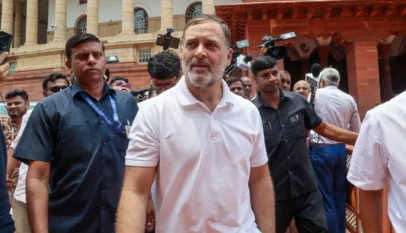
Leader of the Opposition in the Lok Sabha Rahul Gandhi congratulated Vijay, calling the result a reflection of “the rising voice of youth” and thanking Congress workers for their efforts in Tamil Nadu and Puducherry.
Political observers believe the outcome signals a generational shift in Tamil Nadu politics, with younger voters playing a decisive role in reshaping the state’s political identity.
A turning point after six decades
As negotiations continue and political alignments take shape, Tamil Nadu stands at a historic crossroads. After nearly 59 years of uninterrupted Dravidian dominance, the rise of TVK signals a profound realignment in voter sentiment, party structure, and governance expectations.
Whether Vijay can convert this unprecedented electoral performance into a stable government now depends on post-poll negotiations and the willingness of smaller parties to support a new political experiment. Regardless of the final outcome, the 2026 election has already rewritten the political script of Tamil Nadu.

Revenue Minister Reviews Flood Situation During Aerial Survey of Flood-Affected Areas
Bhubaneswar, July 2026 : Hon’ble Minister, Revenue & Disaster Management, Shri S…
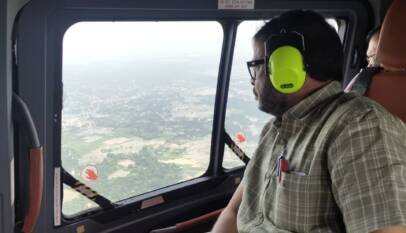
Revenue Minister Reviews Flood Situation During Aerial Survey of Flood-Affected Areas
Bhubaneswar, July 2026 : Hon’ble Minister, Revenue & Disaster Management, Shri Suresh Pujari conducted …