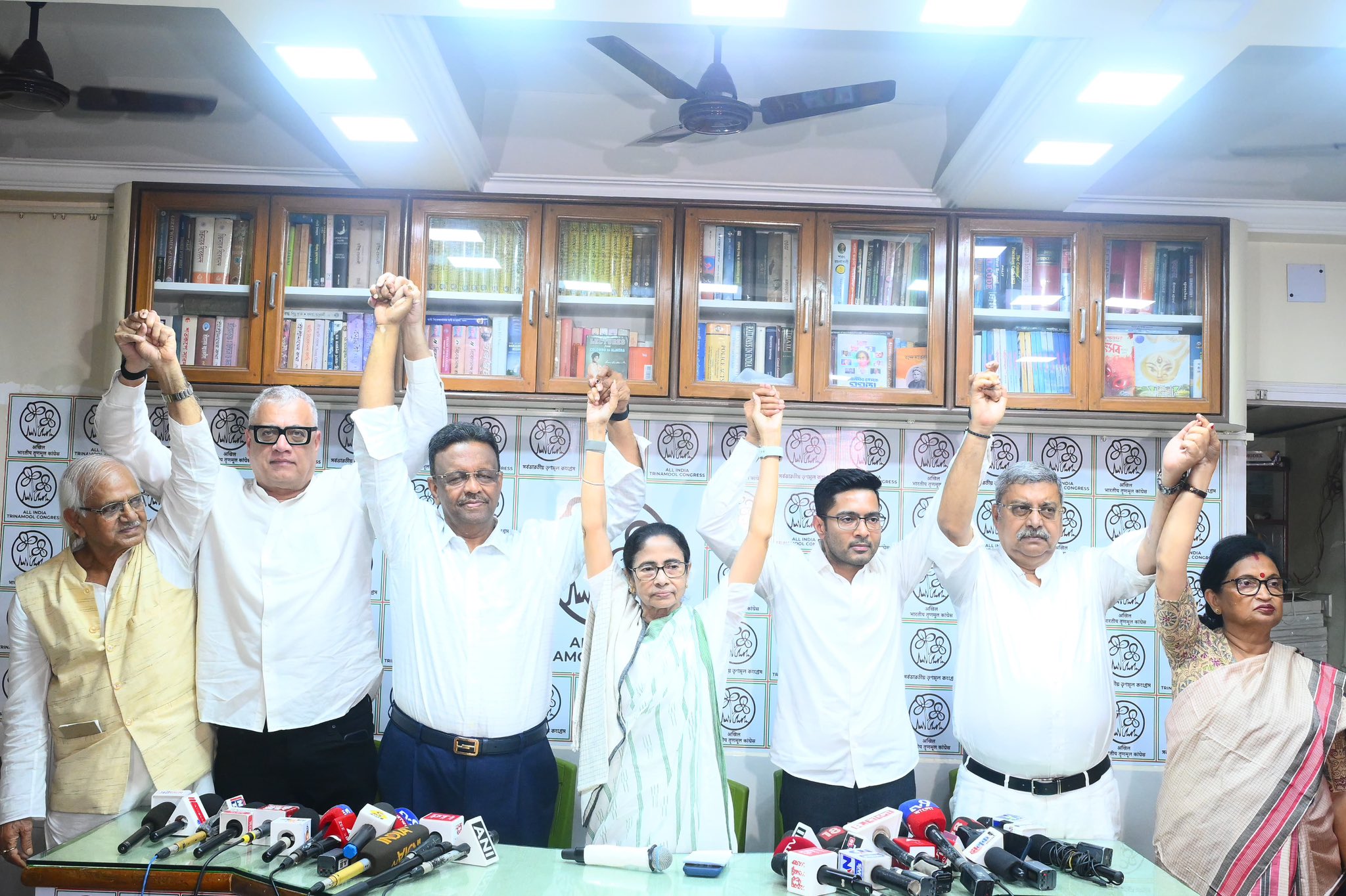
BJP Scripts Historic Victory in West Bengal, Mamata Banerjee and Key Ministers Defeated

May 2026 : In a dramatic political shift, voters in West Bengal delivered a resounding mandate against the ruling Trinamool Congress, ending its 15-year rule and ushering in a historic victory for the Bharatiya Janata Party (BJP). The outcome marks a turning point in the state’s political landscape, as the BJP secured power in a region long considered politically resistant to its influence.
At the centre of this electoral upheaval was the defeat of Chief Minister Mamata Banerjee, who lost her stronghold of Bhabanipur to her former aide-turned-rival Suvendu Adhikari by a margin exceeding 15,000 votes. This loss carried symbolic weight, particularly as Banerjee had narrowly lost to Adhikari in 2021 by less than 2,000 votes, making this a decisive reversal of fortunes. Her defeat signaled not just personal rejection but a broader erosion of support for her leadership.
The scale of the setback for the Trinamool Congress was unprecedented. Out of the 35 ministers in the outgoing cabinet who contested the 2026 Assembly elections, 22 were defeated—amounting to nearly 63 per cent of the leadership being voted out. This sweeping rejection extended across key departments and regions, reflecting deep voter dissatisfaction with the government’s performance.
Analysts have described the verdict as a “silent mandate,” noting that many voters refrained from openly expressing their preferences during the election process. In fact, several polling agencies were unable to conduct or publish reliable exit polls, citing reluctance among voters to disclose their choices. This unusual trend has been attributed to a climate of caution among the electorate, with many choosing to communicate their verdict solely through the ballot box.
The defeat of senior ministers underscored the breadth of the anti-incumbency wave. Prominent figures such as Aroop Biswas, who handled housing and power, lost from Tollygunge, while noted academic and cultural personality Bratya Basu was defeated in Dum Dum. Chandrima Bhattacharya, a senior minister, lost from Dum Dum Uttar, and Shashi Panja was unseated in Shyampukur. Other key leaders, including Sujit Bose, Indranil Sen, and Becharam Manna, also failed to retain their seats.
The list of defeated ministers continued across the state. Swapan Debnath in Purbasthali Dakshin, Bulu Chik Baraik in Mal, and Pradip Majumdar in Durgapur Purba were among those voted out. Tribal affairs minister Birbaha Hansda lost in Binpur, while senior leader Manas Ranjan Bhunia was defeated in Sabang. In industrial regions, Moloy Ghatak lost from Asansol Uttar, and Siddiqullah Choudhury, a prominent minority face and cabinet member, was defeated in Monteswar.
Several ministers lost by significant margins, further highlighting the depth of voter discontent. Nirmal Majhi suffered a massive defeat in Goghat, losing by over 49,000 votes. Udayan Guha, responsible for North Bengal development, was defeated in Dinhata by more than 17,000 votes. Siddiqullah Choudhury lost by over 14,700 votes, while Pradip Majumdar conceded Durgapur Purba by nearly 31,000 votes. Chandrima Bhattacharya, who had captured Dum Dum Uttar in 2021, lost it this time by a margin exceeding 26,000 votes to a relatively new BJP candidate.
The electoral outcome appears to reflect widespread dissatisfaction on multiple fronts, including governance, infrastructure, employment, and allegations related to corruption and women’s safety. Ministers handling critical portfolios such as education, transport, industry, and social welfare were among those defeated, indicating that voter discontent cut across sectors.
What stands out in this election is the collective nature of the rejection. Rather than targeting isolated leaders or local issues, voters seem to have expressed a broader disapproval of the government’s overall functioning and leadership style. The defeat of Mamata Banerjee in her own constituency further amplified this sentiment, symbolizing a decisive shift in public mood.
For the BJP, this victory is particularly significant given the historical context. West Bengal is often associated with the ideological roots of the Bharatiya Jana Sangh, the precursor to the BJP, yet the party had struggled for decades to gain a foothold in the state. This election marks its first successful bid for power in the region, signaling a major expansion of its political footprint.
As the state prepares for a transition in leadership, the results are likely to have far-reaching implications not just for West Bengal but for national politics as well. The decisive nature of the mandate underscores the electorate’s demand for change and accountability, setting the stage for a new political chapter in the state.





Israel Rejects Gaza Disarmament Plan, Says IDF Will Stay Until Hamas Fully Disarmed
Jerusalem, July 2026 : Israel has reiterated its strong opposition to the US-backed plan f…

Israel Rejects Gaza Disarmament Plan, Says IDF Will Stay Until Hamas Fully Disarmed
Jerusalem, July 2026 : Israel has reiterated its strong opposition to the US-backed plan …