Trump-Jinping Summit To Focus On US Arms Sales To Taiwan, And The Iran War.

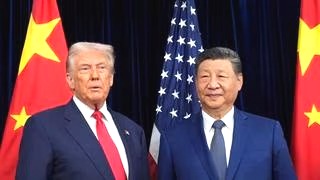
Beijing/Washington; May 2026: US President Donals Trump is scheduled to meet Chinese President Xi Jinping in Beijing on May 14th and 15th. As a prelude PRC Foreign Minister Wang Yi spoke with US Secretary of State Marco Rubio on April 30th. Meanwhile, the PRC Vice Premier He Lifeng called US Secretary of the Treasury Scott Bessent and US Trade Representative Jamieson Greer on the same day to discuss a range of diplomatic, security, and trade issues in preparation for the summit.
Both countries have recently placed trade and investment restrictions on each other despite a one-year trade war “truce” since October 2025. The PRC implemented a new law on April 07th that establishes its ability to punish foreign firms that “undermine China’s industrial and supply chain security”, including by complying with sanctions placed on the PRC or attempting to decouple from PRC supply chains. The United States has implemented trade restrictions to de-risk supply chains and prevent advanced technology transfer to the PRC. The United States is also pursuing investigations on PRC goods that could lead to new tariffs by the end of 2026, following the US Supreme Court’s cancellation of Trump’s “reciprocal” tariffs under the International Emergency Economic Powers Act (IEEPA) in February.
Xi will likely urge Trump to decrease or stop arms sales to Taiwan. The Trump administration approved an arms package to Taiwan worth 11 billion US dollars (USD) in December 2025 and is reportedly considering an even larger arms package worth 14 billion USD that it has yet to publicly disclose. On the otherside, Wang Yi has warned Marco Rubio that the Taiwan issue is the “biggest risk factor” in US-PRC relations. Xi previously warned Trump in a February 04 call against selling more arms to Taiwan, implying that it may jeopardize the upcoming Trump-Xi summit or other aspects of bilateral relations. Xi will likely have less leverage to push Trump on arms sales now that Taiwan’s legislature has approved a 25 billion US dollar (USD) special defense budget to fund both the December 2025 sale and future sales.
Xi may also push Trump to lift Iran-related sanctions on the PRC and work to resume the flow of trade through the Persian Gulf. The US blockade of Iranian ports and Iran’s intermittent closure of the Strait of Hormuz harm PRC energy security. The PRC is more resilient to economic shocks from the Iran War than most of its neighbors, however, and reaps some geopolitical benefits from the war and blockade continuing, so Xi is unlikely to strongly prioritise pressuring Trump to end the war at this time.
IRAN ISSUE –
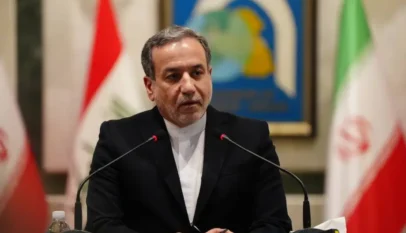
Iranian Foreign Minister Abbas Araghchi had visited the People’s Republic Of China (PRC) for the first time since the Iran War began and met with PRC Foreign Minister Wang Yi, possibly to coordinate positions before the Trump-Xi meeting. Wang and Araghchi met on May 6 in Beijing to discuss the war. The PRC’s stated positions are:
The PRC believes that a “complete cessation of hostilities” is imperative and that restarting the conflict is unacceptable;
- The PRC supports Iran safeguarding its sovereignty and security;
- The PRC hopes that all parties will “respond promptly to the strong calls from the international community” to restore normal and safe passage through the Strait of Hormuz;
- The PRC “appreciates Iran’s commitment not to develop nuclear weapons,” while recognizing Iran’s right to develop peaceful nuclear energy;
- The PRC advocates for the Gulf countries, including Iran, to “take their destiny into their own hands” and build a regional security architecture.
Araghchi claimed that the “political crisis cannot be resolved through military means” and that the issue of opening the Strait of Hormuz “can be resolved as soon as possible” Araghchi commended the PRC’s peace efforts and likewise expressed support for a postwar regional security architecture.
Wang’s rhetoric signaled that Beijing wants active hostilities to end, likely to avoid further erosion of Iranian regime stability, protect energy infrastructure throughout the region, and prevent conflict escalation that harms PRC interests.
Wang’s comments on the Strait of Hormuz were less direct, however, calling for a “prompt response” to the “international community’s” desire to restore normal passage through the Strait, rather than clearly stating that Beijing wants Iran to reopen the Strait. Wang may have used indirect language to avoid offending his Iranian interlocutor. Other PRC officials have more explicitly called for Iran to reopen the Strait of Hormuz and stop attacking the Gulf States, while still blaming the United States and Israel for initiating the war.
The PRC likely wants the Strait reopened eventually but can weather the economic shock longer than most East Asian states, given PRC oil reserves and diversified energy supply. The PRC benefits from the war depleting US military stockpiles, weakening US alliances, and creating energy vulnerabilities for US allies that the PRC can exploit, however. Beijing’s conflicting interests with regard to the war likely limit the extent of its peacemaking efforts.
Wang’s comments on the Iranian nuclear program and on Gulf countries taking security “into their own hands” likely indicate that the PRC does not intend to get heavily involved in resolving either issue directly. The PRC likely does not support Iran getting nuclear weapons and may be gently reminding Iran to honor commitments it made under the late Ayatollah Ali Khamenei to not build them. The PRC is advocating for Middle Eastern regional security architecture to reduce US influence in the Middle East while allowing the PRC to balance relations with Iran and the Gulf States without getting entangled in their conflicts.
The PRC has confirmed on May 07th, that a PRC owned oil tanker came under attack in the Strait of Hormuz for the first time on May 04th, shortly before the Wang-Araghchi meeting. The ship was off the coast of the United Arab Emirates when it was hit. The vessel’s chief engineer said it was “still unclear” who fired on the ship or what kind of munition was used. A PRC Ministry of Foreign Affairs (MFA) spokesperson said on May 08th, that there were no reported crew casualties and reiterated the importance of restoring safe passage through the Strait.
In a very important development, on 01st May 2026, the National Financial Regulatory Administration (NFRA) of the People’s Republic Of China has verbally instructed banks to suspend new loans to independent oil refineries, also known as teapot refineries, under US sanctions. In mitigating the stalemate, PRC Ministry of Commerce (MOFCOM) activated an anti-sanctions law for the first time on May 02nd. This may indicate PRC efforts to mitigate financial sector risks from US sanctions without projecting weakness ahead of negotiations. US Treasury Secretary Scott Bessent announced new sanctions on May 01st against PRC-based oil terminal operator Qingdao Haiye Oil Terminal Co, Qingdao Haiye’s President Li Xinchun, and a Hong Kong-based vessel management company for importing sanctioned Iranian crude oil.
The United States have sanctioned independent oil refinery Hengli Petrochemical on April 24. The NFRA privately and verbally instructed large banks to temporarily suspend new loans to the 05 US designated teapot refineries, review business dealings with those refineries, and not extend new yuan-denominated credit nor call in existing loans.
Meanwhile, MOFCOM have issued an injunction on May 2 that banned the “recognition, enforcement, and compliance” with US sanctions against designated teapot refineries, contradicting the NFRA directive. A MOFCOM spokesperson stated that the sanctions violate international law and that the basis for the injunction is the 2021 Measures for Blocking the Improper Extraterritorial Application of Foreign Laws and Measures, also known as the “Blocking Rules”.
The law gives the PRC legal authority to determine when foreign restrictions do not apply to PRC entities and allows affected parties harmed by foreign sanctions compliance to sue sanctions-complying entities for compensation. The Blocking Rules may deter compliance with sanctions, and thus reduce the effectiveness of those sanctions in cutting off funds to Iran. PRC entities can apply to MOFCOM for exemptions to the Blocking Rules, however.
NFRA and MOFCOM appear to have issued contradicting guidance, with the former directing banks to abide by US sanctions and the latter signaling that the PRC believes it has the strength to defy US sanctions. This may be the PRC’s attempt to avoid publicly showing that US sanctions have any effect on the PRC economy, as the NFRA’s guidance was privately and verbally issued, lest they face a weakened negotiating position ahead of US President Donald Trump’s meeting with General Secretary Xi Jinping on May 14 and 15.
The PRC is the largest buyer of Iranian oil, purchasing over 80 percent of Iranian crude oil before the war. Less than 07% of the PRC’s overall energy consumption is from Middle Eastern oil. The PRC also has insulated itself from supply shocks by diversifying its energy supplies and stockpiling nearly 1.4 billion barrels of oil in December 2025. The PRC has continued to purchase Iranian oil throughout the war by accepting imports from tankers that were already in transit or were storing oil at sea when the war began, despite the blockage of the Strait of Hormuz. The PRC’s invocation of the anti-sanctions law, together with new April 07th and April 13th regulations on industrial and supply chain security, expands the PRC legal framework to counter foreign sanctions and other related measures and prosecute foreign companies perceived to be acting against PRC interests.
Team Maverick.





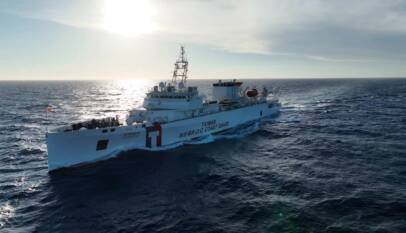
Taiwan Reaffirms South China Sea Claims After Philippines Submits Scarborough Shoal Chart to UN
Taipei, Aug 2026 : Taiwan on Sunday reaffirmed its sovereignty claims over islands in the …
Taiwan Reaffirms South China Sea Claims After Philippines Submits Scarborough Shoal Chart to UN
Taipei, Aug 2026 : Taiwan on Sunday reaffirmed its sovereignty claims over islands in …