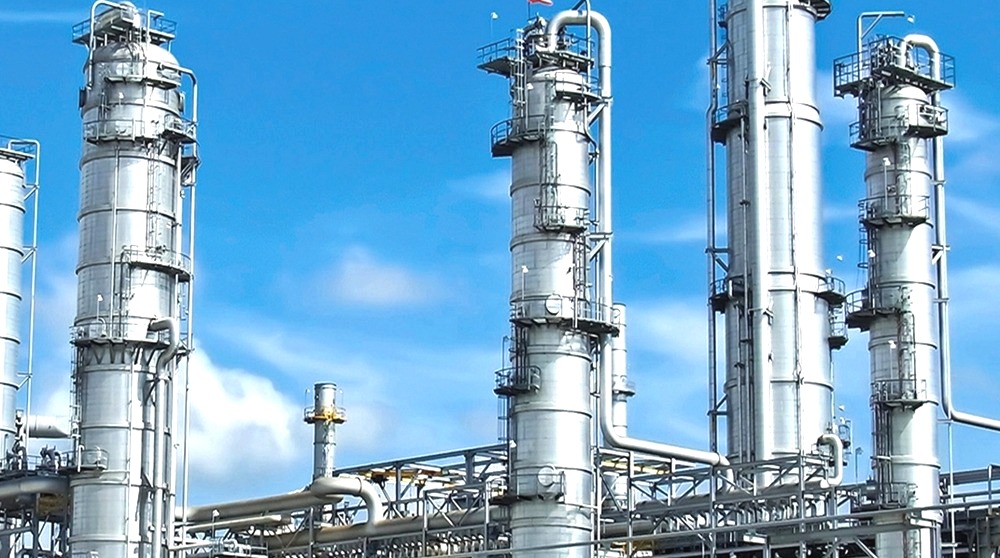
Iran Develops Homegrown Ultrasonic Flare Gas Meter Without Reverse Engineering.

Tehran; May 2026: Iranian technologists have successfully designed and produced an ultrasonic flare gas flowmeter based on acoustic time-of-flight technology without reverse engineering, a feat that reduces the domestic oil and gas industry’s reliance on foreign models. In an interview with the Islamic Republic of Iran Broadcasting (IRIB), Mohammad Mehdi Kharidar, the technical manager of the product at the knowledge-based company, provided details about the device.
He stated that work on the project began in 2021 and that the entire product has been fully designed and built. This product is not the result of purchasing a foreign sample and reverse engineering; rather, it is a completely domestic design. He added that all components of the product, including electronic circuits, signal processing, software, and user interface, had been developed by the local team.
In the area of digital signal processing, Kharidar noted that the team has succeeded in extracting acoustic time-of-flight from sound signals. This work was defined as a doctoral thesis, and two scientific papers have so far been published based on it. According to the team manager, obtaining explosion-proof certification was another major milestone in the product’s development. To receive this certification, a set of technical documents was prepared and specific design parametres were met to prove that the device will not cause explosions or flames in refinery environments. This process took more than one year, he noted.
Regarding exports, he said the company has not yet entered the export market, with its main focus remaining on the domestic market. “Currently, we are in negotiations with local customers”, he noted.
Explaining the foreign models available on the market, Kharidar said two main models were previously purchased by Iran, but imports now face serious difficulties.
One of these products belongs to a German company, and the other belongs to the American company GE Aerospace, which markets its product under the Parametric brand, he said. Other models, including Chinese and Russian versions, are also available, but the common and widely used models in Iran’s industry have been these two brands, he added.
Regarding the domestic target market, the technical manager said that almost any refinery or petrochemical plant with a flare system could be a customer for this product. Kharidar estimated that between 30 and 40 facilities, including refineries and petrochemical plants across the country, are potential customers for the device. On the current status of the project, he said the product has been tested in the laboratory and is now in the preparation phase for a pilot installation at a refinery, with only the installation stage remaining.
However last year on 16th August it was reported that Iran has opened a new phase of a large project to stop flaring of natural gas at oilfields connected to reservoirs in neighboring Iraq.
Iranian President Masoud Pezeshkian used a video link to inaugurate the new unit in NGL 3100, a $1.6 billion petrochemical and refinery facility in the western province of Ilam that is supposed to work mainly on flare gas captured from oilfields. The new phase would enable Iran’s Oil Ministry to capture nearly 2 million cubic metres (mcm) (70 million cubic feet) per day of natural gas that is normally burnt at oil production sites in the region. A first phase of the project was opened in mid-July with a recovery capacity of 84 million cubic feet.
Iran’s Oil Minister Mohsen Paknejad said that flare gas delivery capacity to the NGL 3100 would increase by 45 million cubic feet by October and by another 40 million cubic feet in March, while further stating that the project would enable Iran to capture up to $700 million worth of flare gas per year once it reaches its full capacity in March.
He said the flare gas used NGL 3100 is transferred from oilfields in the south of Ilam using 350 kilometres of pipelines before it is desalinated and processed for delivery to the facility. The minister said the project includes a 100-megawatt (MW) power plant, which supplies 30 MW of its output to Iran’s electrical grid.
Paknejad said that the project creates 150 direct jobs and some 3,000 more in the wider supply chain.
Iran plans to capture up to 15 million cubic metres per day or nearly 5.47 billion cubic metres per year of natural gas from its oilfields until the end of the calendar year in late March. That would be above a target of 4 billion cubic metres per year set in a five-year development plan of the country that ended in 2023. However, an ongoing development plan stipulates that Iran should be able to capture 16 billion cubic metres of natural gas per year from its oilfields by 2028. Team Maverick.






Japanese F-2 Fighter Reloaded With New Large Stealth Cruise Missile Under Its Wings.
Gifu Air Field, Kakamigahara City, Japan; August 2026: Yesterday (Friday – 31st July 2026)…
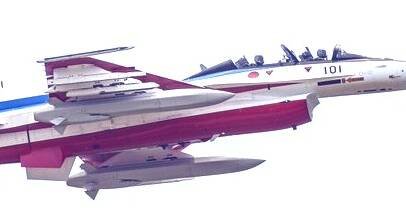
Japanese F-2 Fighter Reloaded With New Large Stealth Cruise Missile Under Its Wings.
Gifu Air Field, Kakamigahara City, Japan; August 2026: Yesterday (Friday – 31st July 2026) …