PM Luxon Rebuts OECD Report On New Zealand Governments LNG Plans.

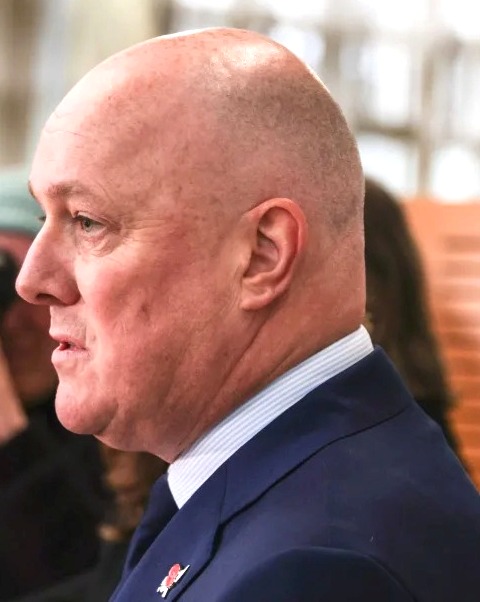
Wellington; May 2026: Prime Minister of New Zealand Christopher Luxon today (12th May 2026) has dismissed the OECD’s warnings about the government’s LNG plans, citing the report to be “a load of rubbish” and says he remains “very interested” in setting up an import facility. In its annual economic survey of New Zealand published last week, the Organisation for Economic Cooperation and Development (OECD) said the LNG proposal risked locking in fossil dependence and instead recommended investment in non-gas generation like biomass or pumped hydro.
Speaking to reporters at the Parliament today, Luxon said he was “not interested” in the OECD’s findings or recommendations. “The report’s a load of rubbish”, he said. Luxon said the coalition government was not going to tolerate “bumper sticker” policies or the sort of “kumbaya and mush” that Labour pursued while it was in power. “We’re the ones that are dealing with a failed energy policy from the last administration”.
In February this year (2026), the government announced a “definitive decision” to build a liquefied natural gas (LNG) import facility in Taranaki, designed to reduce price spikes in dry years and the associated risk premium built into power bills. The whole-of-life cost was to be spread across all electricity users through a new levy. Luxon later has softened his rhetoric, after conflict flared up in the Middle East, and said no final decisions had been made on the proposal: “If it doesn’t stack up, we won’t be doing it”. Today however, PM Luxon have said the government remained “very interested” in the plan.
“We’re continuing our procurement process. We said that we’d come back in the middle of the year having looked at the business case for it. We are very interested in it”, he said. “It’s just making sure the commercials stack up”, while adding further that “the government was pursuing an ‘and-and-and’ strategy by also encouraging a ‘renewables boom’ and strategic reserves in Huntly and Marsden Point”.
In a separate assertion, the Energy Minister Simeon Brown said the government would take into account the situation in the Middle East when making final decisions on its plan of action. But, when asked about the OECD’s findings, Brown said the government had considered all the alternatives and had identified the LNG facility as its “preferred option”. He then turned his sights on the Labour Party, accusing its leader Chris Hipkins of being “the man without a plan”. He said Labour’s Lake Onslow hydro proposal was a “boondoggle” which would not have delivered any energy till 2037.
Adding further Simeon Brown said, “We cannot stand by and wait till 2037 to resolve this issue. It needs to be resolved much faster than that. Look, there will be alternatives that companies continue to invest in – more renewable energy generation, geothermal and others. But we need to solve the dry year risk”.
Meanwhile Chris Hipkins told reporters the LNG import facility was a “gold-plated bad idea” which would cost New Zealanders more through a new gas tax. “It’s going to cost every New Zealand household more money in their power bills. It’s going to raise the price of power in New Zealand, and it’s going to make us more dependent on highly volatile fossil fuels”.
OECD REPORT –
New Zealand needs to reform the pension and electricity sectors, expand and strengthen capital markets, and speed up digitisation of the health sector. The economy is recovering, but the Middle East conflict would delay growth and stoke a near term spike in inflation, while the economy also faced long standing challenges from low productivity, high public debt, and too little investment in key sectors and companies.
Growth of 1.4% was forecast for this year, rising to 2.3% in 2027, while inflation was expected to hit a high of 3.4% this year before falling back into the 1-3% target zone. “Heightened uncertainty and higher energy prices weigh on real incomes, confidence and domestic demand”, the OECD report said.
“Inflation will rise in 2026 due to higher energy and transport costs before gradually easing toward the 2% midpoint, reflecting spare capacity and easing tradeable inflation pressures. “Although considerable uncertainty surrounds the timing and magnitude of this adjustment, given the risk of further shocks”.
The OECD’s advice for the Reserve Bank (RBNZ): –
“Our advice is for monetary policy to remain focused on the medium-term price stability while looking through the temporary first round effects of the energy price shock”, OECD director Luiz de Mello said.
The report said the RBNZ’s monetary policy mandate should be held unchanged for five year periods to “reinforce the RBNZ’s strong operational independence and credibility”.
The OECD joined other international agencies in calling for the age of eligibility for superannuation to be raised by indexing it to life expectancy, with measures to take account of different ethnicities and work backgrounds. It also called for a reversal of the taxation of retirement savings from the current charge on contributions and investment earnings but tax exempt withdrawals.
Finance Minister Nicola Willis said there were no plans to raise the eligibility age for NZ super, and rejected the call for tax changes as a big hit on government finances. “We are trying to get the books back in balance so radical tax reforms that require a deficit on the government books are not something we are exploring right now.”
Other OECD suggestions included measures to improve capital markets, including government financial support, to allow small and medium sized firms to look at listing on the stock exchange and being able to raise finance in New Zealand.
The OECD report also called for changes to the electricity sector to break its reliance on costly natural gas which has underpinned high prices. “Affordability will remain elusive without breaking the gas-electricity price link by scaling non-gas long-duration firming, expanding demand response and strengthening competition”.
It said there should be a mandatory firming and flexibility market with likely a minority investment from the government in independent-led, long-duration non-gas firming generation. Firming is the provision of immediate reserve electricity when renewable supplies decline. In New Zealand that has been done largely through burning gas and coal.
The OECD said the proposal to import liquified natural gas (LNG) should be seen only as a short term option.
Team Maverick.




Shivakumar Says Congress United, Assures Women Will Get Cabinet Berth
Bengaluru, Aug 2026 : Karnataka Chief Minister D.K. Shivakumar on Monday sought to dismiss…
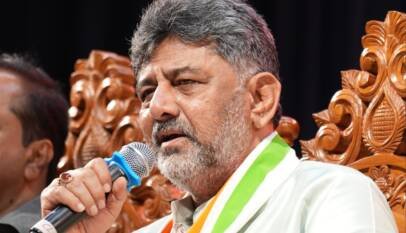
Shivakumar Says Congress United, Assures Women Will Get Cabinet Berth
Bengaluru, Aug 2026 : Karnataka Chief Minister D.K. Shivakumar on Monday sought to dismiss …