Military Balance In Cyprus Favours Turkey.

May 2026: A report compiled by the Cyprus Centre for Strategic Studies which has been published today (May 15th 2026) clearly asserts that the balance of military forces in Cyprus remains clearly in Turkey’s favour, as the Turkish forces maintain significant superiority in manpower, firepower, aeronautical capabilities and operational support, while the upgrading of military infrastructure in the north has further strengthened Ankara’s strategic position in the Levant.
According to the analysis, there are approximately 3.6 Turkish soldiers for every National Guard member on the island. In battle tanks, the ratio stands at roughly 2.1 to 1 in favour of Turkish forces.
Cyprus centre has affirmed that Turkish military units in Cyprus do not operate independently, describing them instead as an extension of the broader military and administrative system of Turkey.
Based on international military models concerning operational support structures, the report estimated that Turkey possesses external logistical and administrative support capacity ranging between 80,000 and 102,000 personnel capable of sustaining forces in potential theatre of operations on the island. By contrast, the report said the republic has ‘limited strategic depth and clearly smaller capabilities for long term operational support’, which directly affects deterrence capabilities.
The analysis argued that Cyprus must adapt its defence strategy towards ‘a more flexible and technologically oriented defence model’, pointing to developments in unmanned systems, electronic warfare and information capabilities as factors reshaping modern warfare. It also stated that available defence spending remains below declared objectives, adding that achieving expenditure equal to 02% of GDP ‘exclusively on armaments does not seem realistically achievable under the current fiscal and geopolitical data’.
The report identified Greece as ‘the most important external strategic factor for the security of Cyprus’, while adding that the presence of the Greek force ELDYK carries ‘an institutional, historical and political strategic dimension’ but does not by itself alter the military balance on the island.
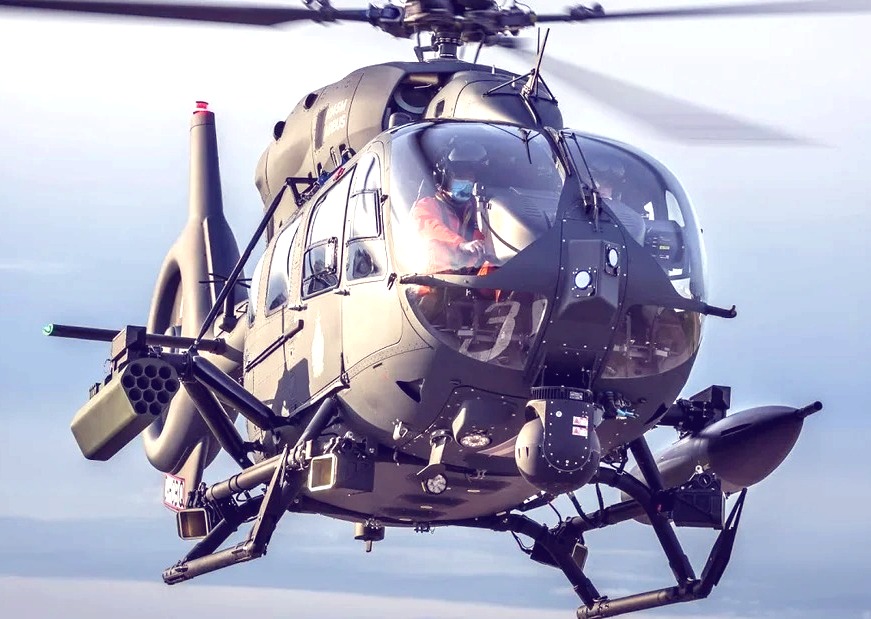
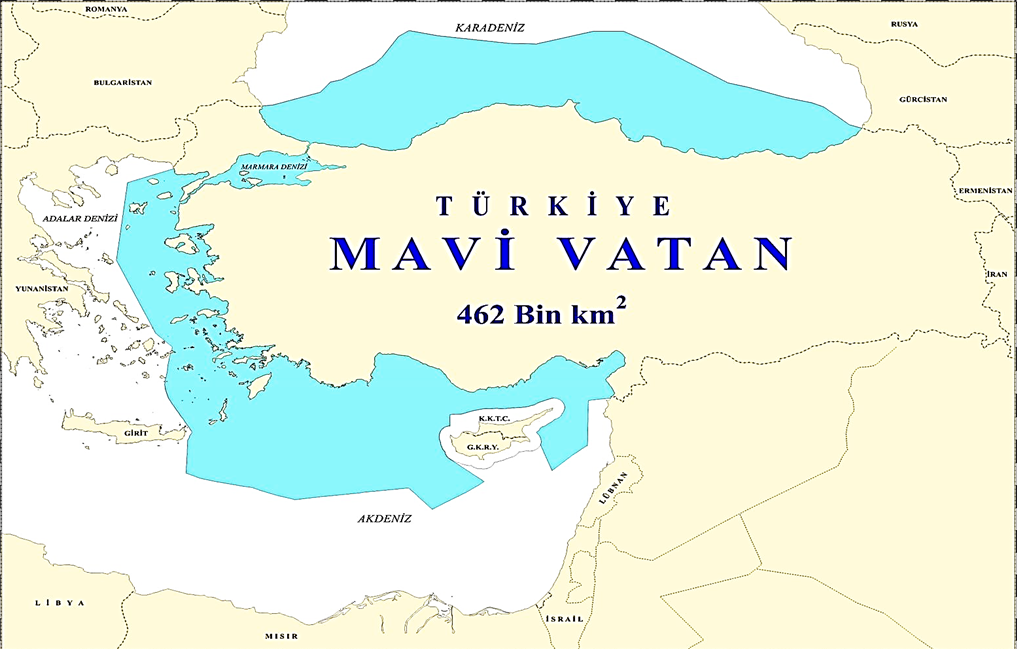
The centre also referred to Turkey’s infrastructure expansion in the north, including the Lefkoniko air base, which it said now functions as an operational centre for Bayraktar unmanned aerial vehicles, including the Akinci platform. Projects linked to naval and surveillance infrastructure in Ayios Sergios, and the Apostolos Andreas area were also highlighted as part of Ankara’s wider “Blue Homeland” strategy in the Levant.
The report said Cyprus is attempting to strengthen deterrence through new defence acquisitions, including Barak MX systems, anti-tank weapons, unmanned aerial systems and electronic warfare capabilities, though replacing Russian made equipment with Western systems remains ‘a complex and highly costly undertaking’. The Cyprus Centre for Strategic Studies, founded by Dr Aristos Aristotelous, is an independent research institution dedicated to military analysis related to Cyprus and the wider Levant.
Turkey’s Blue Homeland Strategy –
Last Wednesday (May 13th 2026), Cypriot MEP Loukas Fourlas called on the European Union to abandon what he described as a policy of equidistance towards Turkey, after Ankara confirmed work on draft legislation linked to the ‘Blue Homeland’ (Mavi Vatan) maritime doctrine. In his letters addressed to European Council President, Antonio Costa; European Commission President, Ursula von der Leyen; European Parliament President, Roberta Metsola, Fourlas have written, “Turkey is attempting to ‘institutionalise illegality and expansionist policy’ by incorporating the doctrine into domestic law”.
The intervention followed a recent conference in Ankara, where Turkish officials and academics confirmed the existence of a draft bill concerning maritime jurisdiction. According to Turkish officials, the proposed legislation would define maritime jurisdictions and establish the legal basis for activities within those zones.
Professor Cagri Erhan, acting chair of the Turkish presidency’s board of security and foreign policies, said the bill stemmed from efforts to preserve ‘the rights and interests of the Turkish nation’ under international law.
Turkish maritime law centre director, Mustafa Baskara, said the legislation aligned with Turkey’s maritime policies in the Black Sea, eastern Mediterranean and waters surrounding the north of Cyprus and Libya. “For us, the Blue Homeland is wherever a ship flying the Turkish flag reaches”, he remarked. The ‘Blue Homeland’ doctrine, developed by former Turkish naval officers, sets out Ankara’s claims over maritime zones in the Levant, Aegean and Black Sea. The doctrine has been strongly opposed by both Cyprus and Greece, which argue that Turkish claims violate international maritime law and the sovereign rights of neighbouring states.
In his letter, Fourlas said Ankara was attempting to transform ‘arbitrary claims into alleged state legitimacy’, while disregarding international law, the law of the sea and ‘the European legal order itself’. He also referred to recent incidents inside the buffer zone in Cyprus and accused Turkey of attempting to create ‘new faits accomplis’ through pressure and intimidation. “The harassment of farmers, the violations and threats against citizens, constitute unacceptable actions that violate every concept of international legality”, he wrote, adding that Turkey was “consciously choosing tension and destabilisation”.
Fourlas warned that continued European tolerance towards Ankara risked undermining the EU’s credibility. “A candidate state for accession cannot violate the sovereign rights of member states without consequences”, he said. The intervention came amid renewed tensions in the Aegean after a Turkish warship reportedly harassed the cable laying vessel Ocean Link between Kos and Astypalaia earlier on Wednesday (13th May 2026).
Greek media reported that the Turkish vessel claimed the area fell under Turkish jurisdiction and ordered the ship to leave. The Greek frigate Adrias, which was operating nearby, intervened and informed the Turkish vessel that the ship was operating within Greek jurisdiction, allowing the work to continue.
The Ocean Link had been conducting underwater surveys and cable laying operations linked to the SEA-SPINE telecommunications project after receiving permits from Greek authorities. Turkish officials in Ankara insisted the proposed maritime legislation was not directed against any specific country.
Team Maverick.






Govt. to formulate policy to provide relief in encroachment cases involving poor and landless families: CM
Chief Minister Thakur Sukhvinder Singh Sukhu today laid the foundation stone of the new Mu…

Govt. to formulate policy to provide relief in encroachment cases involving poor and landless families: CM
Chief Minister Thakur Sukhvinder Singh Sukhu today laid the foundation stone of the new …