Delhi Tops Logistics Ease Rankings, CM Rekha Gupta Says: A Proud Moment for the National Capital

From PM Gati Shakti to Metro Cargo, Delhi Emerges as India’s Modern Logistics Hub
Delhi Ranked No. 1 in Logistics, Now Preparing for Green Warehousing and Freight Corridors: Chief Minister Rekha Gupta
Our Resolve is to Make the National Capital the Country’s Most Modern and Sustainable Logistics Hub: CM Rekha Gupta
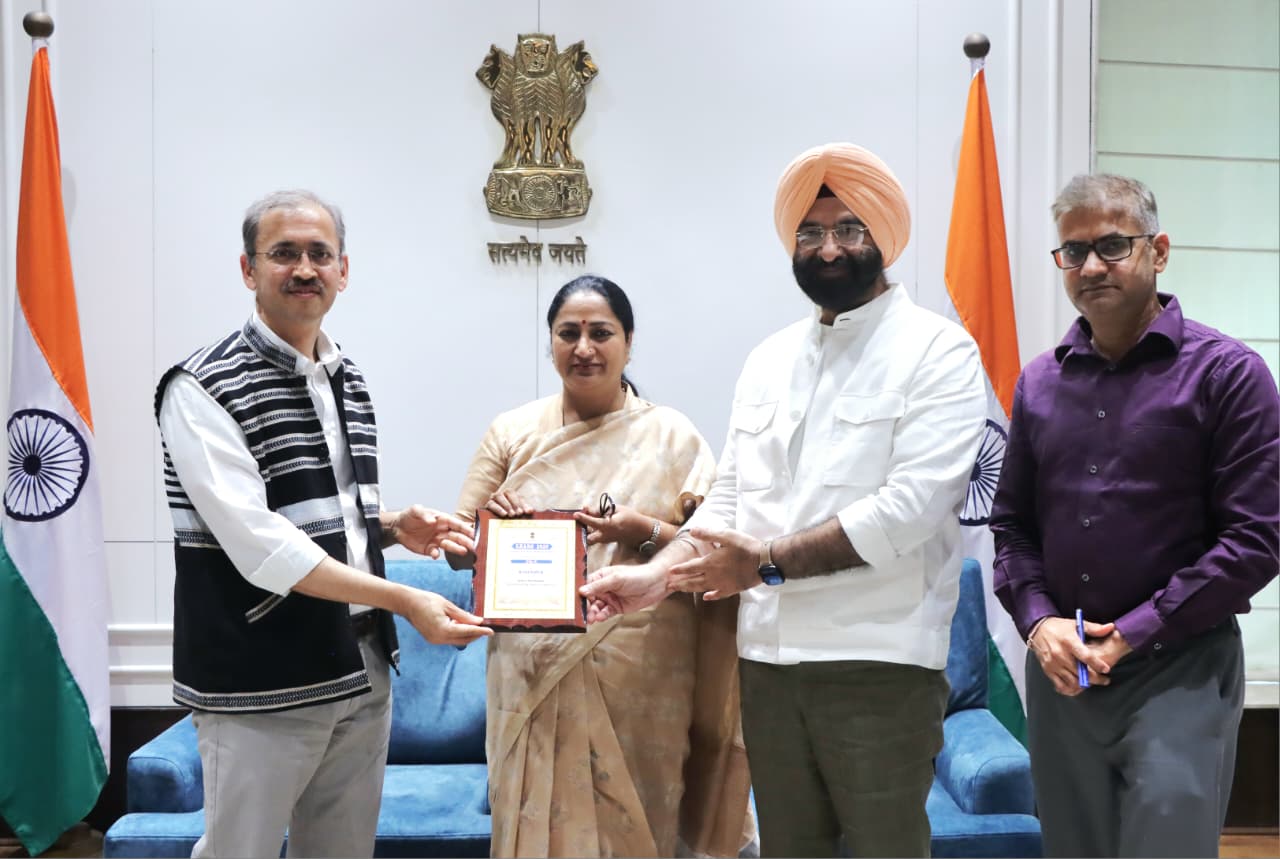
New Delhi, May 2026 : Delhi Chief Minister Mrs. Rekha Gupta said that the national capital has secured a place in the country’s highest “Exemplary” category in the Logistics Ease Across Different States (LEADS) 2025 Index. She described it as a matter of pride for Delhi. The Chief Minister said that this achievement is the result of the Delhi Government’s continuous efforts to strengthen logistics infrastructure, enhance multimodal connectivity, improve ease of doing business, and promote technology-driven governance.
The Chief Minister informed that the LEADS Index evaluates States and Union Territories on key parameters such as logistics infrastructure, logistics services, regulatory framework, digital integration, sustainability, and stakeholder perception. Under the index, States and Union Territories are classified into four categories, Exemplary, High Performer, Accelerators, and Growth Seekers, with “Exemplary” being the highest category. Delhi has shown continuous progress by moving from the “Achiever” category in LEADS 2023 and 2024 to securing the top position in the country this year.
Chief Minister Rekha Gupta said that under the Prime Minister Gati Shakti Yojana, the Delhi Government has prepared a City Logistics Plan, which has already received approval and will soon be notified. This will make urban freight movement, last-mile delivery systems, and urban freight management more streamlined and efficient. Out of the 46 mandatory layers on the PM Gati Shakti portal, 38 have already been successfully integrated. In addition, 317 extra layers have also been added. This has strengthened coordinated infrastructure planning and project implementation among various departments.
The Chief Minister said that through the Delhi Single Window System, the process of approvals and permissions related to logistics and industrial investments has been simplified and expedited. At the same time, through the Unified Logistics Interface Platform (ULIP), facilities for API-based real-time monitoring and data exchange have been developed, leading to better coordination among various logistics stakeholders. Under the pothole-free roads campaign undertaken by the Public Works Department, large-scale improvements have been carried out on Delhi’s major and internal roads. Simultaneously, the operationalisation of the country’s first Regional Rapid Transit System (RRTS), the Namo Bharat Corridor, has strengthened passenger and freight connectivity between Delhi and surrounding regions.
The Chief Minister said that the Phase-IV expansion of the Delhi Metro, including the Dwarka Expressway link, has given new momentum to multimodal urban transport in the capital. Simultaneously, major economic corridors such as the Urban Extension Road-II (UER-II) and the Delhi-Dehradun Expressway are being developed, thereby strengthening freight transportation and regional connectivity. Delhi’s performance in the use of digital systems and technology-based governance has also remained better than the national and Union Territory averages.
According to the Chief Minister, the Delhi Government is finalising the Warehousing and Logistics Policy 2025. The objective of this policy is to reduce congestion in freight movement, eliminate regulatory complexities, and address gaps in logistics infrastructure. In addition, under the Delhi Government’s EV Policy and Electric Fleet Expansion Plan, a target has been set for the procurement of 2,808 e-buses during 2024-25, while a target of over 10,000 buses has been fixed by 2025, of which nearly 80 percent will be electric. Delhi’s performance in EV adoption and public charging infrastructure has also remained better than other Union Territories.
The Chief Minister said that through the Solar Policy, the use of renewable energy in logistics and warehousing infrastructure is being promoted. Meanwhile, expansion of DTC and DEVI bus services is aimed at strengthening public transport and reducing road traffic as well as freight movement pressure. Through the Delhi Industrial Policy, a conducive environment is being created for logistics investments and employment generation. In addition, under the DMRC Metro-Cargo Pilot Project in 2025, parcel transportation through the Metro during non-peak hours has been started in partnership with Blue Dart, which will reduce dependence on roads and ease pressure on road corridors.
The Chief Minister said that the Delhi Government is giving special emphasis to the creation of a skilled workforce. Through the policies of the Delhi Khadi and Village Industries Board (DKVIB), micro and artisan-based industries are being connected with logistics networks. At the same time, institutions such as the Delhi Skill and Entrepreneurship University (DSEU), IRILMM, and TransGlobe Academy are promoting training and skill development in the logistics sector. Delhi’s performance in the availability of skilled human resources has also remained better than the Union Territory average, due to which the capital is emerging as one of the country’s leading logistics human capital hubs.
Chief Minister Rekha Gupta said that in LEADS 2025, Delhi has performed better than the national and Union Territory averages across all major parameters, including logistics infrastructure, logistics services, operations and regulatory framework, as well as sustainability and equity. Delhi has secured strong scores in areas such as roads, railways, airports, digital systems, warehousing, and cold storage. The capital has also performed better than the national average in transport services, terminal services, and skilled manpower. In addition, Delhi has demonstrated excellent performance in interstate freight movement facilitation and policy reforms. However, the need to further strengthen the grievance redressal mechanism has also been identified, and the Government will work on it seriously.
She said that increasing women’s participation in green warehousing and the logistics sector is among the Delhi Government’s upcoming priorities. The Delhi Government is now working towards developing organised transport hubs in the capital to reduce unregulated roadside loading and make freight transport systems more systematic. The Government is also working on increasing the use of the Metro rail network for light freight transportation during night and non-peak hours to reduce pressure on road corridors. Simultaneously, plans are also being worked upon to develop dedicated freight corridors in order to separate commercial and passenger traffic on busy roads.
Chief Minister Rekha Gupta said that mechanisation, automation, and digital integration at air cargo terminals will be promoted to improve productivity and efficiency. In addition, multimodal logistics hubs linked to Metro and RRTS stations will be developed, where electric bus feeder services for first and last-mile connectivity will also be provided. The Delhi Government is working with full commitment to make the national capital the country’s most modern, sustainable, efficient, and future-ready logistics and connectivity hub.
From a Charity Photo to the World Cup Final: Messi and Yamal Set for Extraordinary Reunion
New York, July 2026 : Football has produced countless remarkable stories over the years, b…

From a Charity Photo to the World Cup Final: Messi and Yamal Set for Extraordinary Reunion
New York, July 2026 : Football has produced countless remarkable stories over the years, …