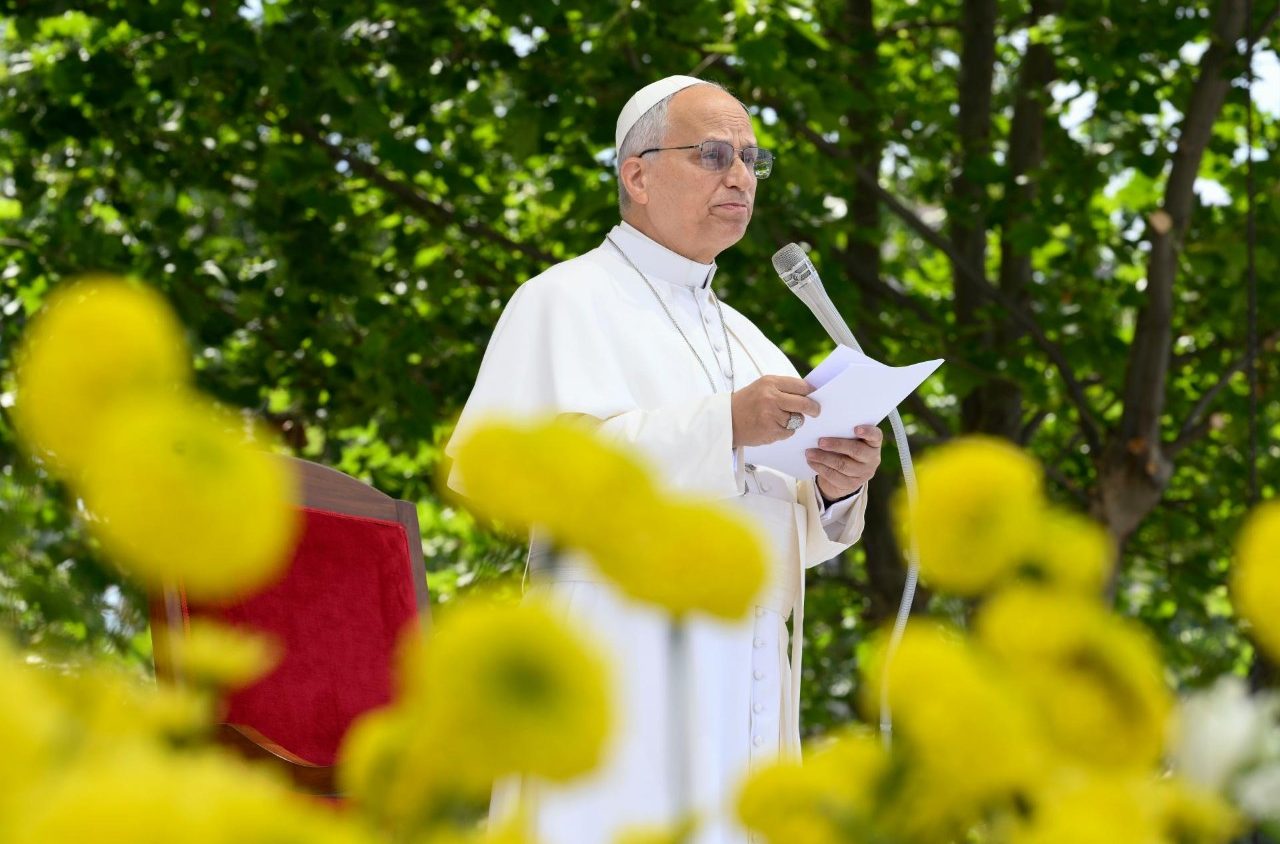
Pope Leo XIV Urges Responsibility, Justice and Environmental Renewal During Visit to Italy’s ‘Land of Fires’

Vatican, May 2026: Pope Leo XIV delivered a deeply emotional and socially charged message during his pastoral visit to Acerra in southern Italy, calling on citizens, public institutions, Church leaders, and local communities to unite in defending human dignity, protecting the environment, and rejecting the culture of indifference that has devastated parts of the region for decades.
Speaking to mayors, local residents, religious leaders, activists, and families affected by environmental pollution, the Pope said the purpose of his visit was to strengthen hope and responsibility among people living in the area commonly known as the “Land of Fires” — a territory long associated with toxic waste dumping, illegal burning of industrial refuse, and environmental crimes linked to organised criminal networks.
“This, dear friends, is the principal meaning of my presence in Acerra today: to confirm and encourage that stirring of dignity and responsibility that every honest heart feels when life springs forth and is immediately threatened by death,” Pope Leo XIV said during his address.
The Pope described Acerra and the wider Campania region as places of great beauty and resilience, insisting that years of environmental destruction and criminal exploitation should not define the identity of its people.
“I am pleased to spend this Saturday morning among you and to visit once again a region whose beauty no injustice can erase,” he said.
The “Land of Fires” became internationally known after widespread reports of illegal disposal and burning of toxic industrial waste across areas surrounding Naples. Environmental groups and health experts have repeatedly raised concerns over pollution, contamination of soil and water, and the possible rise in serious illnesses, including cancer, among residents.
During his visit, Pope Leo met with families who lost loved ones to illnesses believed to be linked to environmental contamination. Reflecting on those encounters, he acknowledged the deep suffering endured by local communities and said the pain of innocent families should become a force for moral awakening and social transformation.
“This land has paid a high price,” the Pope said. “It has buried many of its children and witnessed the suffering of innocents.”
He emphasised that the suffering experienced by local families imposes a moral responsibility on society to act decisively and ethically.
“The value and weight of that suffering compel us to try together to become witnesses to a new covenant,” he said.
Pope Leo stressed that the region is now facing a crucial moment — one that requires not denial or silence, but active remembrance, responsibility, and meaningful change.
According to the Pope, environmental degradation is not only an ecological issue but also a profound moral and social crisis. He warned that resignation, indifference, and shifting blame onto others create fertile ground for illegality and social decay.
“Fatalism, complaining, and shifting blame onto others are the breeding ground of illegality and the beginning of the desertification of consciences,” he warned.
Calling for collective action, Pope Leo urged every individual and institution to take personal responsibility in defending life and the common good.
“Let each of us take responsibility, let us choose justice, let us serve life,” he appealed.
“The common good comes before the business interests of a few, before sectional interests, whether small or great.”
Throughout his address, the Pope repeatedly linked environmental protection with human dignity, justice, and ethical development. Echoing themes associated with Pope Francis’ landmark environmental encyclical Laudato si’, Pope Leo said ecological culture cannot be limited to temporary or fragmented solutions.
Instead, he argued that societies need a deeper transformation in the way they understand progress, economic growth, and their relationship with nature.
He criticised economic systems that prioritise profit, exploitation, and unchecked consumption over public wellbeing and environmental sustainability.
“How much waste, squandering, and poison have come from a model of growth that has almost bewitched us, leaving us sicker and poorer,” he said.
The Pope warned that genuine healing for communities like Acerra would require not only legal action against environmental crimes but also a broad cultural and moral shift involving governments, industries, religious institutions, and ordinary citizens.
According to him, real change must include “a true change in economic, civic, and even religious mentality.”
Pope Leo also paid tribute to priests, religious workers, activists, and local citizens who courageously exposed environmental crimes in the region despite intimidation and resistance.
He praised those who embraced the spirit of Laudato si’ and worked to build what he described as a missionary, outward-looking, and socially engaged Church.
“Walking together, overcoming self-referentiality, daring prophecy despite resistance and threats, is what the Lord asks of us,” he said.
The Pope further emphasised the importance of education in creating long-term social and environmental change. He said education should not only focus on children and young people but also on adults, employers, workers, political leaders, and religious communities.
“Everyone has something to give, but first one must learn how to receive,” he said.
According to Pope Leo, societies become stronger when people remain willing to learn from one another and work collectively toward the common good.
He warned against the growing tendency among some people to believe that creating a better world for future generations is no longer possible.
“Leaving a better world to our children has become too lofty an ambition for some,” he observed.
However, he insisted that the mission of raising responsible future generations remains achievable and essential.
“The educational commitment is within our reach and it is a priority,” he said.
The Pope also called for stronger cooperation between institutions, civic groups, schools, businesses, and local communities to confront organised crime and support positive social initiatives.
He urged public and private organisations to strengthen alliances that promote justice, education, environmental responsibility, and social inclusion.
According to him, these partnerships can help dismantle criminal networks while encouraging healthier and more sustainable models of development.
“It will not only oppose and dismantle criminal alliances, but positively connect and multiply the best forces and the great ideas already present in your hearts,” he said.
Pope Leo concluded his address with a message of hope, urging people to rediscover richer forms of life rooted in human relationships, gratitude, solidarity, and respect for the land.
“Let us therefore learn to be rich in a different way,” he said, calling for societies to become “more attentive to relationships, more committed to valuing the common good, more attached to the land.”
He appealed to residents to protect the environment with the same care they would show toward their own homes and families.
“The problems of this home are our problems; its beauty is our beauty,” the Pope said.
He concluded by encouraging communities not to surrender to despair but to remain vigilant and hopeful about the future.
“We have the task of keeping watch like sentinels in the night,” Pope Leo XIV said. “We can be among those who will behold the new dawn.”
Team Maverick.

Amarnath Yatra Resumes After Six-Day Rain Halt, Pilgrims Hail Safety Arrangements and Renew Their Journey of Faith
Jammu, July 2026 : The annual Shri Amarnath Yatra resumed on Saturday after remaining susp…

Amarnath Yatra Resumes After Six-Day Rain Halt, Pilgrims Hail Safety Arrangements and Renew Their Journey of Faith
Jammu, July 2026 : The annual Shri Amarnath Yatra resumed on Saturday after remaining …