Singapore: Workers Party’s Inner Circle To Ascertain Pritam Singh’s Credibility On June 28.

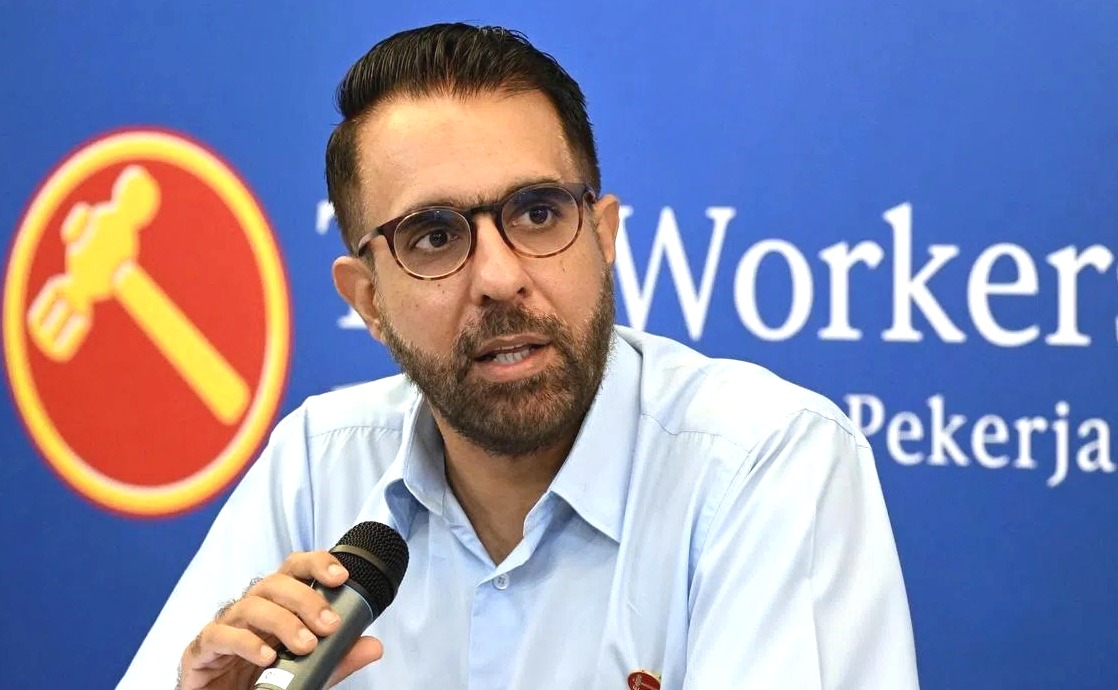
Singapore City; June 2026: The Workers Party’s (WP) inner circle, will meet on the 28th of this month (June 2026) to discuss and ascertain the credibility of the Party Chief Pritam Singh, and whether he is suitable to carry on as Secretary General, during a special cadre members’ conference, which the party announced vide a written notice. The Workers Party has roughly 100 cadres, which form its inner circle and elect its leadership.
The notice had three agenda items:
- First, Singh has been asked to account to the cadres for his two convictions of lying to a parliamentary committee.
- Second, Singh resign as party chief for breaching Article 30 of the WP’s Constitution, which requires any party nominee in public office to be “honest and frank in all his dealings with the party and the people of Singapore”.
- Third, If he does not resign, he will face a secret vote by cadres to determine if he should remain in the post, according to the notice. Singh, in his fourth term as an MP for Aljunied GRC, has been party chief since 2018.
The meeting is scheduled in the afternoon on June 28, and will be chaired by Aljunied GRC MP Gerald Giam, who is WP’s policy research head. A group of long-time cadres had, in December 2025, requested the special cadre members conference, after the High Court upheld Singh’s February convictions.
HIGH COURT’S CONVICTIONS –
On the 04th December 2025, the Singapore High Court had found that even after a period of 02 months, when Pritam Singh was confident that then Sengkang MP Raeesah Khan had lied in Parliament, Workers’ Party chief and Leader of the Opposition Pritam Singh did not intend Raeesah Khan to speak the truth admitting her fault. Having been confronted on Aug 07th, 2021, with the inconvenient truth of a sitting MP from his party having told an unsolicited lie, Mr Singh had hoped that he would not have to deal with it, and was essentially engaged in an exercise of risk assessment and damage control.
Justice of the Court of Appeal Steven Chong said that even after Mr Singh decided on Oct 11, 2021, that Ms Khan should clarify her untruth, it was never his position that she should come clean regardless of whether the issue was raised in Parliament again or whether it was discovered by the Government.
In a 78 page judgment released after he dismissed the appeal, Justice Chong said Mr Singh’s case, at best, was that he wanted Ms Khan to come clean if the issue was raised again in Parliament. If it was not, Mr Singh’s approach “would have been to let sleeping dogs lie – that there was no need to resurrect the issue if it was already buried”, the judge noted. “Alas, that was not to be”.
On the 04th December 2025, in a hearing that lasted less than 10 minutes, Justice Chong said he found the trial judge’s decision to convict Mr Singh of both charges to be supported by the evidence, and upheld Mr Singh’s February 17th conviction on two counts of lying to the Committee of Privileges (COP).
The substance of both charges was that Mr Singh did not intend for Ms Khan to clarify her untruth, and Mr Singh had given false testimony to the COP by claiming that he did, said Justice Chong.
The charges fell within the two-month period where Mr Singh “took no obvious step to get Ms Khan to reveal the truth”, he added in his judgment.
At Mr Singh’s appeal hearing on November 04th 2025, his lawyers contended that the trial judge “ignored crucial pieces of evidence” in finding him guilty. The defence also said Ms Khan’s account was the sole foundation of both charges, even though she had been evasive under cross-examination and had “fabricated completely fantastical evidence”.
However, Justice Chong said the trial judge had carefully evaluated an entire body of evidence in addition to Ms Khan’s testimony. These included contemporaneous WhatsApp messages, the testimony of other witnesses, and Mr Singh’s own conduct during the period in question. “It was the totality of the evidence, rather than merely Ms Khan’s evidence, that persuaded the judge to convict”, he said.
The first charge centred on Mr Singh having told Ms Khan at a meeting on 08th August 2021, that she was to take her lie to the grave.
Justice Chong said that despite Mr Singh’s “vigorous attempts” at disputing this statement, Ms Khan’s WhatsApp message to her WP aides immediately after the meeting ended strongly corroborated her account.
Taking this together with Mr Singh’s conduct, and the WP leaders’ hope or belief at that meeting that Ms Khan’s lie would not be raised in Parliament again, Justice Chong said he agreed with the trial judge.
Noting that a person’s reaction to significant events is usually revealing, Justice Chong said Mr Singh’s “complete failure to follow up” with Ms Khan between August 08 and October 03 was evidence that the WP chief saw no need to proactively clarify the untruth in Parliament. Conversely, steps would have been taken during this period if the intention was to clarify the lie, given the potentially serious political fallout if it were not properly managed, he added.
“In sum, because of Mr Singh’s belief that Ms Khan’s lie was unlikely to surface again, he did not think that there was any need to rock the boat by volunteering the truth”, said the judge.
The second charge centred on Mr Singh having told Ms Khan at their October 03 meeting that “I will not judge you”. The prosecution and defence agreed that Mr Singh had said this, but disagreed on what he meant.
Justice Chong said the meeting must be viewed in the context of its timing, a day before Parliament was due to sit, and Mr Singh wanted to discuss how Ms Khan should respond if her untruth came up then.
The judge said the ordinary meaning of the phrase had to do with someone taking a course of action considered to be objectionable.
“Judgment” carries a pejorative connotation of disapprobation, and a person who does the right thing needs no reassurance against receiving “judgment”, he added. Therefore, ordinarily speaking, the statement would be to reassure the recipient that she will not be judged negatively if she does something objectionable like maintaining a lie, he said. The judge also said it was ‘curious’ that Mr Singh chose not to call other leaders of the WP as witnesses, as they could have corroborated his account of events.
Significantly, this meant that Ms Khan’s testimony that WP chairwoman Sylvia Lim had said at their August 08 meeting that the untruth would probably not come up again was unchallenged. Her view was shared, at least implicitly, by Mr Singh, and Justice Chong said this was a justifiable inference by the trial judge.
It was only at an October 11, 2011, meeting with former WP chief Low Thia Khiang that Mr Singh shifted from not wanting Ms Khan to correct her false statement, to deciding that she should now do so.
Justice Chong said: “Having never taken the position until the October 11 meeting that Ms Khan should clarify the untruth, it necessarily follows that Mr Singh did not intend that she should do so as at the August 08 meeting the focus of the first charge or the October 03rd meeting which is the focus of the second charge”.
After the hearing ended, Mr Singh proceeded to pay his $14,000 fine. “Might as well get it done”. he told reporters at the payment station.
Now coming back to the June 28th meeting – it is mention-worthy that WP’s Constitution states that such a conference can be called at any time by the party’s chair, the central executive committee (CEC), or 10% of the cadre membership or at least 20 cadre members, whichever is higher.
The notice also states that the party will hold its regular cadre meeting and leadership election at 15:00 hours on the same day. These elections, held every two years, are where cadres decide the party’s top leaders, including the secretary-general, chairperson and other members of the CEC.
Singh took over from long-time party chief Low Thia Khiang in April 2018 and has since run unopposed for the top job in the elections.
The special cadre members’ conference comes after the decision by the WP’s CEC, its top leadership body, to issue Singh a letter of reprimand in April 2026 for his convictions.
The CEC considered the findings of a disciplinary panel comprising Sengkang GRC MPs He Ting Ru and Jamus Lim, as well as former Hougang MP Png Eng Huat, which had found that Singh had contravened two articles of the party’s Constitution. These were articles 20(1) and 30.
The WP said the CEC separately considered that “at all material times, Singh did not have any intention to act in a manner contrary to the principles, aims, or objects of the party, or prejudicial to the welfare of the party”. It added that his actions ultimately reflected judgment calls that he had to make.
“In considering the range of potential actions to be taken against Mr Singh, the CEC assessed the totality of the circumstances and has issued a formal letter of reprimand to him”, the party said in its statement.
Team Maverick.


Shivakumar Says Congress United, Assures Women Will Get Cabinet Berth
Bengaluru, Aug 2026 : Karnataka Chief Minister D.K. Shivakumar on Monday sought to dismiss…
Shivakumar Says Congress United, Assures Women Will Get Cabinet Berth
Bengaluru, Aug 2026 : Karnataka Chief Minister D.K. Shivakumar on Monday sought to dismiss …