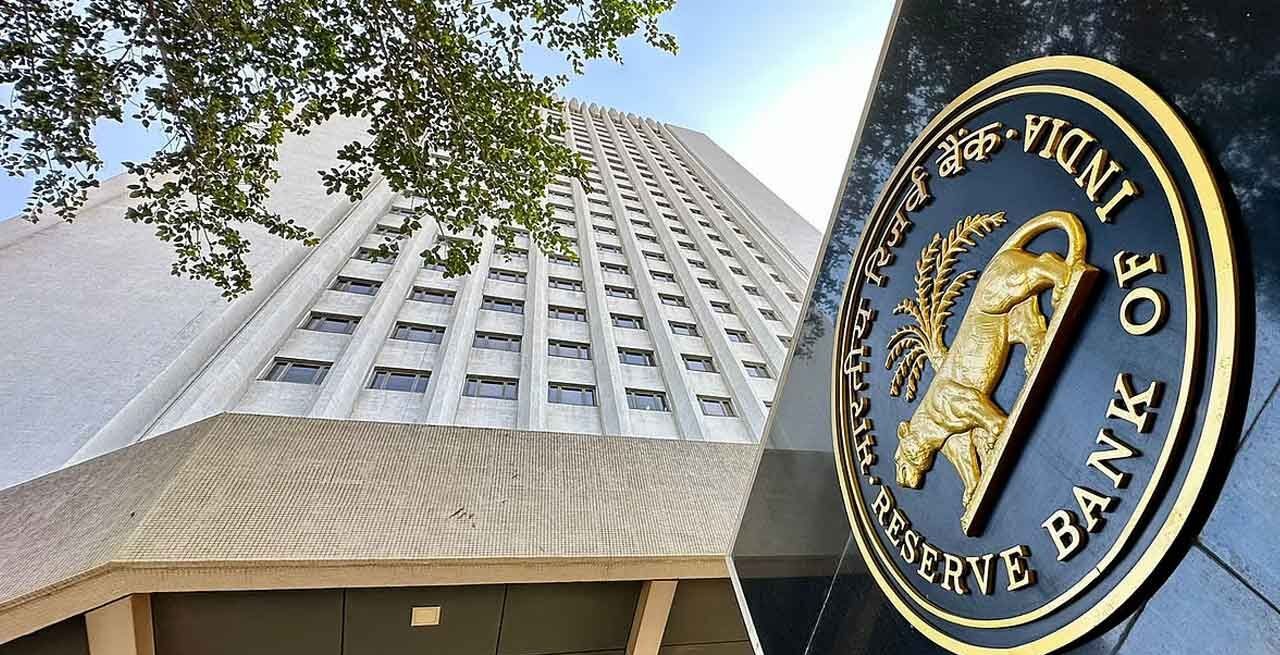
RBI MPC Begins Key Policy Review Amid Global Uncertainty, Rate Pause Likely

New Delhi, June 2026 : The Reserve Bank of India’s (RBI) Monetary Policy Committee (MPC) commenced its three-day policy review meeting on Wednesday, with economists and market participants largely expecting the central bank to leave key interest rates unchanged despite mounting global uncertainties and inflationary pressures arising from geopolitical tensions in West Asia.
The policy decision, along with the RBI’s updated economic projections, will be announced on Friday by RBI Governor Sanjay Malhotra. The meeting comes at a time when the global economic landscape remains fragile, with volatility in crude oil and natural gas prices adding complexity to the central bank’s policy calculations.
While expectations of a rate cut have diminished in recent months, analysts believe the RBI is likely to adopt a cautious stance, balancing inflation risks against the need to support economic growth. The central bank has been closely monitoring the impact of rising energy costs, supply-side pressures and global financial market developments.
According to economists, the recent surge in oil prices following tensions in the Gulf region has heightened concerns about imported inflation. As India remains heavily dependent on energy imports, sustained increases in crude prices could translate into higher transportation and production costs, ultimately affecting consumer prices.
HSBC Chief India Economist Pranjul Bhandari believes the RBI is likely to maintain a pause on rates in the near term while signalling a gradual tightening bias. She noted that financial markets are currently pricing in the possibility of limited rate cuts beginning in the latter part of 2026 rather than expecting an aggressive easing cycle.
Analysts will closely watch the RBI’s revised inflation and growth forecasts, particularly its assumptions regarding global crude oil prices. Economists expect the central bank to reassess its earlier oil price projections in light of recent developments. A higher oil price assumption could push inflation estimates closer to the 5 per cent mark, compared with earlier projections of around 4.6 per cent.
A recent assessment by CareEdge Ratings highlighted growing inflationary concerns stemming from multiple factors, including expectations of a below-normal monsoon and recent increases in retail fuel prices. The agency also warned that elevated wholesale price inflation could begin passing through more rapidly to retail inflation, adding to price pressures in the economy.
However, the report noted that the current inflation trend remains largely supply-driven rather than demand-led. Under its baseline scenario, CareEdge projects India’s GDP growth for FY27 at 6.7 per cent, assuming average crude oil prices remain around $90 per barrel. It cautioned that a prolonged geopolitical conflict accompanied by oil prices rising toward $110 per barrel could reduce growth closer to 6 per cent.
SBI Research has also projected that the RBI will maintain the status quo on interest rates, citing a data-dependent approach amid persistent inflation risks and global uncertainty. The research house estimates GDP growth at 6.6 per cent for FY27 and around 7.5 per cent for FY26, while consumer inflation is expected to remain above 5 per cent for several quarters due to fuel-related pressures and external shocks.
Meanwhile, Emkay Global Financial Services expects the central bank to continue its policy pause, noting that recent corrections in Brent crude prices have improved the external outlook. According to the brokerage, any further easing in geopolitical tensions and moderation in energy prices could provide support to the rupee and allow the RBI greater flexibility in maintaining stable monetary conditions.
As policymakers deliberate over the next three days, investors, businesses and consumers alike will be watching closely for signals on inflation, growth and the future direction of monetary policy. While a rate change appears unlikely this week, the RBI’s commentary on global risks and domestic economic conditions will be crucial in shaping market expectations for the months ahead.





Shivakumar Says Congress United, Assures Women Will Get Cabinet Berth
Bengaluru, Aug 2026 : Karnataka Chief Minister D.K. Shivakumar on Monday sought to dismiss…
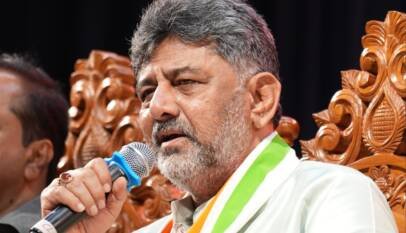
Shivakumar Says Congress United, Assures Women Will Get Cabinet Berth
Bengaluru, Aug 2026 : Karnataka Chief Minister D.K. Shivakumar on Monday sought to dismiss …