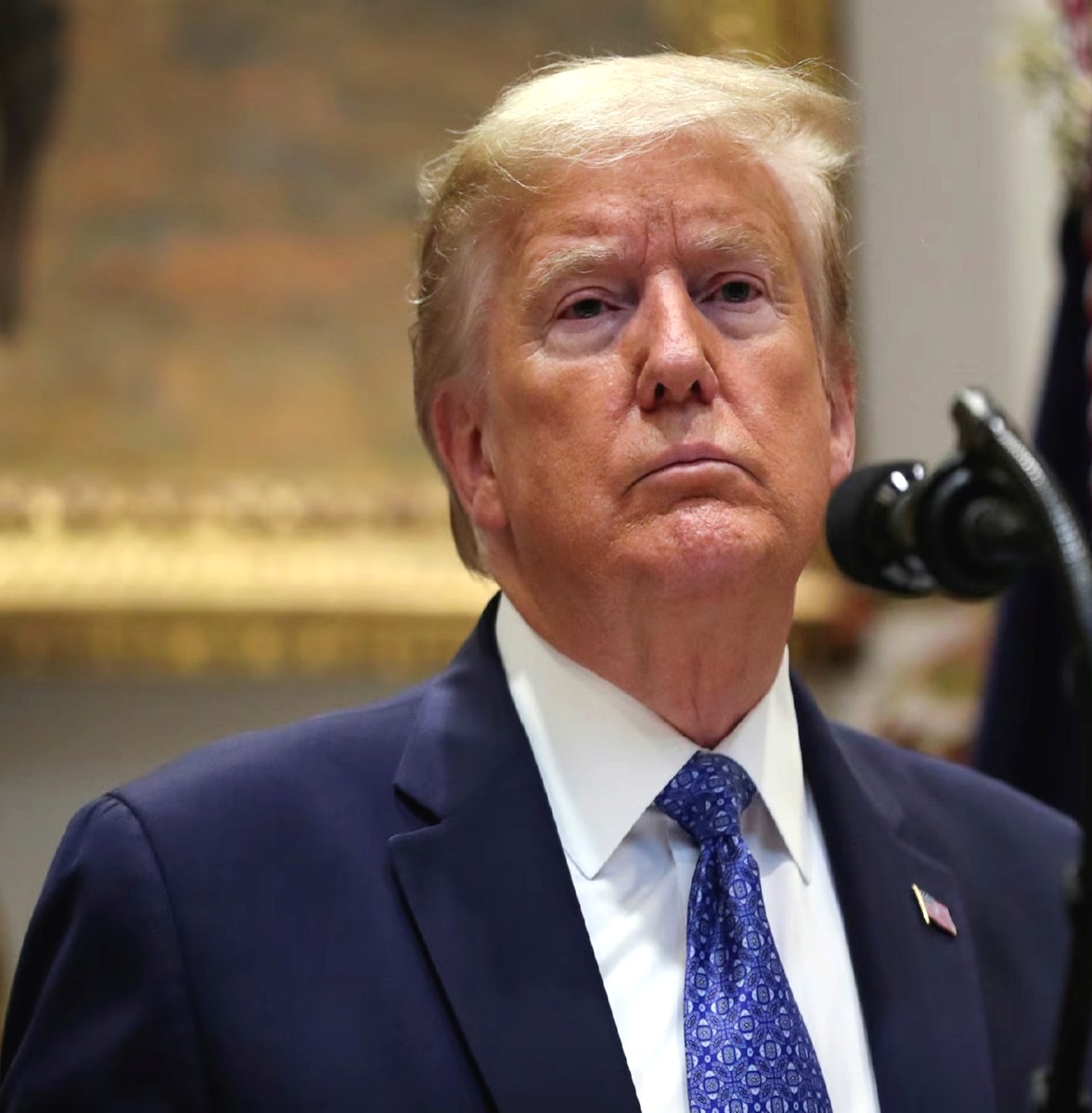
House Of Senate Passes Resolution to end Iran War, challenging Trump.

Washington DC; June 2026: Yesterday (Wednesday – 03rd June 2026), the US Senate representatives passed a legislation designed to force President Trump to end the Iran War, marking a victory for Democrats and the constitutional purists who say the conflict is illegal without explicit congressional approval.
The tally was 215-208, with 04 Republicans: — Representatives Thomas Massie (Kentucky), Brian Fitzpatrick (Pennsylvania), Tom Barrett (Michigan) and Warren Davidson (Ohio) joining the Democrats in supporting the measure. The development is largely symbolic, since there are lingering disputes about whether the measure, known as a concurrent resolution, carries the force of law. And Trump is certain to contest the authority of the measure even if it’s also passed by the Senate, where it’s headed next.
Still, the vote represents a significant development in the political battle over the Iran War, putting Congress on the record condemning a conflict that has dragged on for more than three months, and rattled the global economy with no clear end in sight. “It’s very powerful”, said Representative Jared Huffman (Democrat from California). “We’re inching closer to having both chambers of Congress declare this an illegal war. That’s huge. It’s just becoming more and more untenable, what he has done”.
The vote also highlights an increasing willingness among GOP lawmakers to buck Trump on prominent issues as the midterm election season evolves. Already, many Republicans are balking at Trump’s push for $1 billion for security surrounding his White House ballroom. And a wave of GOP opposition to Trump’s proposed ‘$1.8 billion weaponisation fund’ forced Trump officials to say this week that they’ve abandoned it altogether.
War critics in both chambers have tried numerous times over the last three months to pass resolutions to end the war, only to have them blocked by Trump’s GOP allies. That changed last month when the Senate advanced its own war powers resolution after Senator Bill Cassidy (Republican from Los Angeles) flipped his vote to ‘yes’ just days after Trump helped to defeat Cassidy in Louisiana’s GOP primary. It’s unclear when the Senate measure will come up for a final vote.
In the House, yesterday’s vote was the fourth time that critics of the war sought to end it. The first three war powers resolutions won some Republican support, but not enough to overcome the opposition of Trump’s allies in a chamber they control. Behind Speaker Mike Johnson (Republican from Los Angeles), most Republicans have argued that the conflict does not rise to the level of a war, and therefore doesn’t require congressional approval.
Republican leaders have also warned that tying Trump’s hands in the middle of the conflict would empower Tehran’s Islamic regime at the expense of American security.
The GOP’s wall of defence has eroded, however, as the conflict has grown increasingly unpopular nationally. The shift is not happening within the Republican base, who overwhelmingly support the war. But Independents have soured on conflict as it drags on, a warning sign for vulnerable Republicans fighting to keep their seats in November’s midterms.
A major factor in that shifting mood has been economic: the war has led directly to global trade disruptions that have spiked prices on domestic consumer staples like gas and some groceries, which have hit voters of all stripes. (While gas prices have ticked down over the last week, the national average for a gallon was $4.26 on Wednesday (03rd June) up from $3.14 a year ago, according to the American Automobile Association).
The increases have not been overlooked by Democrats in the Capitol, who have highlighted the issue at every opportunity to attack Trump for abandoning two of his chief pledges on the campaign trail: A promise to avoid conflicts overseas, and another to cut costs for working-class people.
“Donald Trump’s reckless and costly war of choice has cost everyday Americans hundreds, if not thousands of dollars more in increased costs, particularly as it relates to gas prices”, House Minority Leader Hakeem Jeffries (Democrat from New York) told reporters in the Capitol on Tuesday. “This war — this reckless and costly war of choice — needs to end today”.
Some Republicans have also pointed to the War Powers Act itself as a driving factor in their decision to support an end to the war. That 1973 law empowers presidents to launch military operations without congressional approval, in the name of national defence, for a specific window: 60 days, with the option to extend for another 30. That window closed in early May, leading some GOP lawmakers to demand that Trump come to Congress to approve the further use of military force against Tehran.
Sponsored by Representative Greg Meeks (New York), the senior Democrat on the House Foreign Affairs Committee, the resolution also leans heavily on the War Powers Act. Citing that law, it directs Trump to remove all U.S. forces from hostilities with Tehran “unless explicitly authorised by a declaration of war or a specific congressional authorisation for use of military force against Iran”.
The resolution is designated as ‘concurrent’ meaning it will require approval from both chambers but does not go to the White House for the president’s signature or veto. That contrasts with the Senate’s war powers measure, a ‘joint’ resolution, which would go to Trump’s desk and, if signed, carries the force of law. (Trump is expected to veto it if it gets that far).
The White House has dismissed the Meeks resolution on legal grounds, characterizing it as an “unconstitutional legislative veto” over executive authority. The administration is also challenging the measure from a practical angle, arguing that the conflict ended when Trump called for a ceasefire in early April.
“There are no present hostilities from which to remove U.S. Armed Forces”, the White House wrote last month in a formal document, known as a statement of administrative policy, opposing the Meeks bill. “The hostilities that began on February 28, 2026, have terminated with the ceasefire ordered by the President on April 07th, 2026”.
Team Maverick.








Shivakumar Says Congress United, Assures Women Will Get Cabinet Berth
Bengaluru, Aug 2026 : Karnataka Chief Minister D.K. Shivakumar on Monday sought to dismiss…
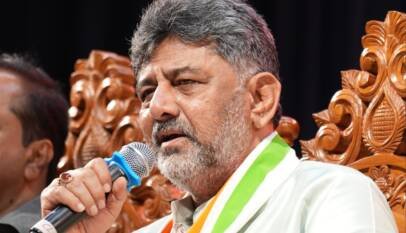
Shivakumar Says Congress United, Assures Women Will Get Cabinet Berth
Bengaluru, Aug 2026 : Karnataka Chief Minister D.K. Shivakumar on Monday sought to dismiss …