Shiv Sena (UBT) Questions India’s Global Standing, Raises Concerns Over Diplomacy and Economic Security

Mumbai, June 2026 : The Shiv Sena (Uddhav Balasaheb Thackeray) on Thursday launched a sharp critique of the Centre’s foreign and economic policies, claiming that India’s geopolitical position has weakened significantly and that the country is facing growing challenges in securing unconditional support from major global powers.
In an editorial published in its mouthpiece Saamana, the party argued that recent developments, including the Pahalgam terror attack, have exposed what it described as India’s increasing diplomatic isolation and vulnerabilities in matters of national and economic security.
The editorial asserted that despite India’s stature as a nation of more than 1.4 billion people, its influence on the global stage has diminished. It claimed that the country’s diplomatic standing has become increasingly uncertain while economic pressures have intensified. According to the article, the weakening of the Indian rupee and concerns over economic stability reflect deeper structural challenges confronting the nation.
The Thackeray-led party also referred to reports concerning the Reserve Bank of India’s gold reserves, alleging that substantial quantities of gold had been liquidated to help stabilise the economy. The editorial suggested that such developments could raise concerns about the future management of national assets. It further criticised what it termed the government’s focus on projecting symbolic achievements while avoiding direct confrontation with countries allegedly linked to security threats against India.
Drawing comparisons with global geopolitical alignments, the editorial noted that countries often stand firmly with their strategic partners during times of crisis. It cited examples of nations supporting their allies in regional conflicts and argued that India currently lacks a powerful international partner willing to extend unequivocal backing during difficult situations.
The article contended that India has gradually moved away from the principles of non-alignment and peaceful coexistence that once formed the cornerstone of its foreign policy. According to the editorial, while India frequently describes Pakistan as economically fragile, major powers such as the United States and China continue to engage with Islamabad because of their broader strategic interests. It also pointed to the roles of countries such as Iran and Turkey in shaping regional dynamics that affect India’s security environment.
The editorial questioned India’s continued economic engagement with China despite tensions arising from incidents such as the Galwan Valley clash and more recent security concerns. It argued that stronger economic measures against Beijing should be considered if China is perceived as enabling activities detrimental to India’s interests.
The party also expressed concern about India’s relations with neighbouring countries, claiming that ties within South Asia have deteriorated in recent years. Referring to recent statements from Nepal’s leadership regarding territorial issues, the editorial suggested that Kathmandu has increasingly aligned itself with Beijing and no longer views New Delhi with the same degree of strategic dependence as in the past.
According to the article, India previously maintained stronger diplomatic engagement with neighbouring countries during the tenure of former Prime Minister Jawaharlal Nehru. The editorial argued that consistent dialogue and outreach helped sustain regional goodwill and cooperation.
The Thackeray camp also took aim at Prime Minister Narendra Modi, claiming that while the government has invested considerable effort in strengthening ties with Western nations, greater attention should be devoted to nurturing relationships with immediate neighbours. It suggested that proactive diplomacy and sustained engagement with bordering countries are essential for maintaining regional stability and protecting India’s strategic interests.
The editorial concluded by warning that both economic resilience and diplomatic influence are critical components of national security. It called for a reassessment of policy priorities to ensure that India remains capable of safeguarding its interests amid an increasingly complex and competitive international environment.
(The content of this article is sourced from a news agency and has not been edited by the Mavericknews30 team.)



Shivakumar Says Congress United, Assures Women Will Get Cabinet Berth
Bengaluru, Aug 2026 : Karnataka Chief Minister D.K. Shivakumar on Monday sought to dismiss…
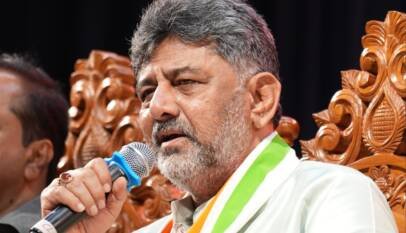
Shivakumar Says Congress United, Assures Women Will Get Cabinet Berth
Bengaluru, Aug 2026 : Karnataka Chief Minister D.K. Shivakumar on Monday sought to dismiss …