United States Hormuz Blockade Plummets Iran’s Oil Export By 90%.

Tehran; June 2026: Iranian oil exports by sea plunged 93% in May according to an analysis of tanker movements out of the country by United Against a Nuclear Iran (UANI).
According to figures from UANI Iran exported just 2.01 million barrels of oil in May compared to 29.7 million barrels in April 2026. The UANI export figure is based on where vessels have crossed the line of the US blockade line, which runs from the most eastern point of Oman to the Iranian-Pakistan border, and exiting the Gulf of Oman rather than point of loading.
The US blockade of Iranian ports started on 13th April and the May 2026 Tanker Tracker from UANI said, “While most tankers laden with Iranian hydrocarbons have been forced to turn back toward Iranian ports by the current enforcement posture, only a small handful have managed to pass through the blockade line”.
According to UANI May exports by sea from Iran consisted of four Panamax and Handymax shipments of Naphtha to China. There were also ‘limited’ LPG exports, however UANI does not track an exact number of shipments.
Completed exports of VLCC shipments of two million barrel crude oil cargoes dropped to zero in May. “The combination of tighter US enforcement and heightened risk of VLCC interdictions across key transit areas has forced Iran’s hydrocarbon exports into smaller, less efficient vessels,” the report noted.
A few laden VLCCs have made it past the blockade but have yet to complete the export of their cargoes. The Iranian-flagged VLCC Huge was tracked in the South China Sea on 13th May and is now anchored 100 kilometres southwest of Hong Kong were it is likely waiting for a ship-to-ship transfer. Another Iranian-flagged VLCC Derya avoided the Malacca Strait taking a longer route via the Indian Ocean and Lombok Strait apparently seeking reduce the chances of interdiction by US naval forces in the region.
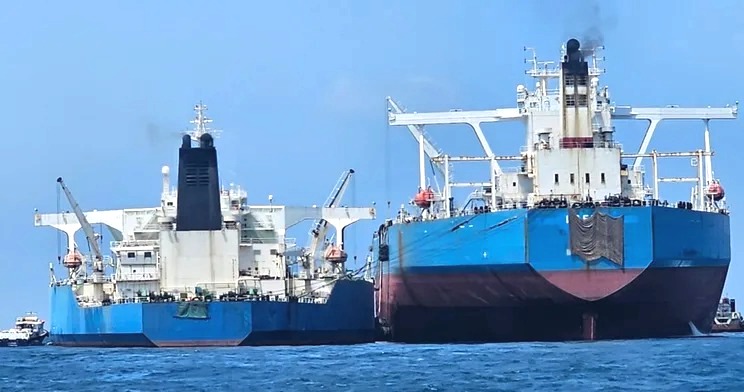
A growing number of vessels used for Iranian exports are building up in clusters both off Iran’s ports and at global hubs such as Malaysia’s Eastern Outer Ports Limits (EOPL) anchorage.
According to UANI there are 69 laden tankers inside the US blockade line including approximately 13 laden tankers in the Kharg Island anchorage and 14 laden tankers by Chabahar Port.
Malaysia’s EOPL has been a focus for ship-to-ship transfers of sanctioned Iranian oil and UANI said that as of May 29, six Iran‑flagged cargo ships are anchored at the EOPL, with a further two Iran‑flagged cargo ships anchored in the vicinity of Port Klang.
Commenting on the figures and the impact of the US blockade Charlie Brown, Senior Advisor to UANI told news reporters, “As the blockade drags on, the math is likely making both Iran and China very nervous. Iran will be running out of space to store its un-exported oil, and the IRGC’s funding will start evaporating. Meanwhile, China’s independent ‘teapot’ refineries are burning through their remaining floating reserves on tankers in the Malaysia EOPL with little hope of replenishment, while that blockade in in force. The economic crunch is guaranteed to hit both Tehran and Beijing. The only question is whether the Trump administration has the domestic and international political capital to sustain the military effort required to keep the vice tight”.
Team Maverick.






Shivakumar Says Congress United, Assures Women Will Get Cabinet Berth
Bengaluru, Aug 2026 : Karnataka Chief Minister D.K. Shivakumar on Monday sought to dismiss…
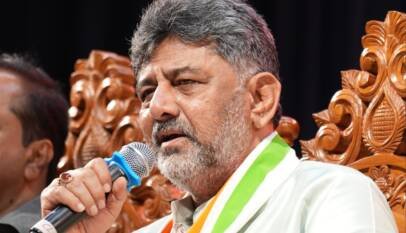
Shivakumar Says Congress United, Assures Women Will Get Cabinet Berth
Bengaluru, Aug 2026 : Karnataka Chief Minister D.K. Shivakumar on Monday sought to dismiss …