Scandinavian Airlines First To India After 17 Years Turned Back From Azerbaijan Due To Paperwork Impasse.

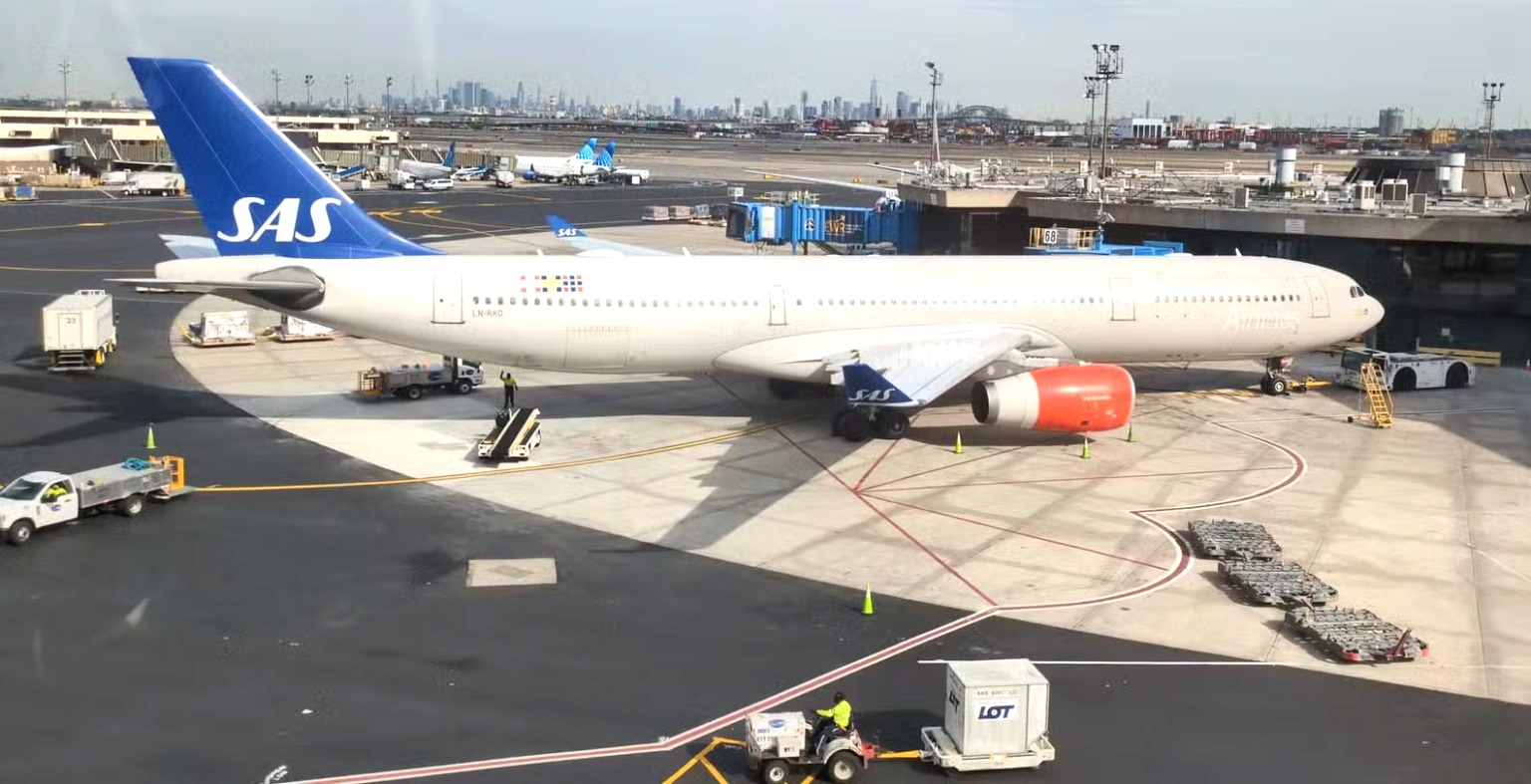
Mumbai; June 2026: The Danish Airlines (SAS) after a long wait for 17 years had initiated a direct flight from Copenhagen to Mumbai – a new route which no other airlines have ever ventured into. However, the quest of the Scandinavian Airlines (SAS) was unfortunately prevented from completing the mission. Failing to receive final approval from civil aviation authorities in India, the Airbus A330-300 widebody jet made a U-turn in Azerbaijan airspace and returned to Copenhagen International Airport (CPH).
As reiterated above, the route from Copenhagen Airport to Mumbai International (BOM) has never been served by any air carrier, and a ground team was standing by in Mumbai with water cannons for an inaugural celebration after touchdown. SAS was led to believe that the jet would receive final approval for the route, but no confirmation came, forcing the plane to cancel its itinerary.
The fate was sealed from the moment the plane pushed back as Flight SK969 departed roughly 04 hours behind its original schedule on its ill-fated journey. In addition, about 04 hours into the flight, while cruising over Azerbaijan, the cockpit crew was instructed to turn around and return to Denmark. Passengers spent roughly 12 hours in the plane only to land right back from where they had started – Copenhagen. That effectively means the passengers lost at least one day of their actual trip sitting in an Airbus.
The travellers have possibly lost by any means thousands of dollars in prepaid domestic flights in India, train tickets, tour plans, or even business opportunities, depending on the purpose of their visit. While SAS covers the basic ticket rebooking, the financial fallout for the travellers goes far beyond a delayed arrival. SAS cannot simply keep passengers stranded indefinitely. To fulfill their contract of carriage, SAS likely had to purchase last-minute tickets for hundreds of passengers on other carriers.
THE FIASCO –
SAS had completed all necessary operational and regulatory preparations for the launch following several months of planning and coordination. Based on ongoing discussions with the relevant authorities, SAS had every expectation that the remaining formal approval would be finalised while the flight was en route. As the approval was not finalised as anticipated, the flight could not continue as planned, the airline said.
The Directorate General of Civil Aviation (DGCA) is required to provide written approval for any flight operation. However, according to aviation sources, the approval had not been granted. The DGCA has not issued any official reason for such non-approval.
The total cost for this aborted long-haul journey could easily have exceeded half a million dollars for SAS, especially factoring in inflated fuel prices due to ongoing conflicts around the world pushing up the price of oil. Flying an older Airbus A330 means that fuel consumption alone would have been higher than on many similar sorties with newer planes, resulting in tens of thousands of dollars in losses.
One reason the A330 was chosen is that it is the lowest-capacity widebody in the SAS fleet. That will keep capacity modest and maximise the chances of high load factors as the new route builds demand. Still, the compensation that passengers are entitled to will far outweigh even the total sunk cost of operating expenses for the aborted flight, and the A330-300 is outfitted with 266 seats.
As SAS takes delivery of more advanced flagship A350 aircraft, these newer planes are taking over premier long-haul routes to markets such as North America. The A330-300 is configured as SAS’s least-premium widebody. While it still features Business Class and SAS Plus, it has a higher ratio of standard economy seats than their premier aircraft.
SAS has stated that they are working closely with relevant government authorities to secure the outstanding authorisations. They expect to officially commence the 5-times-weekly service as soon as the final paperwork is granted, which they hope will be within a few days. SAS recently underwent a massive corporate restructuring, exiting Star Alliance and joining the SkyTeam alliance. This new route to Mumbai serves as a major post-restructuring move under a new strategy.
India is currently the fastest-growing major aviation market in the world. SAS originally withdrew from India in 2009 during the global financial crisis. As the joint flag carrier of Denmark, Norway, and Sweden, the airline was forced to consolidate operations within the European Network to stabilize its core business at that time. Flying to Mumbai allows SAS to bypass Russian airspace with a minimal detour, making it a highly fuel-efficient and profitable way to serve the growing demand for travel between India and Europe.
Team Maverick.




Shivakumar Says Congress United, Assures Women Will Get Cabinet Berth
Bengaluru, Aug 2026 : Karnataka Chief Minister D.K. Shivakumar on Monday sought to dismiss…
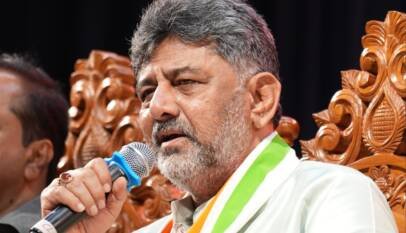
Shivakumar Says Congress United, Assures Women Will Get Cabinet Berth
Bengaluru, Aug 2026 : Karnataka Chief Minister D.K. Shivakumar on Monday sought to dismiss …