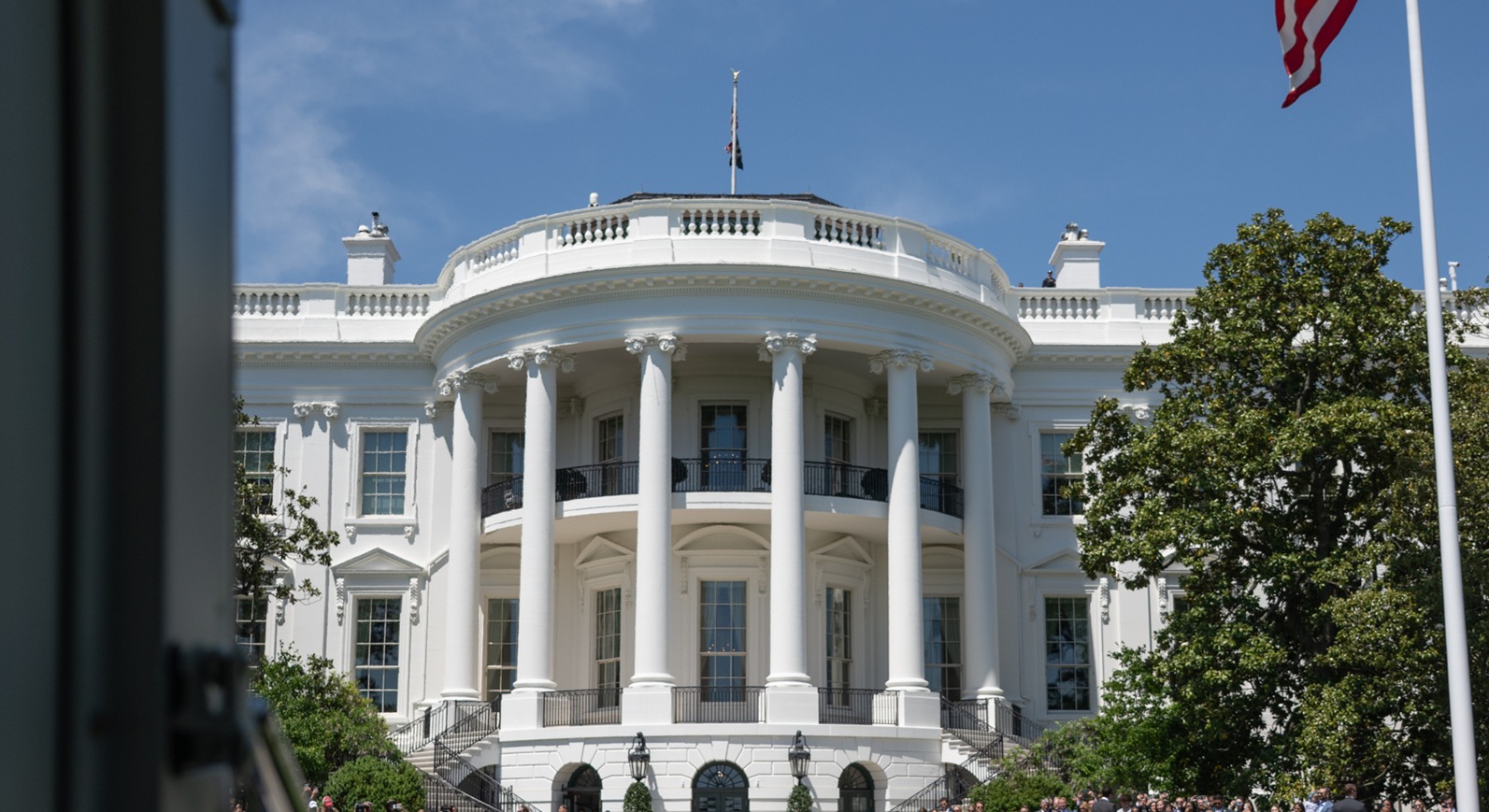
United States’s Warrantless Spy Powers Faces Legal Uncertainty.

Washington DC; June 2026: The unprecedented expiration of the nation’s warrantless spy powers has plunged the country into legal uncertainty over the extent to which it can surveil foreigners located abroad.
Both chambers of Congress yesterday (Friday – 12th June 2026) have failed to pass bills to extend Section 702 of the Foreign Intelligence Surveillance Act (FISA) till 02nd July, amidst outrage from Democrats about Bill Pulte who have being deployed to lead the intelligence community. But Bill Pulte had left the town, allowing the spy powers to lapse after they expired at midnight.
Meanwhile, President Trump is also mulling signing an executive order seeking to boost the programme. However, both the actions have left the country in a new dark, leaving to wonder whether cellphone companies and email providers will continue to comply with any new requests for communications.
“It’s unprecedented, uncharted territory. We’ve never been here before”, said Representative Brian Fitzpatrick (Republican- Pennsylvania), one of the only lawmakers to have queried the 702 database as a former FBI agent. “I think there’s a lot to unpack legally, though. I mean, it’s really a question for the phone companies, right, because they are the ones that are going to be deciding whether or not to share this information with the government”.
FISA 702 allows the government to compel communications companies to turn over the records of foreign targets without a warrant, creating a database used to monitor potential threats. Privacy hawks have long argued that the spy program doesn’t truly expire unless congressional authorisation lapses. The program was recertified by the Foreign Surveillance Intelligence Court (FISC) in March this year (2026), and they contend the program can largely continue functioning under that authority.
But FISA backers say that take is legally dubious, as Congress must still authorize and set guidelines for the program. They also fear electronic service providers would refuse to comply if they aren’t indemnified, a threat those companies made in 2024 when FISA was last reauthorized and a Section 702 lapse appeared imminent.
“There is this theory out there, and it’s been out there for a long time, that the program can survive simply on certification. We’ve never tested that theory, and I’ve always discouraged from people from testing it, because when one of the companies sues, we don’t know how the FISC is going to rule”, said Representative Jim Himes (Connecticut), the top Democrat on the House Intelligence Committee.
“They may rule to allow the program to continue, but we just don’t know that question. So, it’s not a matter of opinion, it’s a matter of let’s not be stupid. But now we may have no choice but to test that question of whether the program can survive the expiration of the statute”.
Even with the FISC certification, it’s not clear that cell providers would take on new requests to turn over the communications of those not already under surveillance. While the FISA 702 database would still be functional, it may not have the latest intelligence.
“It’s going to be hard to continue to grow that database under these constraints, and so it’s not going to give us an accurate real-time picture of what’s going on. It’s a look back, not a look ahead. So that’s the danger here”, House Intelligence Committee Chair Rick Crawford (Republican-Arkansas) said.
FISA supporters say that’s a risky move with a number of high-profile events coming up, including the World Cup and 250th anniversary celebrations, as well as continued tensions between the U.S. and Iran that experts fear could be among the motivations for terror attacks.
“In 2024 when we were towards the witching hour, there were a couple of the major providers who said, ‘Sorry, friends, at the witching hour we’re going to stop participating’. So, the threat was there two years ago”, said Senator Mark Warner (Virginia), the top Democrat on the Senate Intelligence Committee. This time, he said, “we don’t know the answer to that, but it is obviously a high-risk proposition”.
Democrats refused to reauthorise Section 702 over objections to Pulte being tapped to lead the Office of the Director of National Intelligence (ODNI), noting his history of using his role leading the Federal Housing Finance Agency to make criminal referrals of alleged mortgage fraud for four Trump foes.
Trump somewhat backed away from the pick, nominating US Attorney Jay Clayton to lead the office. Pulte, however, is still slated to serve as acting director of intelligence on June 19, and Democrats have said they won’t give him even one day’s access to 702.
“The idea that somebody without a security clearance, who has not even been able to keep mortgage information confidential, is going to get keys to the whole intelligence community”, Warner said with exasperation.
Meanwhile, President Trump said on Thursday (11th June) that he would consider drafting an executive order on Section 702, though it’s unclear whether such a move would be legal or if it would allay the concerns of electronic service providers.
“Executive unilateral usurpation is not a substitute for proper legislation”, said Representative Jamie Raskin (Maryland), the top Democrat on the House Judiciary Committee who would like to see a warrant requirement added to Section 702. Even many Republicans are not sure an executive order will reinforce the legality of the program.
“We’re going into uncharted water, so I’m not sure what can be done with an EO. We’ll find out”, said Rick Crawford, using an abbreviation to refer to an executive order. “It’s the liability protections that exist under current statute that will go away for those carriers, and so are they going to feel adequately protected? And that’s the question”.
Senator Mike Rounds (Republican-South Dakota), a member of the Senate Intelligence Committee, questioned why telecom companies would take the risk. “Why would they do it on their own and then get their butt sued by trial attorneys?” he said. “This is a law which expires, and I don’t know whether or not a court would accept what an executive order would do, but I know it puts this in jeopardy, and this is something that is way too important to be in jeopardy”.
While nearly all agree that a lapse of FISA would be a critical loss at an inopportune time, not all were equally worried.
Senator Josh Hawley (Republican- Missouri) previously did not agree to move forward on a Senate-negotiated three-year extension of FISA 702 over concerns about American’s data. “Before FISA, the intelligence community did much of what they’re doing now, and I don’t know how consequential FISA is, to be honest with you”, he said.
The Senate Intelligence Committee scheduled a Wednesday meeting to weigh Clayton’s nomination, and Senate Majority Leader John Thune (Republican-South Dakota) has said he plans to move swiftly on the nomination. The Senate has done that before, confirming Homeland Security Secretary Markwayne Mullin the day after his confirmation hearing.
But even if Clayton is confirmed before Pulte is slated to start, Section 702 still faces roadblocks to renewal.
The House is on recess till June 23rd, and even then, Congress will return to the existing set of problems that pushed it to twice punt on a long-term Section 702 extension.
Warner, however, feels optimistic about a plan he negotiated alongside Republicans, if Trump can manage to stay out of it. “Here was this path on a very difficult bill where it had passed the House, and I think we had a chance to make the bill significantly better in the Senate”, he said. “There has been a half dozen exit ramps for the White House on this problem. They have chosen not to take them”.
POWERS UNDER FISA SECTION 702 –
Congress enacted Section 702 of FISA in 2008, dictating how the government can spy on foreigners located abroad.
Under this law, the Attorney General and the Director of National Intelligence (DNI) have the power to compel electronic service providers like cell phone companies to turn over the communications of foreign targets.
The law is used to protect US citizens from threats, such as international terrorism and acquisition of weapons of mass destruction, but it’s quickly become one of the nation’s top intelligence gathering tools, supplying nearly 70% of the information for the President’s daily brief.
Though the government is not allowed to obtain information on Americans without a warrant, critics see Section 702 as a backdoor.
Anyone who communicates with foreign targets can have their communication details deleted.
The government must still get a warrant to place wiretaps on US citizens regardless of where they are located, but those limitations are outlined under another section of FISA, Title I.
Both types of activities are overseen by the Foreign Intelligence Surveillance Court (FISC).
Team Maverick.







Pakistan Appoint Mike Smith as Test Batting Coach Amid Batting Crisis
Mumbai, Aug 2026 : Pakistan have appointed former South African first-class cricketer and …

Pakistan Appoint Mike Smith as Test Batting Coach Amid Batting Crisis
Mumbai, Aug 2026 : Pakistan have appointed former South African first-class cricketer and Level …