US-Iran War Costs Reach $37.5 Billion as Trump Seeks $88 Billion Emergency Funding

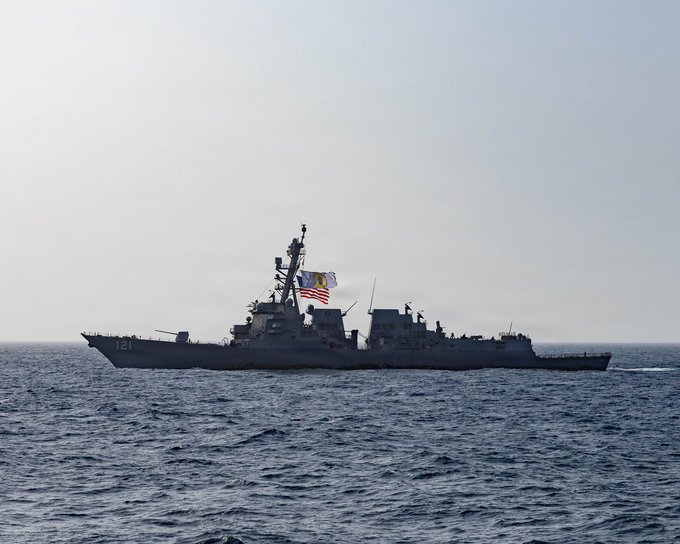
Washington, July 2026 : The conflict between the United States and Iran has already cost an estimated $37.5 billion, US Defence Secretary Pete Hegseth informed lawmakers during a Senate hearing, as the Trump administration sought nearly $88 billion in emergency funding to sustain military operations and strengthen America’s defence capabilities amid escalating tensions in the Middle East.
Appearing before the Senate Appropriations Committee, Hegseth presented the Pentagon’s assessment while defending President Donald Trump’s request for $87.6 billion in supplemental funding, of which nearly $67 billion has been earmarked for military purposes.
Responding to questions from Democratic Senator Richard Durbin, Hegseth said the Pentagon’s current estimate of the conflict’s cost stood at $37.5 billion. He explained that the figure includes expenditures already incurred as well as projected costs for military salaries, operational activities and maintenance through September 30.
The emergency funding request allocates $21 billion to enhance military readiness. This includes pay for service members, replacement of damaged or depleted equipment, support for forward-deployed forces, fuel requirements, logistics and assistance for National Guard units. An additional $46 billion has been proposed to significantly boost the production of munitions while accelerating investment in advanced military technologies such as hypersonic weapons, counter-drone systems, satellite capabilities and other next-generation defence assets.
Hegseth warned lawmakers that failure to approve the supplemental package could affect the armed forces’ operational preparedness. He said military training exercises might have to be scaled back and cautioned that years of deferred maintenance and declining weapons inventories had already placed considerable pressure on the Pentagon.
“Without these funds, we face critical shortfalls that threaten our ability to pay our service members, rapidly replenish equipment and munitions, and sustain vital military operations without disruption,” Hegseth told the committee.
However, Democratic lawmakers questioned the necessity of seeking additional funding, pointing out that the Pentagon still has approximately $75 billion in previously approved but unspent funds from earlier appropriations.
Senator Patty Murray criticised several provisions included in the supplemental request, noting that it allocates nearly $1 billion for the US Southern Command, another $1 billion for continued National Guard deployments in Washington, D.C., and more than $1 billion for military operations along the US southern border.
She argued that Americans wanted the conflict to end through strategic diplomacy rather than continued military spending.
“The American people want to see a quick and strategic end to this war, not tens of billions of taxpayer dollars used to prolong it,” Murray said during the hearing.
The hearing also highlighted growing political disagreement over the legal authority underpinning the administration’s continued military campaign against Iran.
Republican Senator Lisa Murkowski raised concerns regarding the War Powers Resolution, which generally requires a president to terminate military hostilities within 60 days unless Congress provides formal authorisation.
In response, Hegseth maintained that the administration believes President Trump possesses sufficient constitutional authority to continue military operations.
“We share the White House’s position that we have all the authorities necessary at this moment,” he said.
Meanwhile, Chairman of the Joint Chiefs of Staff General Dan Caine declined to comment on whether the United States was considering deploying ground forces to the region. He said military planners routinely develop operational options and assess associated risks but avoided discussing any specific contingency plans.
The Senate hearing underscored the growing debate in Washington over both the financial burden and legal framework of the expanding US military campaign against Iran. As fighting continues around the Strait of Hormuz, Congress is expected to closely scrutinise the administration’s funding request before deciding whether to approve additional resources for the ongoing conflict.
(The content of this article is sourced from a news agency and has not been edited by the Mavericknews30 team.)







US Intensifies Iran Campaign with 11th Straight Night of Strikes, Targets Military Infrastructure
Washington, July 2026 : The United States military carried out its 11th consecutive night …
US-Iran War Costs Reach $37.5 Billion as Trump Seeks $88 Billion Emergency Funding
Washington, July 2026 : The conflict between the United States and Iran has already …