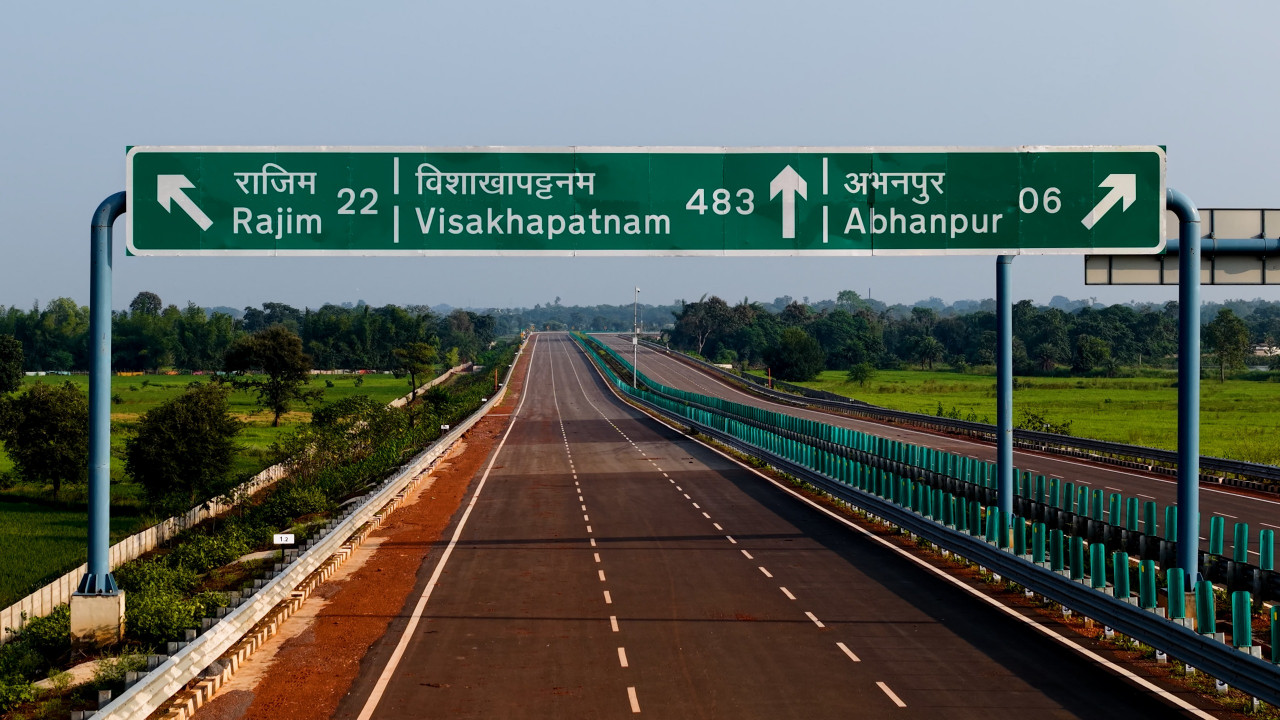
The Meaning of the Journey Has Changed, the Economy Has Grown Stronger NHAI Accelerating Chhattisgarh’s Development

Raipur, February 2026 : The National Highways Authority of India (NHAI) is entering its 31st year since formation. For a rapidly developing state like Chhattisgarh, roads are not merely a means of transport; they are the arteries of economic growth. Over the years, NHAI has scripted a remarkable development story across the state with asphalt and concrete, firmly positioning Chhattisgarh as an emerging logistics and industrial hub of the country. Today, the state’s roads are no longer just routes to destinations—they are pathways to a prosperous future.
NH-53: The Lifeline of Global Trade
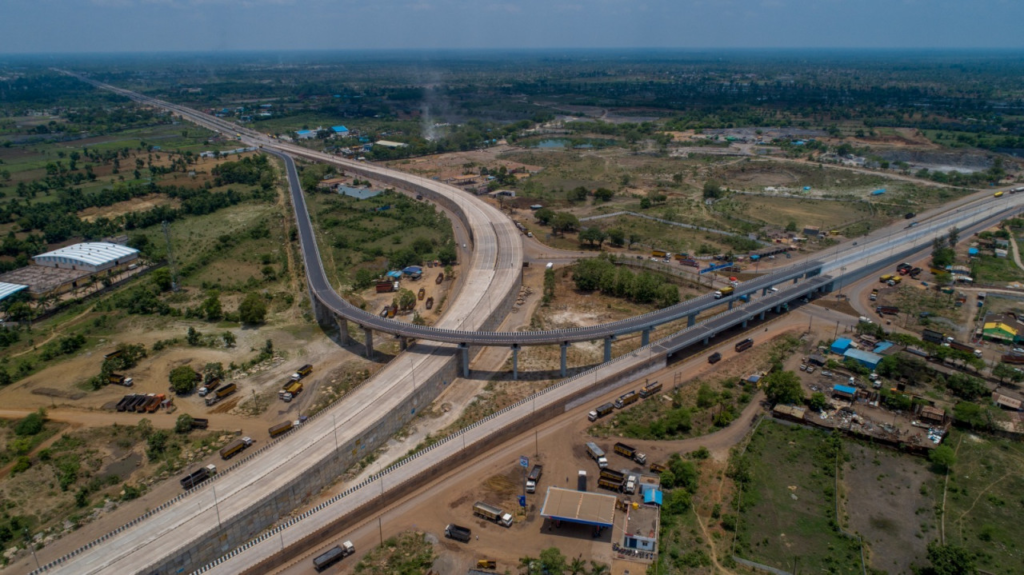
National Highway-53, which passes through Chhattisgarh and is an integral part of Asian Highway-46, has become the backbone of the state’s economy. Stretching from the Maharashtra border through Rajnandgaon, Durg, Bhilai, Raipur, Arang and Saraipali to the Odisha border, this world-class four-lane corridor is giving global recognition to Chhattisgarh’s industrial potential.
A major engineering landmark on this route is the state’s first grand six-lane bridge over the Mahanadi near Arang, built in 2019 and spanning one kilometre. From the Durg bypass to the border regions, NH-53 is taking ease of business and trade facilitation to new heights.
The ‘Golden Link’ Between Capital and Industrial Hubs
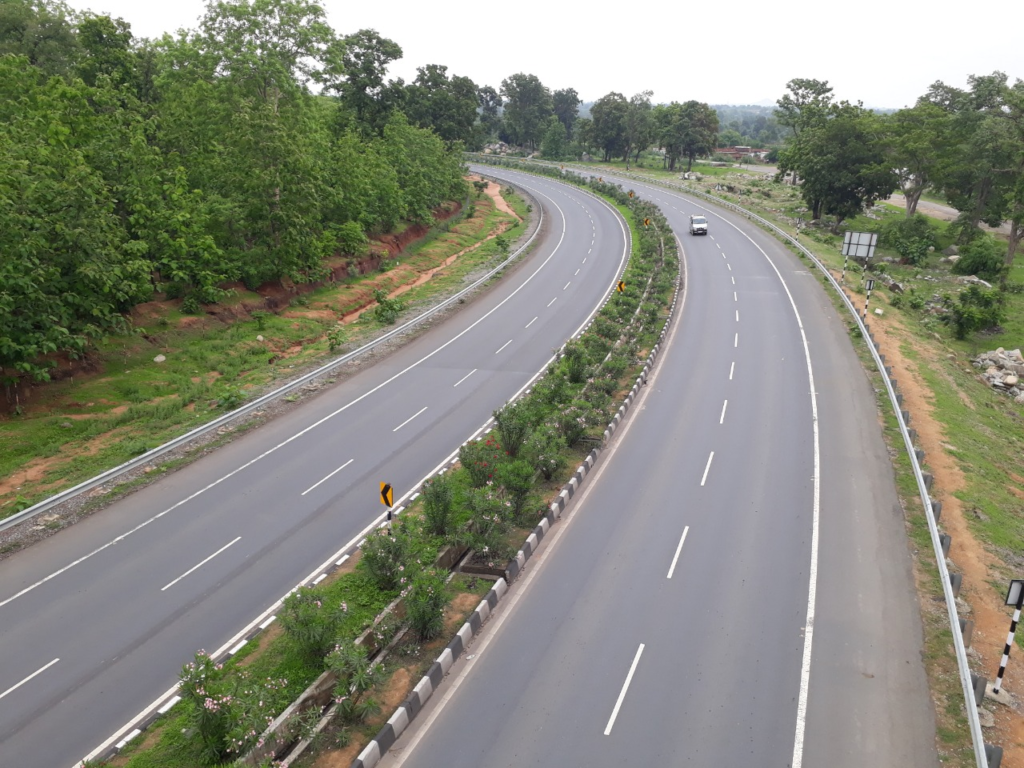
NHAI has carried out unprecedented work to connect the state capital Raipur, judicial capital Bilaspur, and energy hub Korba. The four-lane Raipur–Bilaspur–Pathrapali–Katghora road on NH-130 has reduced travel time by nearly half.
Similarly, the Champa–Korba–Katghora stretch (NH-149B) has given fresh momentum to coal and power-sector transportation. This expanding road network, extending north to Ambikapur and south to Dhamtari, has seamlessly integrated even the remotest regions with the mainstream.
Raipur–Visakhapatnam Corridor
Among the ongoing projects, the most ambitious is the Raipur–Visakhapatnam Economic Corridor. This 125-kilometre six-lane highway, under construction between Raipur, Dhamtari, Kanker and Kondagaon, will directly connect Chhattisgarh to a major seaport.
Its standout feature is the state’s first 3-kilometre-long smart tunnel. Passing through the dense forests of Bastar, the corridor is emerging as a unique blend of modern infrastructure and environmental conservation.
Flyovers and Modern Interchanges

Raipur’s Tatibandh Chowk, once notorious for accidents due to its complex design, is now a symbol of NHAI’s engineering excellence. The 3.5-kilometre stand-alone flyover has not only eased traffic but has also made significant progress toward becoming a zero-accident zone.
Likewise, the Pendridih Interchange in Bilaspur is a fine example of modern connectivity, enabling uninterrupted movement of heavy vehicles towards Raipur, Bilaspur and Raigarh.
Durg Bypass: A New Corridor of Industrial Revolution
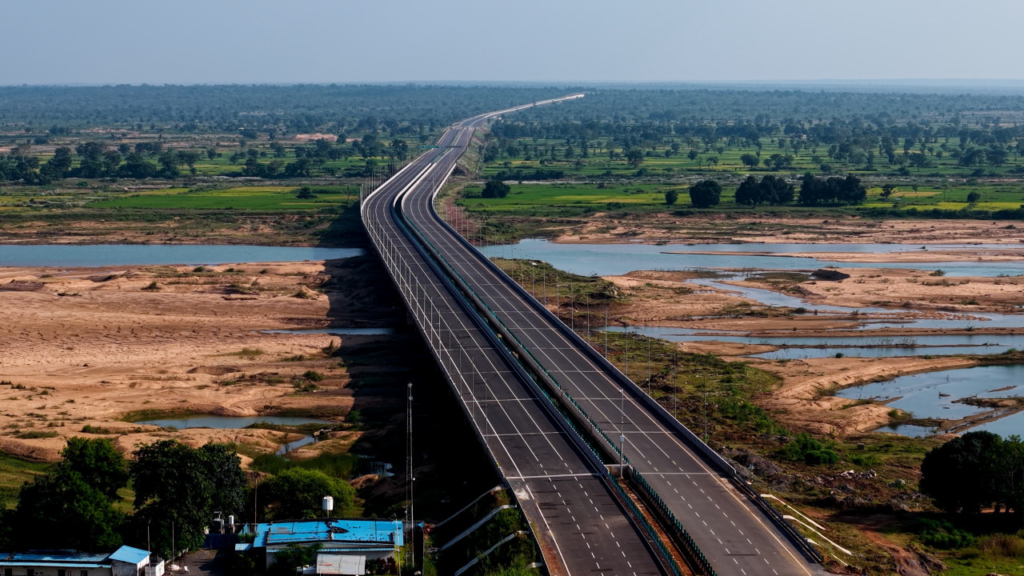
To reduce pollution and traffic pressure in urban areas, the 92-kilometre Durg–Raipur–Arang bypass is under construction. This six-lane route will form part of the Mumbai–Kolkata Corridor, opening new avenues for industrial investment in the state.
Raipur–Dhanbad Corridor
Distances between Chhattisgarh and Jharkhand are set to become a thing of the past. The 627-kilometre Raipur–Dhanbad Economic Corridor, with 384 kilometres passing through Chhattisgarh, will significantly strengthen inter-state ties. Once completed, travel time between Raipur and Dhanbad will reduce from 11 hours to just 7 hours, directly benefiting the steel and coal industries of Korba and Raigarh.
Easy Access to Tourism and Pilgrimage
Modern highways have made access to Chhattisgarh’s cultural and natural heritage extremely convenient. NH-53 now connects major destinations such as Maa Bamleshwari Devi Temple in Dongargarh, the historic Sirpur, and Barnawapara Wildlife Sanctuary, boosting tourism.
Similarly, NH-130 links devotees to Maa Mahamaya Temple in Ratanpur and provides easy access via Ambikapur to Mainpat, often called the “Shimla of Chhattisgarh.” NH-30 connects the capital to Rajim (the Prayagraj of Chhattisgarh) and Gangrel Dam, while access to Bastar’s tourist centres has also become far easier.
Through NH-149B, destinations such as Satrenga, Kosgai and Madwarani in Korba, along with Chhampa’s famous Kosa centres and local temples, are now easily accessible. World-class national highways have opened new possibilities for tourism across the state.
Along with Roads: Conservation and Social Responsibility

NHAI’s objective is not limited to building concrete structures; it also focuses on social responsibility. As part of this commitment, cattle shelters are being constructed at Bhelmudi and Ratanpur in Bilaspur. This sensitive initiative aims to ensure animal safety and conservation along highways while also enhancing road safety.
Voices from Leadership
Chief Minister Shri Vishnu Deo Sai:
“Strong roads are the foundation of a strong economy. With the support of NHAI and the Central Government, national highways in Chhattisgarh have expanded rapidly, giving fresh momentum to industry, agriculture, mining and tourism. Improved connectivity has brought remote regions into the development mainstream and created new opportunities for employment, investment and trade. These roads are now the identity of Chhattisgarh’s progress.”
Deputy Chief Minister and Public Works Minister Shri Arun Sao:
“In Chhattisgarh, national highways have become corridors of development rather than mere roads. Modern highways, flyovers and economic corridors built by NHAI are reducing urban pressure and attracting industrial investment. Better transport systems are saving time, fuel and costs, accelerating economic activity. This road network is a strong foundation for a self-reliant and prosperous future for Chhattisgarh.”





Alvarez, Lautaro Fire Argentina Past 10-Man Switzerland in Extra Time, Set Up Blockbuster World Cup Semi-final Against England
Score: Argentina 3 (Alexis Mac Allister 10′, Julian Alvarez 112′, Lautaro Mart…

Alvarez, Lautaro Fire Argentina Past 10-Man Switzerland in Extra Time, Set Up Blockbuster World Cup Semi-final Against England
Score: Argentina 3 (Alexis Mac Allister 10′, Julian Alvarez 112′, Lautaro Martinez 120+1′) beat …