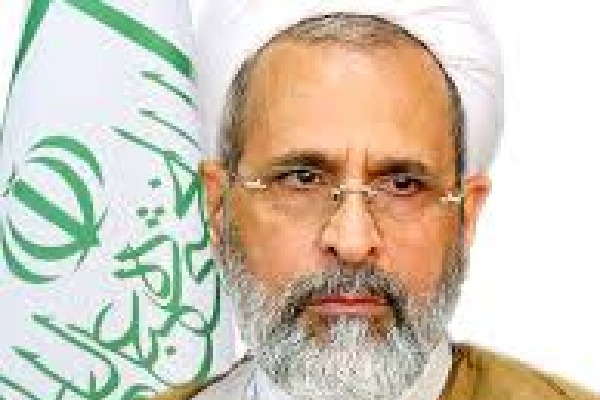
Iran Names Ayatollah Alireza Arafi Interim Supreme Leader After Khamenei’s Death

Tehran, March 2026 : In a dramatic political development following the killing of Iran’s long-time Supreme Leader Ali Khamenei in a joint US-Israeli airstrike, Iranian authorities on Sunday announced Ayatollah Alireza Arafi as the country’s interim leader, triggering a constitutionally mandated transition of power.
Khamenei, who had ruled the Islamic Republic since 1989, was killed in an attack on his residential compound in Tehran, according to an official announcement carried by IRNA. His death marks the end of an era that began after the passing of Iran’s revolutionary founder Ruhollah Khomeini, under whom the post of Supreme Leader was institutionalised following the 1979 Islamic Revolution.
In line with Iran’s constitution, the government confirmed that a three-member leadership council has assumed temporary authority during the transition period. The council comprises President Masoud Pezeshkian, Judiciary Chief Gholamhossein Mohseni Ejei, and a senior cleric representing the Guardian Council. This collective body will oversee state affairs until a permanent successor is formally selected.
Under the constitution, the final decision on Iran’s next Supreme Leader rests with the Assembly of Experts, an 88-member clerical institution vested with sweeping authority over Iran’s political system, armed forces, and key state institutions. The assembly is expected to convene in the coming days to deliberate on a permanent appointment.
Ayatollah Alireza Arafi, named interim successor, is a prominent Shia cleric and Islamic jurist with deep roots in Iran’s religious establishment. Born in 1959 in the central Iranian city of Meybod, Arafi has built a long career within the country’s seminary system and governing councils.
He currently serves as head of Iran’s Centre for the Management of Islamic Seminaries and has been the director of the influential Qom Seminary since 2016. Arafi is also a member of the Guardian Council, positioning him at the intersection of religious authority and constitutional oversight.
Previously, he led Al-Mustafa International University from 2008 to 2018 and has been a permanent member of the Supreme Council of the Cultural Revolution since 2011. His interim appointment signals continuity as Iran navigates one of the most consequential transitions in its modern political history.



Hockey Junior Men’s Nationals: Rajasthan, Telangana, Puducherry Shine in Coimbatore
Coimbatore, July 2026 : Hockey Rajasthan, Telangana Hockey and Le Puducherry Hockey regist…

Hockey Junior Men’s Nationals: Rajasthan, Telangana, Puducherry Shine in Coimbatore
Coimbatore, July 2026 : Hockey Rajasthan, Telangana Hockey and Le Puducherry Hockey registered impressive …