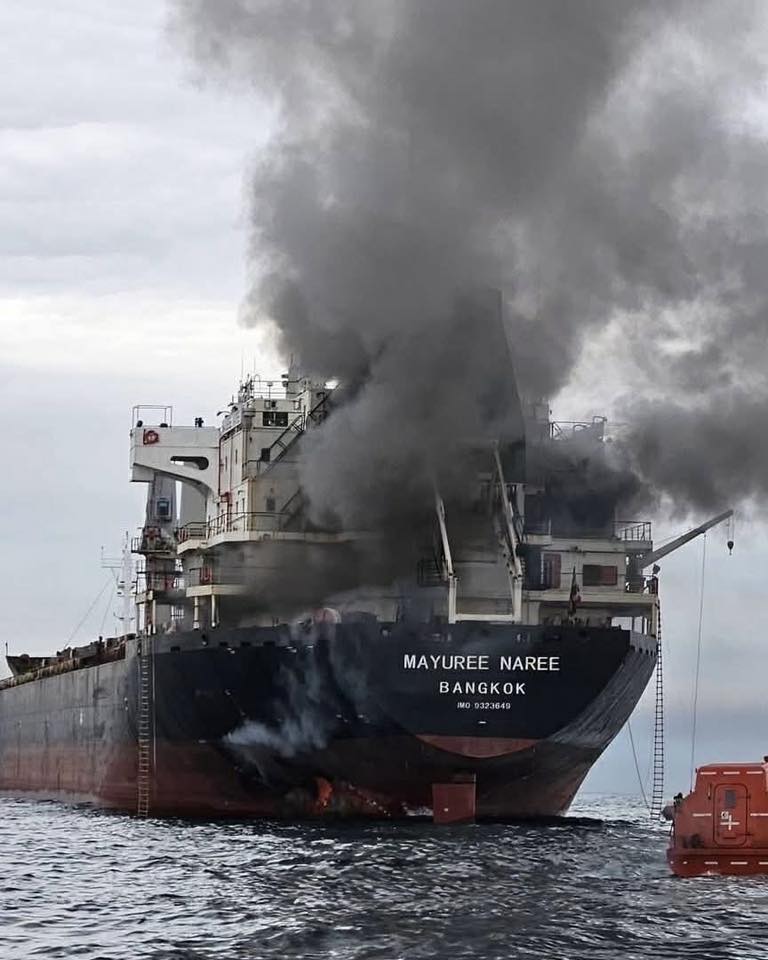
Greece, Germany Reject Military Role in Strait of Hormuz as Global Concerns Over Middle East Conflict Rise

Athens, March 2026: Greece has ruled out any participation in a military operation in the strategically vital Strait of Hormuz, with government spokesperson Pavlos Marinakis stressing that Athens has no intention of becoming involved in a war.
Speaking during a regular press briefing on Monday, Marinakis clarified that Greece’s current role in the European Union maritime mission known as Operation Shield is strictly limited to the Red Sea and does not extend to the Strait of Hormuz.
“Our participation is geographically defined in the Red Sea and does not concern the Strait of Hormuz,” Marinakis said, adding that the mission’s objective is to protect commercial shipping in the region. According to him, only vessels from Greece and Italy are currently taking part in the operation.
The Greek government reiterated that it supports the universal application of international law and peaceful solutions to disputes. Marinakis emphasised that Athens remains committed to diplomacy and stability in the region. “Under no circumstances do we intend to get involved in war,” he said.
The statement comes amid rising global tensions following escalating conflict in the Middle East and concerns over the security of maritime trade routes. The Strait of Hormuz is considered one of the world’s most important energy corridors, through which a significant portion of global oil shipments pass.
Over the weekend, Donald Trump said he had urged several countries heavily dependent on Middle Eastern oil supplies to join a coalition aimed at escorting vessels through the Strait of Hormuz. However, the White House has not disclosed the names of the countries involved in those discussions.
Meanwhile, Germany also rejected calls for military involvement in the region. German Defence Minister Boris Pistorius stated on Monday that Berlin would not deploy military forces to support operations in the Strait of Hormuz.
Pistorius made the remarks during a press conference in Berlin after meeting with Latvia’s Defence Minister Andris Spruds. While expressing Germany’s willingness to support diplomatic efforts aimed at ensuring safe navigation through the strait, he questioned the necessity of European military intervention.
“It is not our war. We did not start it,” Pistorius said, emphasising that Germany preferred a diplomatic approach rather than a military response.
Trump had earlier warned that North Atlantic Treaty Organization (NATO) could face a “very bad” future if member states fail to support US-led efforts to maintain open shipping lanes in the Strait of Hormuz, according to reports.
Elsewhere, Australia signalled that it would not deploy naval forces to the region either, although it said it was prepared to deal with the economic fallout from the ongoing conflict.
According to the Australian Broadcasting Corporation, Australia’s Minister for Infrastructure, Transport, Regional Development and Local Government Catherine King said the country had sufficient fuel reserves to manage potential supply disruptions. She noted that as of Monday, Australia’s fuel stockpiles included 37 days of petrol, 30 days of diesel, and 29 days of jet fuel.
King said the government had reduced minimum fuel stockholding obligations and temporarily relaxed fuel quality standards to allow higher sulphur levels, ensuring adequate domestic supply during the crisis.
“We’re well prepared here in this country to weather the economic crisis that is occurring as a result of the Middle East,” she said.
At the same time, the Australian government issued updated travel advisories for its citizens. The Department of Foreign Affairs and Trade warned Australians not to transit through several Middle Eastern countries, including Bahrain, Iran, Iraq, Israel, Kuwait, Lebanon, Palestine, Qatar, Syria, Yemen and the United Arab Emirates.
Officials said the conflict could escalate further, warning that flights may be disrupted or suspended without notice, highlighting the growing global concern over the instability in the region.
(The content of this article is sourced from a news agency and has not been edited by the Mavericknews30 team.)





Amarnath Yatra Resumes After Six-Day Rain Halt, Pilgrims Hail Safety Arrangements and Renew Their Journey of Faith
Jammu, July 2026 : The annual Shri Amarnath Yatra resumed on Saturday after remaining susp…

Amarnath Yatra Resumes After Six-Day Rain Halt, Pilgrims Hail Safety Arrangements and Renew Their Journey of Faith
Jammu, July 2026 : The annual Shri Amarnath Yatra resumed on Saturday after remaining …