The Tsunami In Bunker Fuel Demand Arising Out Of The Iran War Have Shifted From The Middle East To Mauritius.

Port Louis; May 2026: A Tsunami, that was evidently visible in the catapulting surge of tanker fuel demands immediately after the Strait of Hormuz was closed, originating in the Middle East, has now repositioned in the African country of Mauritius.
The shutdown of the Strait of Hormuz and subsequent collapse of bunker fuel sales at nearby Fujairah saw profound shifts in the demand to other markets, Peter Fynsk, Managing Director of Bunker One Africa, said on parent company Bunker Holding’s Bunkers Only podcast on 19th May 2026 (Tuesday).
“We quickly saw its impact on the trade lanes”, Fynsk said. “Instead of going up to Fujairah and into the Persian Gulf, more vessels started changing the route and steaming around the Cape. This had led to highly increased demand in Mauritius, Port Louis, and into the East African environment. Internally we have described this as a tsunami of demand, where first demand increased in East Africa and West Africa, and further into Western Europe and the Americas”.
Fujairah’s total sales excluding lubricants totalled 7.40 million cubic metres in 2025, and 70% – 80% of this demand has now shifted away since the start of the war. Mauritius was one of the biggest beneficiaries of this effect at the start of the war, Fynsk said. “For Mauritius, we saw an increase of roughly 60% at the start”, he said.
“That’s obviously now moved into Africa and further on. When you’re operating on an island on the east side of Africa it’s quite difficult to secure fuel and equipment enough to adapt to this kind of demand; that obviously means that the flow is continuing further on into Africa. We’ve seen that the lead time for resupply has come up from 10-14 days to up to one to two months now, so we are right now ensuring that we have enough oil on the shelves to service our clients”.
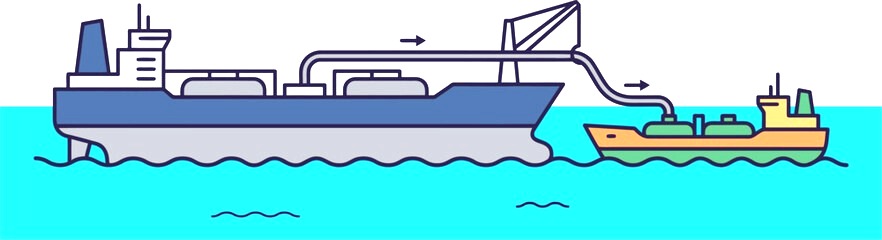
Bunker demand at Port Louis reportedly almost doubled to nearly 01 million Metric Tons in 2024. Bunker One has about 20,000 cubic metres of marine fuel storage at Port Louis and supplies HSFO, VLSFO, and LSMGO using its barge the MT Tulip.
Mauritius is strategically located on the east-west route in the Indian Ocean, linking Africa and Asia, as well as Pacific Ocean shipping reached via the southern route around South Africa. This presents opportunities for offering bunkering services.
A significant liberalisation of the Mauritian bunker market was undertaken in 2014, with government incentives provided through reduction and removal of charges and duties and an improved process for issuing of licenses and import permits. Bunkering services are carried out year-round by local suppliers, including Indian Oil (Mauritius) Ltd., Vivo Energy Mauritius Ltd., Total Mauritius Ltd., Engen (Mauritius) Ltd., and Stonewin (Mauritius) Ltd. Three grades of bunker fuel, namely GO 2500, FO 180, and FO 380, are currently available in Port Louis. The MPA has allocated land in the port area to private developers for the construction of additional storage facilities. Ship-to-ship bunkering is allowed solely within the port limits and at anchorage.
The following incentives are currently provided:
- exemption from excise duty and value-added tax on bunker fuel including for bunker barges operating with port limits;
- corporate tax exemption for bunker trade in IFO 380;
- exemption from environmental levy. Per the MPA, the supply of bunker fuel had exceeded 1 million metric tons as of August 2025 and one private company was proceeding with the construction of the bunker jetty.
Mauritius’s strategic location on the Indian Ocean shipping route presents significant opportunities for U.S. companies in the bunkering and petroleum sector. Key areas include the construction of petroleum jetties, development of fuel storage facilities, and supply of advanced bunkering equipment and environmentally friendly fuel alternatives.
The liberalised bunker market, coupled with government incentives such as exemptions from excise duty, VAT, and corporate tax, makes Mauritius an attractive destination for investment. U.S. firms can also provide technology solutions for fuel management, consulting services on regulatory compliance, and training for local operators. Partnerships with established local suppliers offer additional avenues for market entry and collaboration.
Team Maverick.



Solar Defence Showcases Indigenous ‘Bhargavastra’ Counter-Swarm Drone System to Indian Army
New Delhi, July 2026 : Solar Defence and Aerospace Ltd. (SDAL) on Friday showcased its ind…
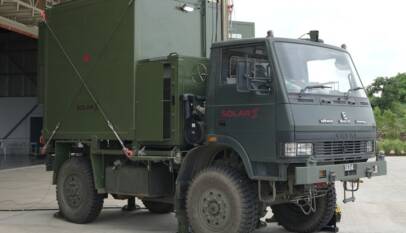
Solar Defence Showcases Indigenous ‘Bhargavastra’ Counter-Swarm Drone System to Indian Army
New Delhi, July 2026 : Solar Defence and Aerospace Ltd. (SDAL) on Friday showcased …