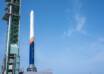
US Flags Pakistan’s Missile Programme as Emerging Threat in Global Security Assessment

Washington, March 2026 : Tulsi Gabbard has warned that Pakistan’s advancing missile programme could, in the future, bring the United States within striking range, highlighting it as part of a broader and evolving set of global threats to American security.
Presenting the US intelligence community’s 2026 Annual Threat Assessment before the Senate Select Committee on Intelligence, Gabbard outlined growing concerns over the rapid development of advanced missile technologies by several nations. She noted that both China and Russia are working on sophisticated delivery systems designed to evade or bypass US missile defence mechanisms. Meanwhile, North Korea already possesses intercontinental ballistic missiles (ICBMs) capable of reaching American territory and continues to expand its nuclear arsenal.
Against this backdrop, Pakistan’s missile development has drawn increasing attention. Gabbard stated that Islamabad’s progress in long-range ballistic missile technology could eventually lead to the development of ICBMs with the capability to strike the US homeland. While such capabilities may not yet be fully realised, the trajectory of its programme places Pakistan among emerging strategic concerns for American defence planners.
The 34-page threat assessment report reinforces this view, noting that Pakistan is steadily advancing its missile technology, potentially enabling it to target regions beyond South Asia. If current trends continue, the report suggests, such developments could pose a direct threat to the United States in the future.
The report also identifies South Asia as a region of persistent security challenges. Relations between India and Pakistan remain sensitive, with the potential for escalation due to their nuclear capabilities. It highlights that past confrontations between the two nations have carried the risk of wider conflict, particularly when triggered by terrorist incidents.
Citing a recent terrorist attack near Pahalgam in Jammu and Kashmir, the report underscores how such events can quickly escalate tensions. It noted that intervention by Donald Trump helped de-escalate the latest crisis, and assessed that neither India nor Pakistan currently seeks open conflict. However, the presence of active terrorist groups continues to create conditions for potential crises.
Gabbard emphasized that while the US maintains a strong nuclear deterrent to safeguard its homeland, the threat landscape is rapidly expanding. Countries including Russia, China, North Korea, Iran, and Pakistan are actively developing a range of advanced missile systems, both nuclear and conventional, that could threaten US security.
She warned that the number of missiles capable of reaching the US could rise dramatically in the coming years—from over 3,000 currently to more than 16,000 by 2035—reflecting the scale of the evolving threat environment.
The report also sheds light on tensions along the Pakistan-Afghanistan border, particularly between Pakistan and the Taliban. It notes increasing friction due to Islamabad’s concerns over anti-Pakistan militant groups operating from Afghan territory. In February, clashes escalated after Taliban forces launched strikes on Pakistani military positions, prompting retaliatory airstrikes by Pakistan, including in Kabul—marking a significant escalation.
While the Taliban has publicly called for dialogue, it has denied harbouring militant groups targeting Pakistan. The situation remains volatile, adding another layer of complexity to regional and global security dynamics highlighted in the US assessment.
(The content of this article is sourced from a news agency and has not been edited by the Mavericknews30 team.)



From a Charity Photo to the World Cup Final: Messi and Yamal Set for Extraordinary Reunion
New York, July 2026 : Football has produced countless remarkable stories over the years, b…

From a Charity Photo to the World Cup Final: Messi and Yamal Set for Extraordinary Reunion
New York, July 2026 : Football has produced countless remarkable stories over the years, …