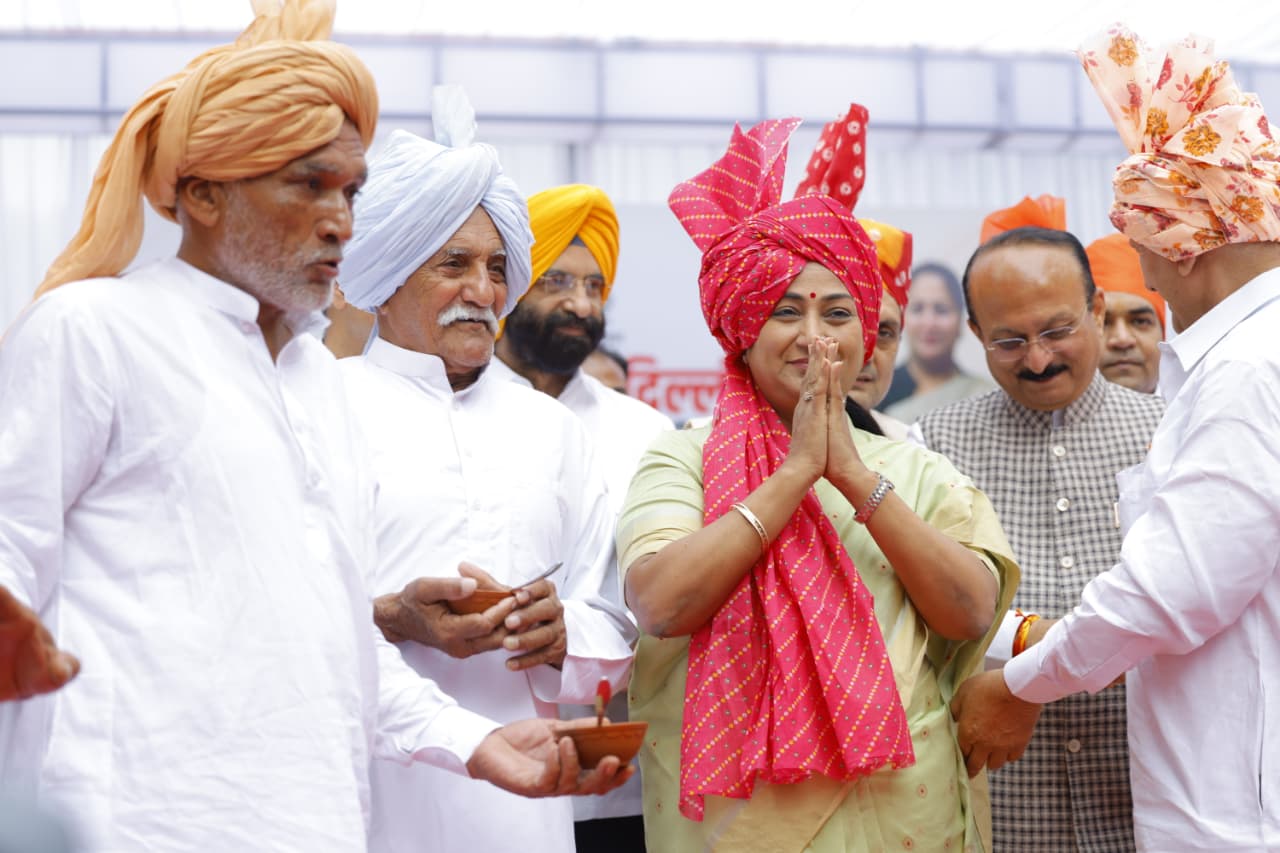
Chief Minister Rekha Gupta Presents Delhi’s Robust Economic Report

Economic Survey 2025-26: Delhi’s Economy Reaches ₹13.27 Lakh Crore, Marking an Impressive Growth of 9.42%
Per Capita Income Touches ₹5.31 Lakh, Standing Two-and-a-Half Times Higher Than the National Average
New Delhi, March 2026 : Chief Minister Smt. Rekha Gupta presented the Economic Survey 2025-26 on Monday, the first day of the Legislative Assembly’s Budget Session. Laying it on the table of the House, the Chief Minister stated that the Economic Survey serves as clear evidence of the capital’s rapidly growing economy, robust infrastructure, and pro-people welfare policies. The Delhi Government’s objective is to transform the capital into a world-class, inclusive, equitable, and livable city, so that the aspirations of every citizen may be fulfilled.
DELHI ECONOMY
“The Economic Survey of Delhi 2025–26” marks the 17th edition in its series. The Government of NCT of Delhi has been working with an aim to transform Delhi into a world-class city and to fulfil the aspirations of its citizens by making it an inclusive, equitable and liveable global city.
As per advance estimates, the GSDP of Delhi at current prices during 2025-26 is likely to reach ₹13,27,055 crore, reflecting a growth of 9.42% over 2024-25. The per capita income of Delhi at current prices during 2025-26 is estimated at ₹5,31,610, registering a growth of 7.92% over the previous year. Delhi’s per capita income is estimated to be around 2.5 times higher than the national average. The Survey indicates that the per capita income of Delhi grew at slower rate compared to national average during the two years of 2023-24 and 2024-25.
Delhi’s economy continues to be dominated by the service sector, contributing 86.32% to Gross State Value Added (GSVA) at current prices during 2025-26, followed by the secondary sector at 12.88% and the primary sector at 0.80%. The city has maintained a consistent revenue surplus, with the budgeted surplus for 2025-26 estimated at ₹9661.31 crore, which is 0.73% of GSDP.
Tax collection for 2025-26 is budgeted to grow by 15.54% over the previous year. The total budget for 2025-26 stands at ₹1,00,000 crore, out of which ₹59,300 crore has been allocated for schemes, programmes and projects of GNCTD, marking an increase of ₹20,300 crore over ₹39,000 crore in 2024-25 (BE).
During 2025-26, the transport sector has been allocated the largest share of about 20% of total budget allocation for schemes and projects, followed by social security and welfare (17%), water supply and sanitation (15%), education (13%) and health (12%). The annual average Consumer Price Index (CPI) for industrial workers in Delhi increased from 132.5 in 2024 to 139.4 in 2025, registering a rise of 6.9 points (4.9%).
ENVIRONMENT, FOREST AND AGRICULTURE
With sustained efforts towards air pollution control, the number of ‘good days’ (including good, satisfactory and moderate categories) has increased from 159 in 2018 to 200 in 2025.
Delhi has a well-established veterinary infrastructure comprising 46 government veterinary hospitals, 25 veterinary dispensaries, one laboratory, one Farmers Information Centre and three mobile veterinary units. The number of animals treated in government veterinary hospitals and dispensaries has increased significantly from 4,15,986 in 2011-12 to 5,38,458 in 2024-25 and further to 5,45,754 up to March 2026.
TOURISM, POWER AND INDUSTRY
The manufacturing sub-sector plays a major role in Delhi’s secondary sector. GSVA from manufacturing is estimated at ₹45,930 crore in 2024-25 and ₹50,144 crore in 2025-26 at current prices, reflecting annual growth rates of 6.30% and 9.18%, respectively.
Delhi continues to be a key destination for both foreign and domestic tourists. In 2024, Delhi secured the 6th position in foreign tourist visits with a share of 9.55%, as per the India Tourism Data Compendium-2025.
In the power sector, peak demand has increased from 5846 MW in 2015-16 to 8442 MW in 2025-26. The total installed renewable energy capacity stands at 509 MW as of January 2026, comprising 425 MW of solar energy and 84 MW from waste-to-energy.
TRANSPORT
Public transport in Delhi primarily consists of bus services operated by DTC and cluster buses, along with the metro rail network of DMRC. The number of electric buses has increased significantly from 2150 in April 2025 to 4338 in March 2026.
The average daily ridership of DMRC, including Airport Express Line (AEL), is approximately 67 lakh passengers. As of March 2026, DTC and the Transport Department together operate a fleet of 6100 buses, including 1002 non-AC low-floor CNG buses, 760 AC low-floor CNG buses, 2750 AC low-floor electric buses (12-metre) and 1588 AC low-floor electric buses (9-metre).
HOUSING, WATER SUPPLY AND WASTE MANAGEMENT
The Atal Canteen scheme was launched in December 2025, and currently 73 such canteens are operational. The Delhi Government provides free lifeline water up to 20 kilolitres to households with metered connections, benefitting approximately 18.91 lakh consumers.
About 93.5% of households in Delhi now have access to piped water supply. During the summer season, water production is maintained at around 1000 MGD per day. Water is supplied to nearly 25 million residents through a network of 15,700 km of pipelines and more than 123 underground reservoirs.
Over the last 17 years, the installed capacity of Delhi Jal Board has increased by 21.64%, with total water treatment capacity reaching 961 MGD by 2025. The sewerage network includes about 11,040 km of peripheral sewers and 200 km of trunk sewers. The government continues to focus on ensuring equitable access to clean water, effective wastewater and solid waste management, and achieving Sustainable Development Goal 6 (clean water and sanitation for all).
EDUCATION
Delhi has 1270 government and government-aided schools, accounting for 22.85% of all schools in the city. These schools account for 39.75% of total enrolment during 2024-25.
Delhi government schools recorded strong academic outcomes, with pass percentages of 97.7% in Class 10 and 98.3% in Class 12 during the 2024-25 academic session. The intake capacity in various technical and professional courses at the university level during 2025-26 is 4664.
The government has also established 75 CM SHRI Schools under the Directorate of Education from the academic session 2025–26. These institutions are envisioned as future-ready, pace-setting centres aligned with the National Education Policy (NEP) 2020, promoting excellence and equity in education.
HEALTH
Delhi’s healthcare infrastructure includes 40 multispecialty and super-specialty hospitals, 98 allopathic dispensaries, 64 seed primary urban health centres, 370 Ayushman Arogya Mandirs, 48 polyclinics, 57 ayurvedic dispensaries, 28 unani dispensaries, 121 homeopathic dispensaries, 16 mobile health units, 6 mobile dental vans and 36 school health clinics, providing preventive, promotive and curative services.
The number of beds per 1000 population has increased from 2.73 in 2015-16 to 2.84 in 2025-26. The total number of beds in government hospitals under the Health and Family Welfare Department has increased from 12,464 in 2020 to 15,659 in December 2025.
SOCIAL SECURITY AND WELFARE
The Delhi Government provides financial assistance of ₹2500 per month to senior citizens aged 70 years and above, and ₹2000 per month to those aged 60–69 years. An additional ₹500 per month is provided to beneficiaries from SC/ST and minority categories within the 60–69 age group. Financial assistance of ₹2500 per month is also provided to persons with special needs and women in distress.
During the financial year 2025-26, approximately 4.40 lakh senior citizens (up to March 2026), 4.09 lakh women in distress (up to January 2026) and 1.40 lakh persons with special needs (up to March 2026) have been covered under these schemes.
PUBLIC DISTRIBUTION SYSTEM
The Public Distribution System (PDS) in Delhi operates through a network of 1953 fair price shops, serving approximately 72.21 lakh beneficiaries through 17.18 lakh Aadhaar-enabled digital food security cards as of 31 March 2025.
Under the scheme, Antyodaya Anna Yojana (AAY) households receive 35 kg of food grains per month (28 kg wheat and 7 kg rice), while Priority Household (PHH) beneficiaries receive 5 kg of food grains per month (4 kg wheat and 1 kg rice) free of cost. Additionally, the Delhi Government provides 1 kg of sugar free of cost to AAY cardholders.



More Than a Café: How MITTI Café is Brewing Hope, Dignity and Dreams at Rashtrapati Nilayam
Hyderabad, July 2026 : Tucked away inside the serene campus of Rashtrapati Nilayam in Boll…
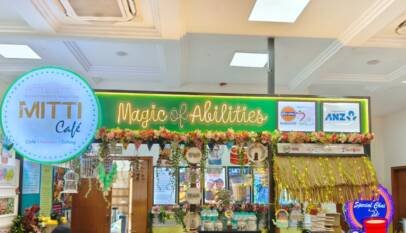
More Than a Café: How MITTI Café is Brewing Hope, Dignity and Dreams at Rashtrapati Nilayam
Hyderabad, July 2026 : Tucked away inside the serene campus of Rashtrapati Nilayam in …