From National Leadership to Global Excellence: Punjab Government Launches Mission Samarth 2026–27 with Attendance Reforms

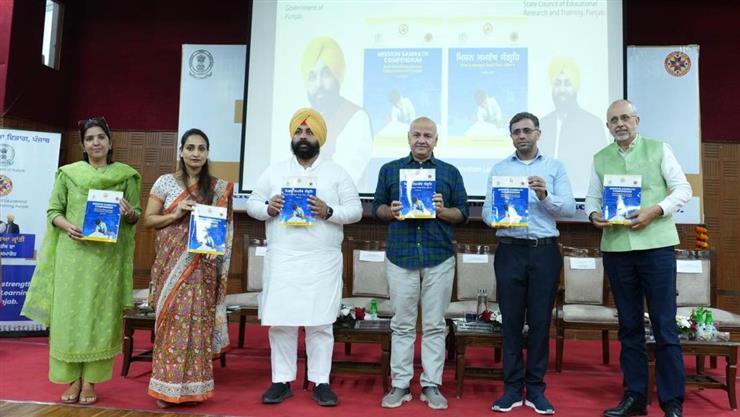
Chandigarh, April 2026 : To take Punjab’s education revolution to the next phase, Education Minister Harjot Singh Bains and former Delhi Deputy Chief Minister and AAP Punjab in-charge Manish Sisodia today launched Mission Samarth 4.0. This is a major foundational learning programme aimed at bringing global-level excellence in education.
This new initiative provides a statewide attendance tracking system, under which parents will receive daily SMS updates about their child’s attendance. It reflects Punjab’s move towards real-time accountability and a consistently positive classroom learning environment.
Describing the programme as the next big leap in Punjab’s education revolution, Education Minister Harjot Singh Bains said that Punjab, which has already secured the top position in the PARAKH (Performance Assessment, Review, and Analysis of Knowledge for Holistic Development) survey, is now moving towards transformative outcomes by strengthening classroom accountability and adopting proven educational practices.
He emphasized that Chief Minister Bhagwant Singh Mann has increased the education budget to Rs 19,279 crore to ensure that funds reach classrooms instead of remaining stuck in files. This will bring meaningful changes in government schools, from infrastructure to outcomes.
Referring to Punjab’s top ranking in the PARAKH National Survey 2024, Bains said that under the leadership of Chief Minister Bhagwant Singh Mann, the state has introduced the attendance tracking system as part of Mission Samarth 2026–27.
He said, “Parents will receive daily SMS updates about their child’s attendance, including information about every absence. The aim is to increase regular attendance, learning interest, and participation in various activities. If a child remains absent for seven days, parents will be contacted at the district level, and if the absence exceeds 15 days, the state headquarters will intervene. This will ensure both continuity in learning and the safety of children.”
Highlighting the importance of the programme, the minister said, “Mission Samarth has transformed classrooms. This phase focuses on attendance tracking, improved monitoring, and sharing of best practices to enhance standards and accountability in education. Our goal is to ensure a strong foundational base for every child.”
Speaking about the journey, he said, “I am grateful for this responsibility. Earlier, every MLA wanted to become a minister, but not the education minister. For me, this has been a preferred role.”
Discussing investment in education, Bains said, “The education budget has been increased from Rs 12,657 crore in 2021–22 to Rs 19,279 crore in 2026–27, the highest allocation for any sector in Punjab. This money has reached every school. Earlier, teachers had to collect funds even for basic repairs, but now grants are sufficient.”
He added that every senior secondary school with over 500 students now has a dedicated campus manager, while schools with more than 100 students have security and sanitation staff.
On academic reforms, he said that textbooks are now delivered on time. “Earlier, books arrived as late as September or October. This year, every child received complete textbooks by April 1, free of cost,” he said.
Explaining the core objective of Mission Samarth 4.0, he said it ensures that students from Classes 3 to 8 achieve proficiency in reading, writing, and mathematics. He cited an example of a Class 8 student who said he had passed Class 5 without learning much but now feels confident after the programme.
Bains and Sisodia also released a compendium of 38 proven classroom practices developed by Punjab teachers to improve learning outcomes and support weaker students.
Manish Sisodia said, “Punjab has proven that government schools can lead the nation. With Mission Samarth 4.0, the state is ensuring that every child attends school daily and learns effectively. This is a major step towards global excellence.”
He added, “If even one child falls behind, the government has failed in its basic duty. Children represent hope, and that hope cannot fall below the baseline.”
Highlighting accountability, Sisodia said, “Speeches do not change lives—actions do. A simple message to parents that ‘your child has reached school safely’ builds real trust.”
School Education Secretary Sonali Giri welcomed the guests and said that the initiative would ensure pride among students and parents in government schools.
Senior officials, including SCERT Director Kiran Sharma and Central Square Foundation Advisory Board member Shweta Sharma Kukreja, were also present.
Under Mission Samarth, a focused, classroom-driven approach is adopted, grouping students based on learning levels rather than grades. With Punjab already emerging as a top-performing state in PARAKH 2024, Mission Samarth 2026–27 aims to take the state from national leadership to global excellence.



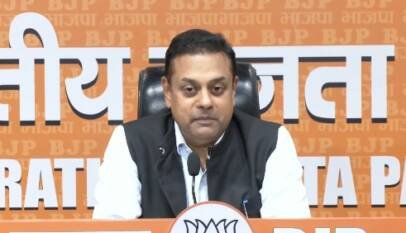
Adani group visits Hon’ble Deputy Chief Minister and Energy Department, Govt. of Odisha
Bhubaneswar, July, 2026 : Kharavel Bhawan, representatives from the Adani Group delivered …
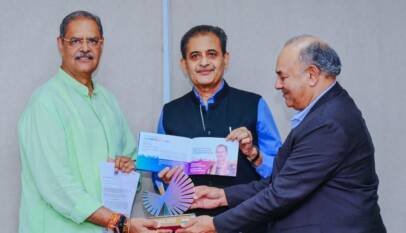
Adani group visits Hon’ble Deputy Chief Minister and Energy Department, Govt. of Odisha
Bhubaneswar, July, 2026 : Kharavel Bhawan, representatives from the Adani Group delivered a comprehensive …