Australia To Receive Frigates From Japan In The Largest Ever Defence Deal.

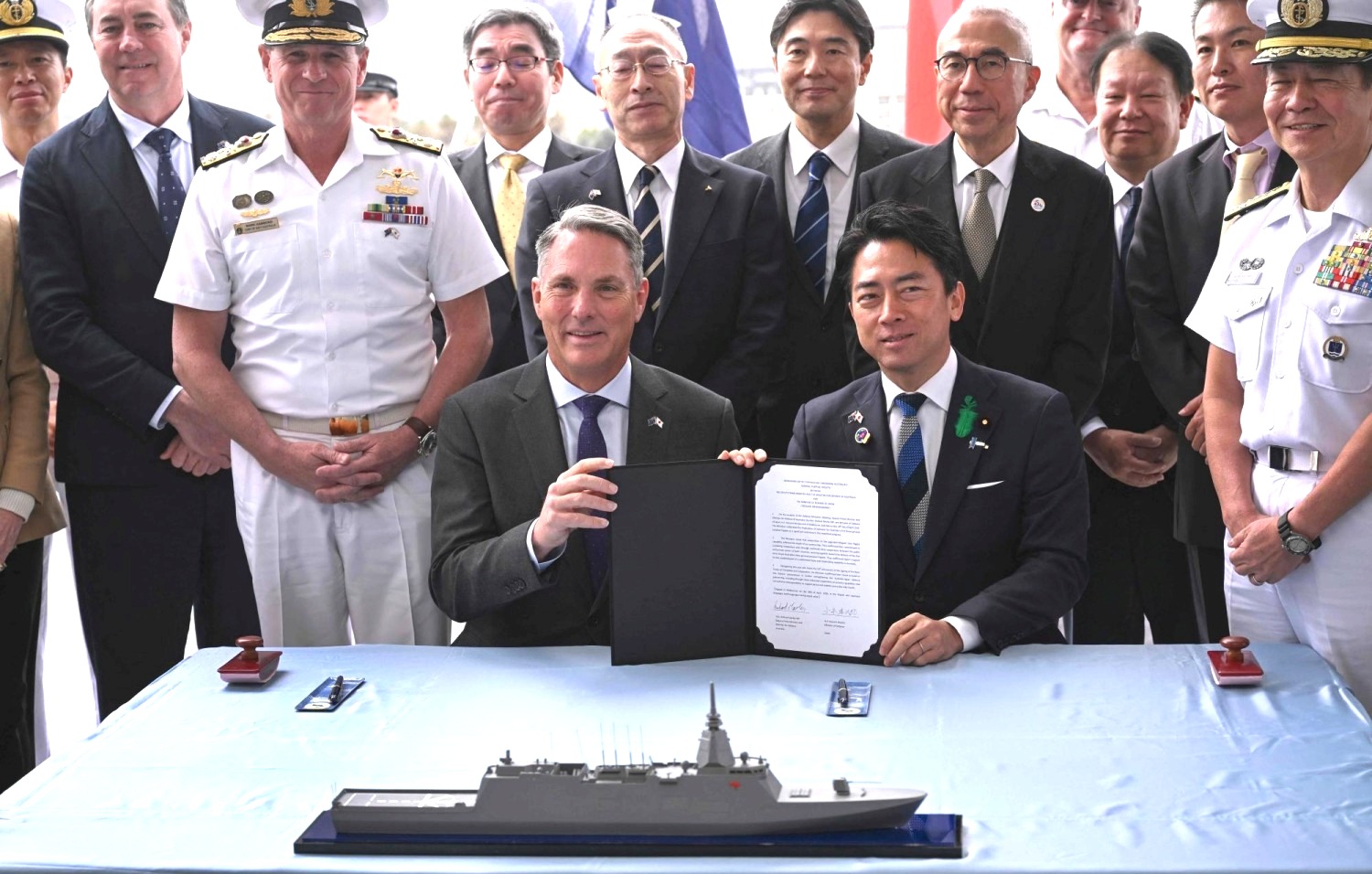
Canberra/Tokyo; April 2026: In a major breakthrough for Japan’s defence industry, Japan today (18th April 2026) has reached a landmark agreement with Australia to supply the first 03 of a planned fleet of 11 upgraded Mogami-class frigates to the Australian Navy, the largest defence export contract in Japan’s postwar history. Signed in Melbourne by Defence Minister Shinjiro Koizumi and his Australian counterpart, Richard Marles, the multibillion dollar deal underscores the deepening strategic alignment between the quasi-allies and heralds significantly expanded military and industrial cooperation.
“We will see the first of these frigates come to Australia in 2029 and in the early 2030s the general-purpose frigate, the Mogami class, will be the backbone of continuous naval shipbuilding in Western Australia”, Marles said in a ceremony aboard the Maritime Self-Defence Force’s Mogami-class frigate Kumano, which was in Australia to take part in the Kakadu multilateral maritime exercise.
Koizumi, who also signed a “Mogami Memorandum” with Marles reaffirming both governments’ commitment to the program’s successful delivery and deeper defence-industrial cooperation, described the introduction of Japanese naval vessels into the Australian Navy as a “major step” in elevating bilateral defence ties.
Australia aims to acquire 11 general-purpose frigates optimized for undersea warfare to replace its aging Anzac-class fleet. To accelerate delivery, the first three vessels will be built in Japan at Mitsubishi Heavy Industries’ Nagasaki Shipyard & Machinery Works, while production of the remaining ships will shift to the Henderson shipyard in Perth, Western Australia, where they are expected to be constructed by Australian firm Austal. The first warship is scheduled for delivery in December 2029 and is set to enter service in 2030, with the third set to become operational by 2034.
Marles said Canberra is working with both Japanese industry and the MSDF to develop an initial capability to sustain and operate the upgraded Mogami frigates in Australia, supported by Australian industry and workers.
Following a competitive bidding process, Australia selected Mitsubishi Heavy Industries (MHI) last August as the preferred partner for its decadelong Project Sea 3000. Officials in Canberra described Japan’s proposal as “the clear winner” over Germany’s Thyssenkrupp Marine Systems in terms of cost, capability and its ability to meet delivery timelines. While officials have stated that Australia and Japan’s shared concerns over China’s growing military assertiveness “didn’t influence” the selection process, observers had long speculated that Beijing’s moves would be a key factor in any decision.
Australia’s latest Integrated Investment Plan estimates it will cost between 15 billion and 20 billion Australian dollars ($10.76 billion to $14.35 billion) over the next decade, which is roughly double the AU$7 billion to AU$10 billion projected just two years ago.
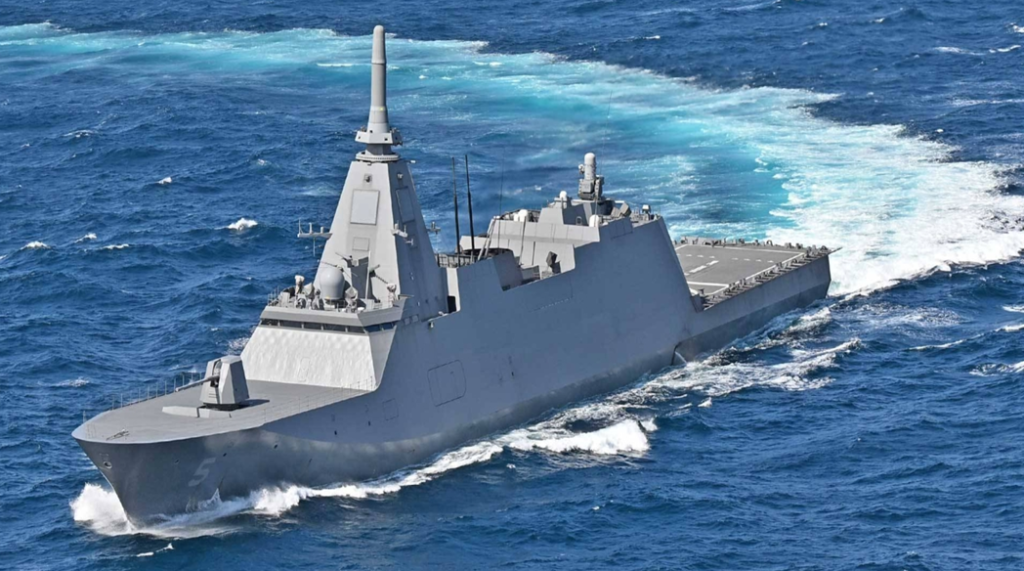
The Mogami-class frigates can be deployed across a range of missions, including anti-submarine warfare. Their modular architecture allows for mission-specific configurations, enhancing operational flexibility. Designed for a service life of around 40 years and interoperability with U.S. systems, the vessels are also more cost-effective than larger destroyers and can be operated with a crew of about 90 which is roughly half that of comparable ships, those who perform similar roles.
The class, which features a stealthy hull design that reduces radar detectability, is also undergoing continuous upgrades. The Maritime Self-Defence Force (MSDF) is procuring two batches of 12 ships, with the second batch, a larger and more capable variant, slated to enter service from 2028. This upgraded version, which has yet to be fielded, is the model Australia will acquire to help secure its maritime trade routes, northern approaches as well as escort military assets.
Each of the multimission warships boasts a range of up to 10,000 nautical miles (18,520 kilometers), a 32-cell vertical launch system and is armed with surface-to-air missiles and anti-ship missiles. Each frigate will be crewed by 92 sailors and officers and be capable of embarking the navy’s MH-60R Seahawk maritime combat helicopter. The frigates will operate both independently and in conjunction with Australia’s Hobart-class destroyers and Hunter-class frigates.
The ship’s anti-air warfare systems are to be installed by Mitsubishi Electric under a separate contract announced Saturday. The company said in a statement that it will leverage its advanced sensor and information-processing technologies to contribute to the Australian Navy’s intelligence-gathering and surveillance capabilities as well as strengthen bilateral defence cooperation through advanced technologies. The value of the contract was not disclosed.
The procurement is part of a broader expansion of Australia’s surface combatant fleet aimed at addressing threats both further afield and alongside regional partners amid concerns over China’s rapid military build-up. With Japan and Australia steadily deepening security coordination, Tokyo positioned the Mogami bid as a means of formalizing the partnership through enhanced interoperability and industrial collaboration.
The Mogami agreement represents only Japan’s second export of a complete defence system since the easing of arms export restrictions in 2014, following the sale of air-surveillance radars to the Philippines in 2020. It also marked the first time Japan established a joint public-private promotion body dedicated to a single defence export project, which an approach officials say could be replicated in future deals. The contract highlights the progress of Japan’s defence industry over the past decade, helping to dispel memories of its unsuccessful submarine bid to Australia in 2016. At the same time, the lucrative contract serves as a confidence booster for the broader domestic defence industry.
The lessons learned will be critical going forward as Tokyo prepares to scrap as early as next week a requirement limiting Japan’s military exports to five nonlethal categories in a bid to step up defence-industrial cooperation with allies and key partners. One of them could be New Zealand.
Following Australia’s selection of the Mogami class, New Zealand has also expressed interest in the advanced Japanese warship, with the upgraded Mogami class and the British Type 31 have emerged as the top contenders to replace the New Zealand Navy’s aging Anzac-class frigates by the mid-2030s.
New Zealand is yet to confirm this but it has said it aims to procure and employ capabilities that are “common and complementary” to those of Australia.
Koizumi confirmed on Saturday that New Zealand has a “strong interest” in the upgraded Mogami class, noting that revisions to Japan’s export guidelines “will enable us to pursue transfers that meet the needs of like-minded countries and strengthen their deterrence and response capabilities. We are already hearing about the needs and expectations for Japan’s high-tech defence equipment from a range of countries”, he added.
Marles also welcomed Japan’s planned easing of its arms export controls, calling it “really important” for reducing barriers and building a “seamless defence-industrial base” needed to deliver the Mogami contract and support future joint industrial projects.
Today’s ceremony also included an implementing agreement on the sharing of sensitive data related to Australia’s advanced Ghost Bat “loyal wingman” drones. Both partners increasingly view unmanned systems as force multipliers capable of offsetting China’s military mass, a lesson underscored by the conflicts in Ukraine and the Middle East.
The two sides also signed a letter of intent to boost cooperation in cyber defence. But it’s not just Australia and New Zealand. There is also growing interest in Japanese equipment and tech from NATO member states and countries in Southeast Asia.
Indonesia has also expressed interest in the upgraded Mogami and is known to be considering acquiring decommissioned Japanese Soryu-class submarines. As Japan aims to boost the defence capabilities of like-minded neighbors, the Philippines has also expressed interest in acquiring used MSDF Abukuma-class destroyer escorts in what could be another export of a major naval platform. Tokyo is set to decommission the first of six Abukuma vessels next year.
Team Maverick.






AAIB Interim Statement on the Progress of Investigation into the Accident Involving Air India Flight AI-171
Today marks one year since the tragic accident involving Air India Flight AI-171, a Boeing…
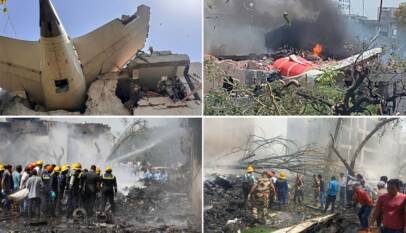
AAIB Interim Statement on the Progress of Investigation into the Accident Involving Air India Flight AI-171
Today marks one year since the tragic accident involving Air India Flight AI-171, a …