Treaty On The Non-Proliferation Of Nuclear Weapons Opens Today At New York As India To Participate.

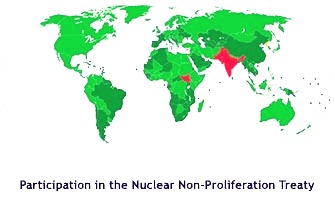
New York; April 2026: The 11th Review Conference of the Parties to the Treaty on the Non-Proliferation Treaty (NPT) of Nuclear Weapons, which opens today (April 27th) at the UN headquarters in New York, may become one of the most confrontational in history.
Due to sharp geopolitical differences, the 191 member states of the NPT have been unable to agree on a final statement for the past two times, and now the attention of the world community is riveted on the third attempt to reach a compromise. However, there have only been more irritants since the last two conferences. The failure of States to adopt generally acceptable language to reaffirm the viability of the NPT would be another painful blow to the nuclear non-proliferation regime.
Such conferences are held on an average once in every five years to sum up the interim results of the implementation of the “cornerstone” international agreement in the field of security. The key provision of the NPT, which entered into force in 1970, is to guarantee that nuclear powers will not transfer weapons and military nuclear technologies to non-nuclear countries, and they will not accept them or try to create them on their own. Not everything is perfect with the implementation of the NPT, but it is generally accepted that if it were not for this treaty, today there would not be 09 nuclear states (05 officially recognised: Russia, United States, China, France, Britain, and 04 unrecognised: India, Israel Pakistan, North Korea), but about 30, which would make the use of nuclear weapons more likely.
But in recent years, there has been a palpable increase in dissatisfaction with the way this kind of global social contract is being implemented. The nuclear powers have entered a period of tough confrontation with each other, which makes it impossible to further reduce their nuclear arsenals, although they are supposedly obliged to do so under the NPT.
Non-nuclear states, on the one hand, are dissatisfied with the fact that nuclear powers do not fulfill their disarmament obligations, and, on the other hand, against the backdrop of surging international turbulence, they themselves have recently become increasingly interested in nuclear weapons, seeing them as the only means of guaranteeing protection from external threats.
Non-nuclear Iran, which has been subjected to aggression by the nuclear United States and Israel, has already threatened to withdraw from the NPT, which, according to many experts, could lead to a “domino effect”, when other countries in the region consider the restrictions imposed on them under the treaty is inappropriate.
Director General of the International Atomic Energy Agency (IAEA) Rafael Grossi recently called the nuclear arms race his ‘worst nightmare’, while further asserting, “At some point, we may see a crack in the system of nuclear non-proliferation. And then a chain reaction will begin. This causes me concern, because I believe that a world with 20 or more nuclear powers would be extremely dangerous”, he said in an interview.
A successful Review Conference with the adoption of a consensus final declaration would be an indicator that all States parties to the NPT are willing and able to find compromise solutions in order to maintain the non-proliferation regime. But following the results of the last two conferences, it was not possible to reach such a common document.
In May 2015, primarily because of the objections of the United States, Canada and Britain to the wording of a zone free of weapons of mass destruction in the Middle East. In 1995, the NPT was extended indefinitely, but the key condition for the Arab countries to agree to this was precisely the creation of such a zone in their region. Israel, the only country in the region that possesses nuclear weapons, refuses to participate in negotiations on this issue. Israel is not a party to the NPT. In 2015, the United States, Canada and Britain, in fact, spoke on his behalf, rejecting any specific wording on the zone.
In August 2022, one of the main reasons for the disagreements between the participants in the review conference was the conflict over the Zaporizhzhia Nuclear Power Plant (ZNPP), which had recently come under the control of the Russian Federation. Western countries accused Russia of threatening the nuclear facility and seizing it, and it, in turn, insisted that they were deliberately politicizing this issue and making the conference a “hostage” of its geopolitical agenda.
In connection with the previous two failures, attention to the current conference is particularly high.
Tariq Rauf, a former curator of IAEA security policy and former program director of the Stockholm Peace Research Institute (SIPRI), and now an independent expert, has said while speaking with media reporters, “I do not think it would be an exaggeration to say that the 2026 NPT Review Conference is the most significant since the 1995 conference, when the States Parties made an extraordinary decision to extend the treaty indefinitely”.
In his opinion, it is not the time now for “ritual reaffirmations of loyalty to the treaty and its provisions” and “talk about the need to lower expectations, rather is the time for honest analysis and practical action. The review process was successful when there was political will and organization, and it failed when narrow national interests were allowed to disguise themselves as principled positions”.
Whether, despite the differences in national interests and positions of states, it will be possible to reach a compromise in a month, as the conference would conclude on May 22nd. The chances of a breakthrough, soberly assessing the situation, are small. Since the past two conferences, the number of controversial issues has only increased and each state has its own list of claims to others.
It is Russia, which among other things, considers the following actions to violate the provisions or undermine the spirit of the NPT:
- The war between the United States and Israel against Iran (both this year and last year’s 12-day war). The strongest blow to the treaty and the IAEA safeguards system was the unprovoked, unjustified and illegal attacks by Israel and the United States on Iran. In themselves, these acts of aggression are a blatant example of the use of the nuclear non-proliferation regime and the NPT, on which it is based, as a pretext for the use of military force against ‘undesirable’ governments in order to overthrow them, or even destroy the states they lead, as reiterated by the Russian Deputy Foreign Minister Sergei Ryabkov last week during a meeting of the PIR Center Trialogue International Club.
He stressed that the strikes on Iran were carried out primarily in the interests of Israel, a state that has historically ignored the NPT, reserving the right to make accusations against non-proliferation obligations against other countries. The United States, which supported this aggression, as Sergei Ryabkov recalled, was one of the founding fathers of the NPT and remains one of its depositories.
- The announcement by France and Britain of their intention to begin to build up their nuclear arsenals again and at the same time to stop making information about them transparent.
- The policy of France, which allows the deployment of its nuclear arsenals in a number of European countries as part of providing them with a ‘nuclear umbrella’.
- More frequent statements by representatives of Western countries that do not possess a nuclear arsenal regarding the possibility of creating their own nuclear weapons or deploying foreign nuclear weapons on their territory.
- Statements by the US administration about its readiness to resume full-fledged nuclear tests under the pretext that they are allegedly carried out by Russia and China.
- Disinterest of the United States in the proposal of the Russian Federation to voluntarily assume obligations to limit the number of strategic offensive arms, as well as to deploy intermediate-range and shorter-range missiles.
- The transfer of nuclear submarines to Australia as part of the AUKUS project.
This is not a complete list of what causes Moscow concern in the context of the NPT. Russia’s opponents have their own list of claims against it. For example, on the eve of the review conference, NATO member states adopted a joint statement stating that while they were fully committed to the full implementation of the NPT, Russia violated crucial arms control obligations and irresponsibly resorted to threatening nuclear rhetoric.
According to Sergei Ryabkov, the NPT member states are approaching the opening conference ‘with a very heavy baggage’. At the same time, he stressed that he did not agree with the ‘alarmist reasoning’ that the third consecutive ‘failure’ to agree on a final document would cause irreparable damage to the treaty and the international regime based on it. “The final document of the conference is certainly an important element, but it cannot be an end in itself of the review process. At the end of the review cycle, the most important thing is to make sure that the NPT continues to perform its functions, and the states parties remain committed to their obligations under the treaty”, he said at Trialogue.
If the parties still want to try to reach a joint document, then, in the context of the current confrontation, according to Sergei Ryabkov, it should be drawn up according to the principle of the “lowest common denominator (LCD)” and without “impassable formulations”.
Team Maverick.




Massive Crowds Gather in Tehran as Iran Begins Week-Long Funeral for Supreme Leader Ali Khamenei
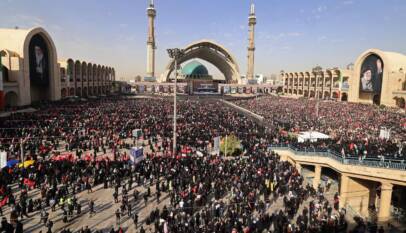
Tehran, July 2026 : Hundreds of thousands of mourners filled the streets of Tehran as Iran…
Massive Crowds Gather in Tehran as Iran Begins Week-Long Funeral for Supreme Leader Ali Khamenei
Tehran, July 2026 : Hundreds of thousands of mourners filled the streets of Tehran …