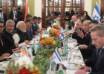
Open Letters From His Majesties Office Of Treasury And Bank Of England.

London; April 2026: The CPI inflation was 3.3% in March 2026, prompting an open letter from the Governor of the Bank of England to the Chancellor on 30th April 2026. The Chancellor replied to the Governor the same day on 30th April 2026.
If at any point of time, the inflation moves away from the target by more than 01 percentage point in either direction – the remit for the Monetary Policy Committee (MPC) requires an exchange of open letters between the Governor of the Bank of England and the Chancellor of the Exchequer. The open letter system, required in the remits for the MPC since 1997, provides a formal mechanism of transparency and accountability in the event of any appreciable deviations from target. The letter should refer as necessary to the Bank’s latest Monetary Policy Report and forecasts. The reason for publishing the letter at that time is to allow the MPC time to form and communicate its strategy towards returning inflation to the target after consideration of the trade-offs, resulting in a more meaningful exchange about the MPC’s strategy.
BANL OF ENGLAND GOVERNORS LETTER –
This letter sets out the outlook for inflation and the policy action the Monetary Policy Committee (MPC) is taking to return inflation to the 2% target, along with other considerations required by the MPC’s remit when inflation moves away from the 2% target by more than 01 percentage point.
Why has inflation moved away from the 2% target? At the time of the February Monetary Policy Report, there had been continued disinflation in domestic prices and wages, in part reflecting the impact of monetary policy. CPI inflation had been expected to fall back to around the 2% target from April.
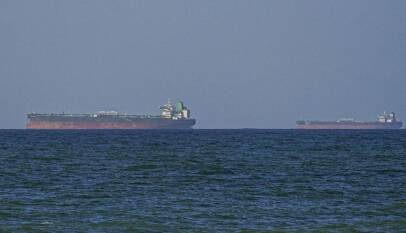
The subsequent outbreak of conflict in the Middle East has had a significant impact on the availability and price of a range of goods, particularly oil and natural gas. Transport through the Strait of Hormuz, a key shipping route, has been restricted and there is limited capacity on alternative export routes. This has pushed up energy prices globally. CPI inflation increased from 3.0% in February to 3.3% in March, 0.3 percentage points higher than expected at the time of the February Report. The upside news mainly reflected higher motor fuel prices, which have risen on account of higher crude oil prices owing to the conflict in the Middle East.
The direct contribution of energy prices to CPI inflation in March was 0.3 percentage points. The price of household motor fuels tends to move quickly as the global oil price rises. Average petrol pump prices have risen from 130 pence per litre in February, prior to the conflict, to around 157 pence per litre in April. Diesel has risen by more, from 141 pence per litre in February to 190 pence per litre.
Household gas and electricity prices are somewhat slower to increase following wholesale cost increases. This is because energy suppliers purchase gas weeks or months in advance of using it, and these prices are taken into account when Ofgem calculates the energy price cap. Utility prices therefore account for little of the current overshoot in inflation. Indeed, utility prices are projected to be lower in 2026 Q2 than Q1 as a result of the Government’s energy bill package set out in Budget 2025. But, based on the prevailing gas futures curves, the price cap is now expected to rise significantly in both July and in October, putting upward pressure on utility prices later in the year.
Energy is a key input into the production of food and core goods items. The conflict has raised the prices of non-energy goods globally, largely through the indirect effects of higher energy costs. This has already started to feed through to higher non-energy world export price inflation. Global agricultural prices have risen by 4.5% since the start of the conflict, owing largely to the direct effects of rising energy costs. The conflict has also pushed up prices of key inputs to fertiliser production, including urea, ammonia and sulphur, large volumes of which has passed through the Strait of Hormuz. Natural gas, the price of which has increased sharply, is also a key input into fertiliser production, passing through to food prices with a lag.
Services inflation was 4.5% in March, up from 4.3% in February, also contributing materially to the overshoot in inflation relative to target. Measures of underlying services inflation are elevated and above target-consistent rates. Part of the recent strength appears to reflect past rises in restaurant and cafe inflation, which may reflect previous rises in food price inflation.
The outlook for inflation having already increased to 3.3%, CPI inflation is expected to be higher later this year. Bank staff expect inflation to decline to 3.1% on average in 2026 Q2 before rising back to 3.3% in Q3. That Q3 projection is 1.4 percentage points higher than at the time of the February Report. The majority of this upside news to the near-term CPI outlook reflects a larger direct contribution from higher energy costs. CPI inflation is expected to rise somewhat further in Q4.
Although headline CPI inflation is projected to be higher later this year, services inflation is expected to fall from 4.5% in March to 3.8% by September. That reflects the impact of continued easing in wage growth and a large fall in April owing to base effects, as unusually large rises in water bills and vehicle excise duty in 2025 fall out of the annual comparison. Beyond April, the extent of disinflation is expected to be much less than previously expected. This is due to stronger non-labour input costs due to the Middle East conflict.
The indirect effects of higher energy prices are expected to build gradually, raising CPI inflation by around ⅓ of a percentage point in 2026 Q3. Based on a range of models that incorporate energy costs in domestic and imported supply chains, as well as intelligence from the Bank’s Agents and survey evidence, Bank staff estimate that the pass-through of indirect effects will be quickest in the near term for food prices. Core goods are also expected to increase due to higher energy costs.
What happens to inflation further ahead partly depends on whether the direct and indirect effects of higher energy prices lead to changes in wage and price-setting behaviour that will feed through into broad-based inflationary pressures. Continued weakness in activity and the labour market is likely to lessen the strength of second round effects from higher global energy prices. But these effects are likely to be stronger, the larger and more persistent is the rise in global energy prices.
The MPC has considered three scenarios in the April Report that help to illustrate how different assumptions about the path of global energy prices and the extent of any second-round effects could affect the medium-term outlook for inflation. Across these three scenarios, inflation is higher in the near term than the central projection in the February Report. The outlook varies depending on the magnitude of the energy shock and how that propagates through the economy. Larger and more
persistent rises in global energy prices are judged to be likely to lead to bigger second round effects on inflation.
The policy action the Committee is taking in response The MPC has statutory objectives to maintain price stability and, subject to that, to support the economic policy of the Government including its objectives for growth and employment as set out in its remit. The MPC sets monetary policy to meet the 2% inflation target, and in a way that helps to sustain growth and employment. The MPC’s remit is clear that the inflation target applies at all times, reflecting the primacy of price stability in the UK monetary policy framework. The framework recognises, however, that there will be occasions when inflation will depart from the target as a result of shocks and disturbances.
Monetary policy will ensure that CPI inflation returns to the 2% target sustainably in the medium term. In forming a view on its policy stance, and the horizon within which inflation returns to target, the Committee considers a number of factors including the nature and persistence of any shocks, the speed of Bank Rate transmission through to the real economy, the structure of the economy and the inflation expectations of agents in the economy.
At its April meeting, the Committee voted to maintain Bank Rate at 3.75%. The Committee will continue to monitor closely the situation in the Middle East and how its impact propagates through the economy. The Committee stands ready to act as necessary to ensure that CPI inflation remains on track to meet the 2% target in the medium term.
HM TREASURY’S LETTER –
The twelve-month measure of CPI inflation was 3.3% in March, which triggered an exchange of open letters under the terms of the Monetary Policy Committee (MPC) remit.
I acknowledge your projection in the April Monetary Policy Report that CPI inflation is expected to decline to 3.1% on average in 2026 Q2 before rising back to 3.3% in 2026 Q3 as a result of higher energy costs due to the Iran war. As you note, the MPC sets monetary policy to meet the 2% inflation target, and in a way that helps to sustain growth and employment.
Operationally independent monetary policy is a key feature of the UK’s economic framework and vital for maintaining price stability, so the government respects and fully supports the independence of the MPC. While the responsibility for returning inflation to the 2% target rests with the MPC, the government is also taking action to bring down inflation.
My number one mission is to drive growth and increase living standards in every part of our country. Low and stable inflation is a vital part of that – to keep costs low for families, support rising incomes and boost economic growth. The most important thing that the government can do to keep inflation low is to stick to our fiscal rules and get borrowing down. We have already reduced borrowing by nearly 1% of GDP in the last year and we are set to reduce borrowing faster than any other G7 country by 2030.
And at the Budget, I went further to bear down on prices for families – freezing rail fares and prescription charges and taking £150 off energy bills. Those measures, which came into force in April, are forecast to take 0.4ppt off inflation this year. As a result, prior to the Iran war, inflation was forecast to fall to target later this year – sooner than previously expected.
As you note in your letter, the conflict in the Middle East is very likely to put upwards pressure on prices. And so, I have taken further steps to support families with the immediate pressures they face and to support our long-term energy and economic resilience.
i. Immediate action: the government has announced over £50 million to support low income families and businesses who heat their homes with oil to help tackle surging prices. We have also taken an immediate action to tax excess revenues through the Electricity Generator Levy by raising the rate from 45% to 55%. This will ensure that a proportion of any exceptional revenue that generators may receive because of the conflict in the Middle East is available to support businesses and households.
ii. Delivering long-term stability: the government has announced a suite of measures to go further and faster on electrification and build our energy security, to protect the British people for good. By bringing forward plans later this year to offer voluntary fixed price contracts to existing low-carbon generators, with an intention to run an allocation process next year, it will ensure the consumer is less exposed to volatile gas-linked electricity prices. A rapid de-escalation in the Middle East remains the best way to protect us from rising energy bills. The UK is working extremely closely with the US on de-escalation and on managing the economic implications. I will continue to coordinate through the G7, G20 as shown in my recent discussions around the IMF and World Bank Spring Meetings.
We will continue to deliver growth, even in these challenging times, while supporting the MPC to bring down inflation.
I am grateful for your work and the work of all members of the Committee.
I am copying this letter to the chair of the Treasury Committee and depositing both your letter and this response in the Libraries of both Houses of Parliament.
Team Maverick.






Marizanne Kapp’s Unbeaten 81 Powers South Africa to Thrilling Six-Wicket Win Over India
Manchester, June 2026 : Marizanne Kapp delivered a masterclass under pressure, smashing an…

Marizanne Kapp’s Unbeaten 81 Powers South Africa to Thrilling Six-Wicket Win Over India
Manchester, June 2026 : Marizanne Kapp delivered a masterclass under pressure, smashing an unbeaten …