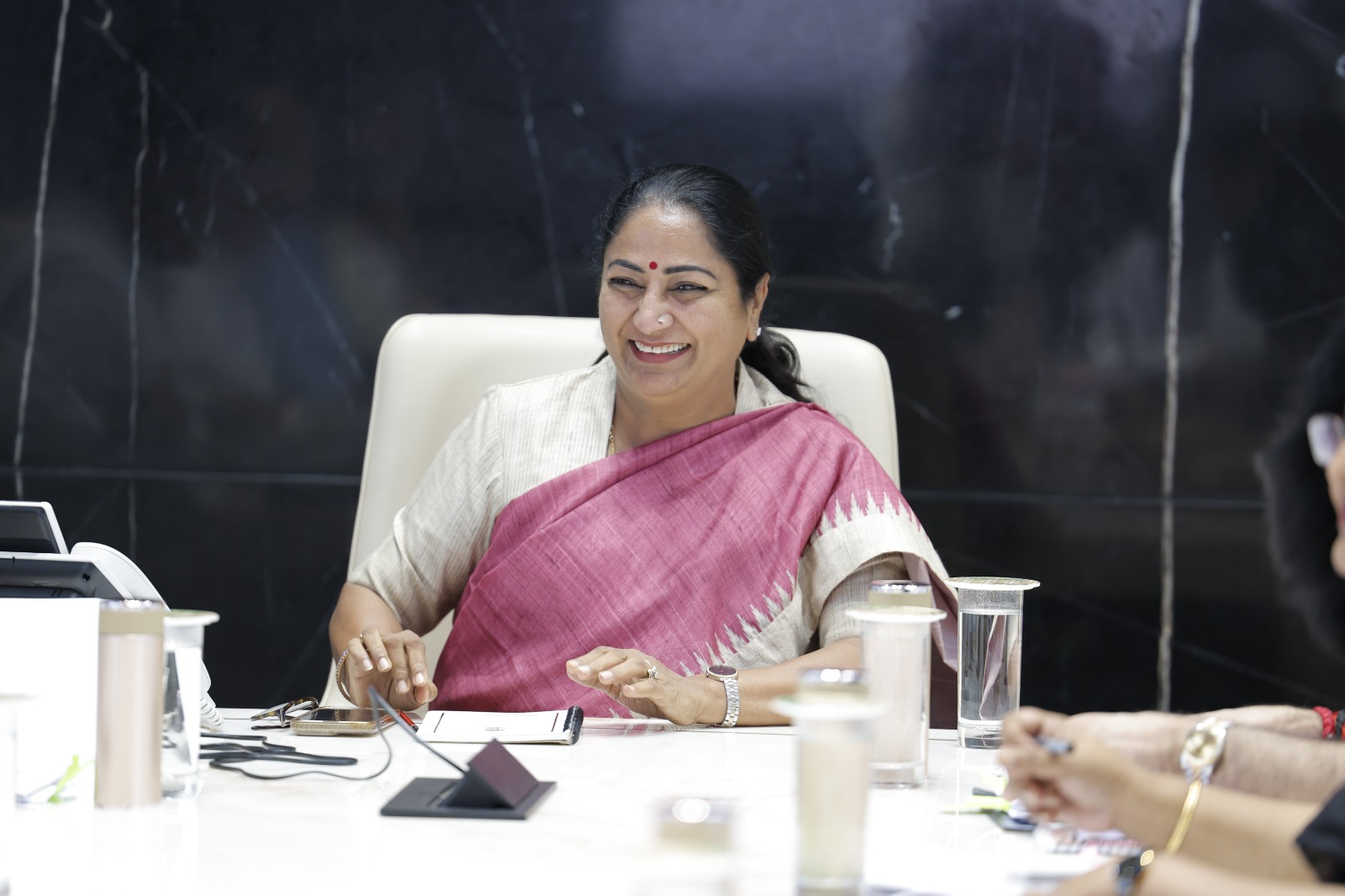
Detailed information regarding the seven corridors of Metro Phase V (B). News updates regarding the event are being released shortly.

Metro Phase-V (B) Corridors Will Connect Delhi’s Outlying and Rapidly Developing Areas: CM Rekha Gupta
Out of the seven corridors, the target is to complete four priority corridors by the year 2029: Chief Minister Rekha Gupta
May 2026 : On the occasion of the Delhi Metro Rail Corporation’s (DMRC) 32nd Foundation Day, the Chief Minister announced on Sunday the new corridors to be constructed under Metro Phase-V (B). A total of 7 corridors will be developed in this phase of the Delhi Metro. These will have a combined length of 97.158 kilometers, and 65 new stations will be built along them. The estimated cost for all seven corridors to be constructed under Metro Phase-V (B) is approximately ₹48,204.56 crore. The Chief Minister stated that this entire project will connect Delhi’s outlying and rapidly developing areas to the metro network, thereby providing people with enhanced facilities for fast, safe, and convenient travel. Presented below are the details regarding these corridors:
Dhansa Bus Stand-Nangloi corridor
CM Rekha Gupta said the first corridor will run from Dhansa Bus Stand in Najafgarh to Nangloi. The 11.859-km stretch will be a fully elevated, independent corridor with nine stations. “All stations on this route will be elevated,” she said, adding that areas such as Naresh Park Extension, Ranhola, Bakkarwala, Baprola, Dichaon Kalan and Najafgarh Extension will be connected. Interchange facilities will be available at Nangloi (Green Line) and Dhansa Bus Stand (Grey Line).
Central Secretariat-Kishangarh corridor
The second corridor, CM said, will link Central Secretariat to Kishangarh over a distance of 15.969 km. “A major portion of this corridor will be underground,” she noted, specifying that 13.721 km will be underground and 2.248 km elevated. The route will have 10 stations, including nine underground and one elevated. It will connect key locations such as New Moti Bagh GPRA colonies, RK Puram Sectors 1 and 7, Jawaharlal Nehru University and the Prime Ministers’ Museum. Interchanges will be available at Central Secretariat (Violet, Yellow and Magenta lines), Moti Bagh (Pink Line), RK Puram (Magenta Line) and Kishangarh (Golden Line).
Samaypur Badli-Narela corridor
The Chief Minister said the third corridor will extend the existing Line-2 from Samaypur Badli to Narela DDA Sports Complex. “This 12.89-km corridor will be fully elevated and will include eight stations,” she said. The extension will connect Siraspur, Khera Kalan, Holambi Kalan, Alipur, Shahpur Garhi and DSIIDC Narela. Interchange facilities will be available at Siraspur (Yellow Line) and Narela DDA Sports Complex (Red Line).
Kirti Nagar-Palam corridor
The fourth corridor, she said, will extend Line-5 from Kirti Nagar to Palam, covering 9.967 km. “This route will include both underground and elevated sections, with 8.397 km underground and 1.57 km elevated,” CM said. It will have six stations, including five underground and one elevated. The corridor will serve Saraswati Garden, Mayapuri Industrial Area Phase III, IITM Janakpuri and Sagarpur. Interchange points will be available at Mayapuri (Pink Line) and Palam (Magenta Line).
Jor Bagh-Mithapur corridor
CM Rekha Gupta said the fifth corridor, an independent line from Jor Bagh to Mithapur, will span 16.991 km with both underground and elevated sections. “The corridor will have 12 stations, seven underground and five elevated,” she said. It will connect Lodhi Colony, Old Ishwar Nagar, Ali Village, Jaitpur, Moladband and Mithapur. Interchange facilities will be available at Jor Bagh (Yellow Line), Lajpat Nagar (Violet and Pink lines), NSIC Okhla (Magenta Line), Jasola Apollo (Violet Line) and Madanpur Khadar (Golden Line extension).
Shastri Park-Mayur Vihar Phase III corridor
The sixth corridor will run from Shastri Park to Mayur Vihar Phase III, CM said, adding that it will be an independent corridor of 13.197 km. “It will include 8.99 km underground and 4.207 km elevated sections, with eight stations in total,” she said. The route will cover Mayur Vihar Phase III, New Kondli, Patparganj (Mother Dairy), Geeta Colony, Gandhi Nagar market and Kailash Nagar. Interchange points will include Shastri Park (Red Line), Nirman Vihar (Blue Line) and Trilokpuri (Pink Line).
Keshavpuram-Rohini Sector 34 corridor
The seventh corridor, CM said, will be developed from Keshavpuram to Rohini Sector 34. “This will be a fully elevated corridor of 16.285 km with 12 stations,” she said. It will connect West Shalimar Bagh, East Pitampura, Rohini Sector 16, Delhi Technological University and Rohini Sector 29. Interchange facilities will be available at Keshavpuram (Red Line), North Pitampura (Pink Line) and Rohini Sector 34 (Red Line).
Phased execution, priority corridors first
CM Rekha Gupta said four corridors have been identified as priority projects and will be taken up on a fast-track basis. “We have set a target to complete these priority corridors by 2029,” she said, adding that the remaining three corridors will be developed in phases thereafter.
She also directed the Delhi Metro Rail Corporation (DMRC) to prepare and submit revised Detailed Project Reports (DPRs) separately for the priority and non-priority corridors. Emphasising the broader impact, CM said the expansion will improve last-mile connectivity, reduce travel time and promote a more sustainable mode of transport. “This project will play a key role in ensuring balanced and inclusive urban development across Delhi,” she said.




Marizanne Kapp’s Unbeaten 81 Powers South Africa to Thrilling Six-Wicket Win Over India
Manchester, June 2026 : Marizanne Kapp delivered a masterclass under pressure, smashing an…

Marizanne Kapp’s Unbeaten 81 Powers South Africa to Thrilling Six-Wicket Win Over India
Manchester, June 2026 : Marizanne Kapp delivered a masterclass under pressure, smashing an unbeaten …