INS Dunagiri, INS Sanshodhak and INS Agray Commissioned; Naval Officers Highlight Indigenous Strength and Advanced Capabilities

Kolkata, June 2026 : The commissioning of three major naval platforms — INS Dunagiri, INS Sanshodhak and INS Agray — at the Syama Prasad Mookerjee Port in Kolkata marked a significant milestone in strengthening India’s maritime capabilities. As Prime Minister Narendra Modi formally inducted the vessels into service, senior naval officers associated with the ships highlighted their advanced technologies, indigenous systems and crucial operational roles in enhancing the Indian Navy’s combat preparedness.
The induction of the three vessels reflects India’s growing emphasis on self-reliance in defence manufacturing and the rapid expansion of indigenous naval capabilities. Designed to address a range of operational requirements, the ships will bolster anti-submarine warfare, hydrographic survey operations and coastal defence preparedness.
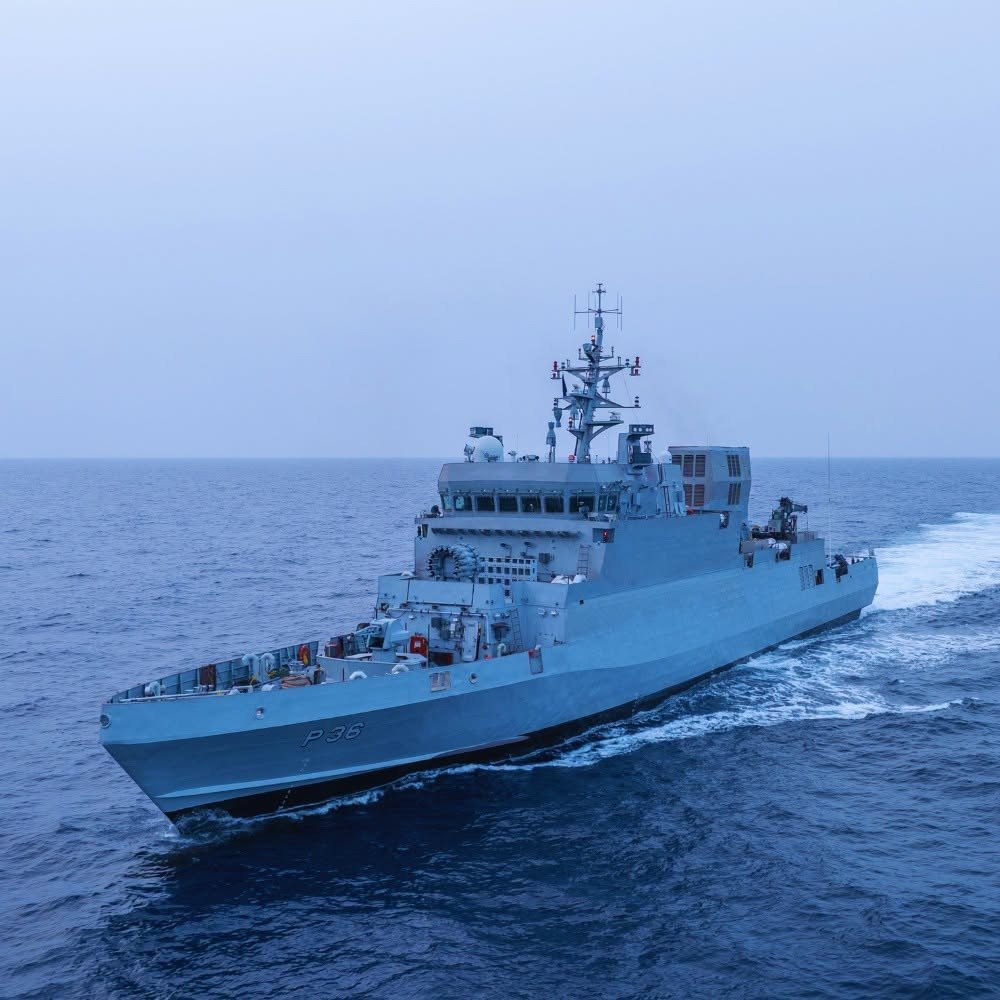
Speaking about INS Agray, an Anti-Submarine Warfare Shallow Water Craft (ASW-SWC), Commanding Officer Commander Sunil Malpotra stressed that the vessel’s strength lies in its sophisticated weaponry and sensor systems rather than its size.
“People should not judge the ship by its appearance. Although compact in size, INS Agray is densely packed with advanced weapons and sensors. It possesses all the capabilities required to detect, track and neutralise enemy submarines. Additionally, considering the evolving nature of asymmetric maritime threats, the vessel is equipped to effectively counter surface-based challenges as well,” he said.
Commander Malpotra explained that the vessel is equipped with an entirely indigenous anti-submarine warfare suite. The ship features a domestically developed sonar system, a combat management system, rocket launchers, torpedo tubes and advanced decoy systems designed to divert incoming torpedoes. These systems significantly enhance the Navy’s ability to operate in challenging shallow-water environments where submarine detection is particularly difficult.
INS Agray’s Executive Officer, Lieutenant Commander Rishabh, described the commissioning process as both professionally demanding and immensely rewarding.
“The journey began around eight to nine months ago when the vessel was little more than a steel structure. Watching it evolve into a fully operational warship has been an incredibly satisfying experience,” he said.
He noted that INS Agray is the fifth vessel in the Anti-Submarine Warfare Shallow Water Craft class and has been specifically designed to hunt hostile submarines operating in shallow coastal waters and littoral regions. Such capabilities are increasingly important given the strategic significance of India’s vast coastline and surrounding maritime zones.
Engineering Officer Lieutenant Commander Piyush highlighted one of the vessel’s key technological innovations — its advanced waterjet propulsion system.
“Most naval ships rely on conventional propeller technology. INS Agray is among the largest Indian Navy vessels fitted with waterjet propulsion. The system draws in water and expels it at high speed to generate thrust, offering enhanced manoeuvrability, improved operational efficiency and reduced acoustic signatures,” he explained.
Meanwhile, INS Dunagiri’s Commanding Officer, Captain Divya Alok, spoke about the ship’s cultural and symbolic significance. She noted that the vessel belongs to the P-17 Alpha class and follows the tradition of naming ships after mountains.
“The ship carries a strong connection with India’s heritage and mythology. All vessels of the Giri class are named after mountains, reflecting the country’s rich cultural and historical traditions,” she said.
Alongside the combat-focused INS Agray and the advanced frigate INS Dunagiri, INS Sanshodhak will strengthen the Navy’s hydrographic survey capabilities by conducting detailed mapping and charting of maritime areas, which are critical for navigation and operational planning.
The commissioning of the three vessels is being viewed as a major boost to India’s maritime security architecture. Together, they will enhance operational readiness, improve anti-submarine warfare capabilities, strengthen coastal surveillance and support strategic maritime operations. The induction also underscores the success of India’s indigenous shipbuilding programme and the government’s commitment to achieving greater self-reliance in the defence sector.
Team Maverick.





A New Threat Posed To Israel-US Joint Air Operations In The Form Of Chinese QW-12 ADM To Iran.
Beijing/Washington DC; August 2026: As per information provided by trusted PLA sources, Ir…

A New Threat Posed To Israel-US Joint Air Operations In The Form Of Chinese QW-12 ADM To Iran.
Beijing/Washington DC; August 2026: As per information provided by trusted PLA sources, Iran is …