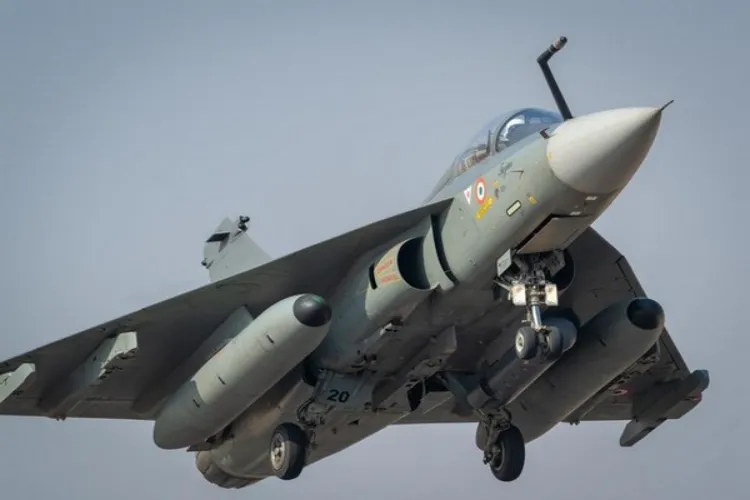
HAL Prioritises Domestic Defence Orders Before Expanding Global Export Drive

New Delhi, July 2026 : Hindustan Aeronautics Limited (HAL) has made it clear that its immediate focus is on meeting India’s rapidly growing military aviation requirements before launching a more aggressive international export campaign, according to The Tribune.
HAL Chairman and Managing Director Ravi Kota said the company’s biggest challenge at present is not finding international buyers but delivering the large number of aircraft already ordered by the Indian armed forces. The company is simultaneously working to expand production capacity, strengthen its supplier ecosystem and ensure that deliveries are made within committed timelines.
Kota said HAL intends to complete its domestic commitments before turning its full attention to foreign markets. The company must first establish adequate production capacity, build a reliable industrial ecosystem and work closely with partners to ensure timely deliveries. Once these foundations are firmly established, HAL will be in a stronger position to approach international customers with the credibility gained from successfully meeting the requirements of the Indian armed forces.
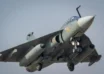
The strategy comes against the backdrop of one of HAL’s largest production programmes. The company has secured an order for 180 TEJAS MK-1A light combat aircraft for the Indian Air Force, while its order book also includes 156 Prachand Light Combat Helicopters for the Army and Air Force.
The scale of these commitments has placed significant demands on HAL’s manufacturing and supply chain capabilities. More than 20 TEJAS airframes have been completed and are awaiting engine deliveries and final radar integration. Kota acknowledged delays involving engine supplies and radar integration but said the programme remains on track.
The first batch of 15 TEJAS MK-1A aircraft has already been delivered to the Indian Air Force and is operating successfully, providing an important foundation for the larger production programme.
Focus on Indigenous Aircraft and Helicopters
On the Advanced Medium Combat Aircraft (AMCA) programme, Kota clarified that HAL is not currently part of the selected development arrangement following the government’s competitive selection process. Although HAL had contributed to structural design work, the company is now concentrating on its own major programmes, including helicopters, trainer aircraft and the expansion of its indigenous aviation portfolio.
HAL is also approaching important milestones in its helicopter programmes. The company expects to certify the Dhruv Next Generation helicopter in August after completing the remaining flight-test requirements.
Orders have already been received from Pawan Hans, with three helicopters reportedly ready for delivery once certification is completed. Kota described the market outlook for the platform as strong.
The Light Utility Helicopter (LUH) is also moving towards operational service. Around 10 helicopters have been manufactured and are undergoing final trials to meet military requirements. HAL expects deliveries to begin during the current year.
Export Ambitions Continue
While domestic deliveries remain the immediate priority, HAL has not abandoned its international expansion plans. India has set an ambitious objective of increasing defence exports from the current level of around ₹25,000-30,000 crore to ₹50,000 crore over the longer term, and HAL is expected to play an important role in achieving that target.
Rather than depending on a single large overseas contract, the company is gradually expanding its international footprint by engaging with multiple countries.
HAL has already supplied Dornier 228 aircraft to Guyana and expects further opportunities with Guyana as well as Niger. Countries including Malaysia, Vietnam, Seychelles, Thailand and Armenia have also expressed interest in different HAL helicopter platforms.
Kota said the company is working with these countries to accelerate negotiations and convert interest into concrete orders.
Global Partnerships Key to Future Growth
HAL’s future growth strategy is increasingly dependent on partnerships with major global aerospace and defence companies. The company is collaborating with GE Aerospace on the GE F414 engine for the TEJAS MK-2 fighter programme and with Safran on the engine for the proposed Indian Multi-Role Helicopter programme.
Other international partners include MBDA, Honeywell Aerospace, Martin-Baker and Eaton Aerospace. Kota said these partnerships are already in place, with the next challenge being to accelerate their implementation and translate them into greater production and technological capabilities.
The company is also looking to strengthen its relationship with the United Kingdom, which Kota described as an important partner for India’s aerospace sector and a potential gateway to the wider European aerospace market.
HAL intends to deepen its engagement with British aerospace companies and encourage them to establish offices and operations in India. Such partnerships could help strengthen HAL’s supply chain, improve delivery capabilities and facilitate access to advanced technologies and international markets.
HAL Targets Global Top 20 by 2035
Looking further ahead, Kota has set an ambitious objective for HAL to move from its current global ranking of approximately 30th to 35th to the top 20 aerospace companies by 2035.
Achieving that target would require HAL to simultaneously expand production, improve efficiency, develop indigenous technologies, strengthen international partnerships and establish a larger global customer base.
The company’s immediate strategy, however, remains firmly centred on India’s requirements. By completing its substantial domestic order book and building the industrial capacity required to support future programmes, HAL hopes to establish a stronger foundation for international expansion.
The approach reflects the broader transformation underway in India’s defence aerospace sector. As the country seeks to become increasingly self-reliant in military aviation while also emerging as a major defence exporter, HAL is expected to play a central role.
Successfully delivering the TEJAS, Prachand, Dhruv and LUH programmes, while developing new platforms and expanding international partnerships, will be critical to HAL’s ambition of becoming one of the world’s leading aerospace manufacturers by 2035.





Israel Rejects Gaza Disarmament Plan, Says IDF Will Stay Until Hamas Fully Disarmed
Jerusalem, July 2026 : Israel has reiterated its strong opposition to the US-backed plan f…

Israel Rejects Gaza Disarmament Plan, Says IDF Will Stay Until Hamas Fully Disarmed
Jerusalem, July 2026 : Israel has reiterated its strong opposition to the US-backed plan …