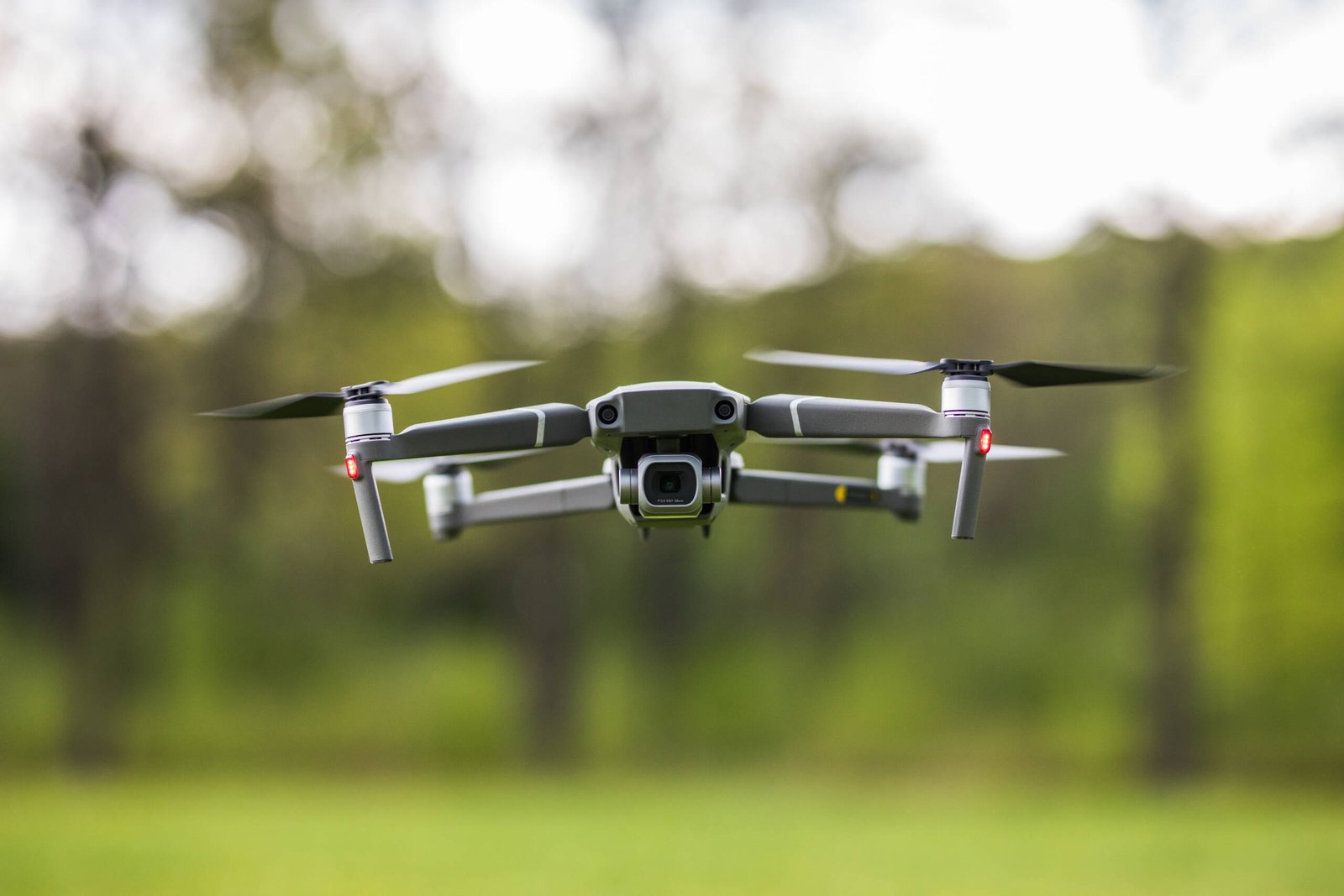
DRDO Seeks Private Industry to Develop 50-Drone Swarm Capable of Operating in High Winds and Heavy Jamming

New Delhi, July 2026 : In a major push to strengthen India’s unmanned warfare capabilities following Operation Sindoor, the Defence Research and Development Organisation (DRDO) has invited private industry to develop an advanced swarm of 50 drones capable of flying in extremely close formation, operating in high winds and maintaining communications even under intense electronic jamming.
The ambitious project is being pursued under DRDO’s Technology Development Fund (TDF) and has been classified as a “deep tech and cutting-edge” programme. The objective is to develop a drone cluster that can operate as a single coordinated formation, with one drone acting as the “master” while controlling the remaining aircraft through commands received from a ground station.
According to the Request for Proposal (RFP), the proposed system will consist of at least 49 slave drones arranged in a seven-by-seven grid, coordinated by a single master drone. In effect, one operator would be able to control the entire formation rather than individually directing each aircraft.
The technical requirements set an exceptionally high benchmark. The drones must maintain an inter-drone separation of 500 millimetres or less, meaning the aircraft could fly barely 50 centimetres apart while remaining synchronised. Their position must be maintained within plus or minus five centimetres across all three axes, even when operating in winds of up to 20 metres per second and at altitudes of as much as 5,000 metres.
The system must also be capable of correcting positional errors within approximately 500 milliseconds, allowing the swarm to maintain its formation despite sudden changes in flight conditions.
Such close formation flying presents considerable technological challenges. Even a small navigation, communications or flight-control failure could result in collisions between drones. The project therefore places significant emphasis on high-precision navigation, autonomous flight control and sophisticated swarm intelligence algorithms.
Advanced Swarm Intelligence and AI
The proposed system will require drones to function collectively rather than as independent aircraft. Swarm intelligence and control algorithms will enable the formation to maintain its structure, respond to changing conditions and dynamically reconfigure itself based on commands from the ground.
Artificial intelligence and edge computing are among the critical technologies identified by DRDO for the project. These capabilities are expected to allow the drones to process information rapidly and make coordinated decisions while airborne, reducing dependence on continuous communication with a central operator.
The swarm must also be dynamically reconfigurable from the ground, allowing its formation and operating pattern to be altered according to mission requirements.
Each drone will be required to carry a payload between 500 grams and 2 kilograms and remain airborne for at least 30 minutes. The batteries should be capable of being recharged within 15 minutes, while the complete system must be deployable within five minutes after being unpacked.
Focus on Electronic Warfare Resilience
One of the most important elements of the programme is the requirement for the swarm to remain operational in an electronically contested environment.
The RFP calls for a five-kilometre “jammer-proof” communication link operating in the S-band, High Frequency band or C-band and incorporating Electronic Counter-Countermeasure (ECCM) capabilities.
The emphasis reflects the growing importance of electronic warfare in modern conflicts, where adversaries can attempt to disrupt or disable unmanned systems by interfering with their communication and navigation networks.
The swarm will therefore require secure communications, cybersecurity protections and electronic warfare resilience. The system must be capable of maintaining coordinated operations even when conventional communication links face deliberate interference.
Indigenous Technology at the Core
DRDO has also placed considerable emphasis on indigenous technologies. The project mandates more than 70 per cent indigenous content, while commercial off-the-shelf components sourced from countries considered adversaries are to be avoided.
The proposed system is expected to incorporate Navigation with Indian Constellation (NavIC) augmentation, India’s indigenous satellite navigation capability. DRDO has also specified the use of an indigenous autopilot stack and domestic manufacture of key sensors, including Inertial Measurement Units (IMUs) and Light Detection and Ranging (LiDAR) systems.
The objective is not simply to produce a swarm of drones but to create an indigenous technology ecosystem covering navigation, flight control, communications, artificial intelligence, sensors, cybersecurity and electronic warfare protection.
The final system package is expected to include all 50 drones, batteries with 100 per cent spares, communication and control subsystems, algorithms, applications and source codes.
Maritime Operations Also Part of Requirement
The project also includes a notable maritime operational requirement. A drone launched from a moving ship must be capable of returning to the actual launch point rather than merely navigating back to the geographical coordinates from which it initially departed.
This capability would be particularly relevant to naval operations, where the launch platform itself is continuously moving. Accurate recovery would require the drones to account for the vessel’s movement and dynamically update their return trajectory.
The requirement adds another layer of complexity to the navigation and autonomous flight-control architecture being sought by DRDO.
12-Month Prototype Target
DRDO has set an aggressive development schedule. Prototype development and functional testing are targeted for completion within 12 months, while qualification trials, technology transfer and final project closure are expected to be completed within 24 months.
The project is primarily aimed at India’s Micro, Small and Medium Enterprises (MSMEs) and startups, reflecting the government’s growing effort to bring private companies and emerging technology firms into the defence innovation ecosystem.
Defence Public Sector Undertakings and other public sector entities have been excluded from bidding, with a single development agency ultimately expected to be selected.
The initiative comes amid a significant expansion of India’s focus on drones, loitering munitions and counter-unmanned aerial systems following Operation Sindoor in May. During the conflict, Indian military officials reported extensive use of drones along the western border, highlighting the growing role of unmanned systems in contemporary warfare.
Director General of Army Air Defence Lt Gen Sumer Ivan D’Cunha had said Pakistan launched between 800 and 1,000 drones across the western border over four days during the conflict. The Indian military has subsequently accelerated trials of indigenous loitering munitions, counter-drone systems and other unmanned technologies.
Private companies and startups are increasingly being brought into these efforts to accelerate the development and deployment of new capabilities.
A defence and security establishment source noted that while the armed services are increasingly working directly with industry on several requirements, the TDF route remains particularly important for complex technologies that demand advanced research and development.
The proposed 50-drone swarm clearly falls into that category.
If successfully developed, the system could provide the Indian armed forces with a highly coordinated unmanned capability for surveillance, reconnaissance, electronic warfare and potentially other tactical missions. The ability to deploy dozens of drones as a single formation could also improve battlefield awareness while complicating an adversary’s ability to counter individual platforms.
More importantly, the programme represents a shift from conventional drone development towards networked, autonomous and collaborative unmanned warfare. By combining AI, swarm intelligence, indigenous navigation, secure communications, advanced sensors and electronic warfare resilience, DRDO is seeking to create a system capable of functioning in the increasingly contested environments that are expected to define future battlefields.
The programme also reinforces India’s broader effort to build domestic expertise in sophisticated unmanned technologies while reducing dependence on foreign components and systems. With the project specifically opening the door to MSMEs and startups, it could provide a significant opportunity for Indian private industry to contribute to the next generation of autonomous defence platforms.
(The content of this article is sourced from a news agency and has not been edited by the Mavericknews30 team.)







Israel Rejects Gaza Disarmament Plan, Says IDF Will Stay Until Hamas Fully Disarmed
Jerusalem, July 2026 : Israel has reiterated its strong opposition to the US-backed plan f…

Israel Rejects Gaza Disarmament Plan, Says IDF Will Stay Until Hamas Fully Disarmed
Jerusalem, July 2026 : Israel has reiterated its strong opposition to the US-backed plan …