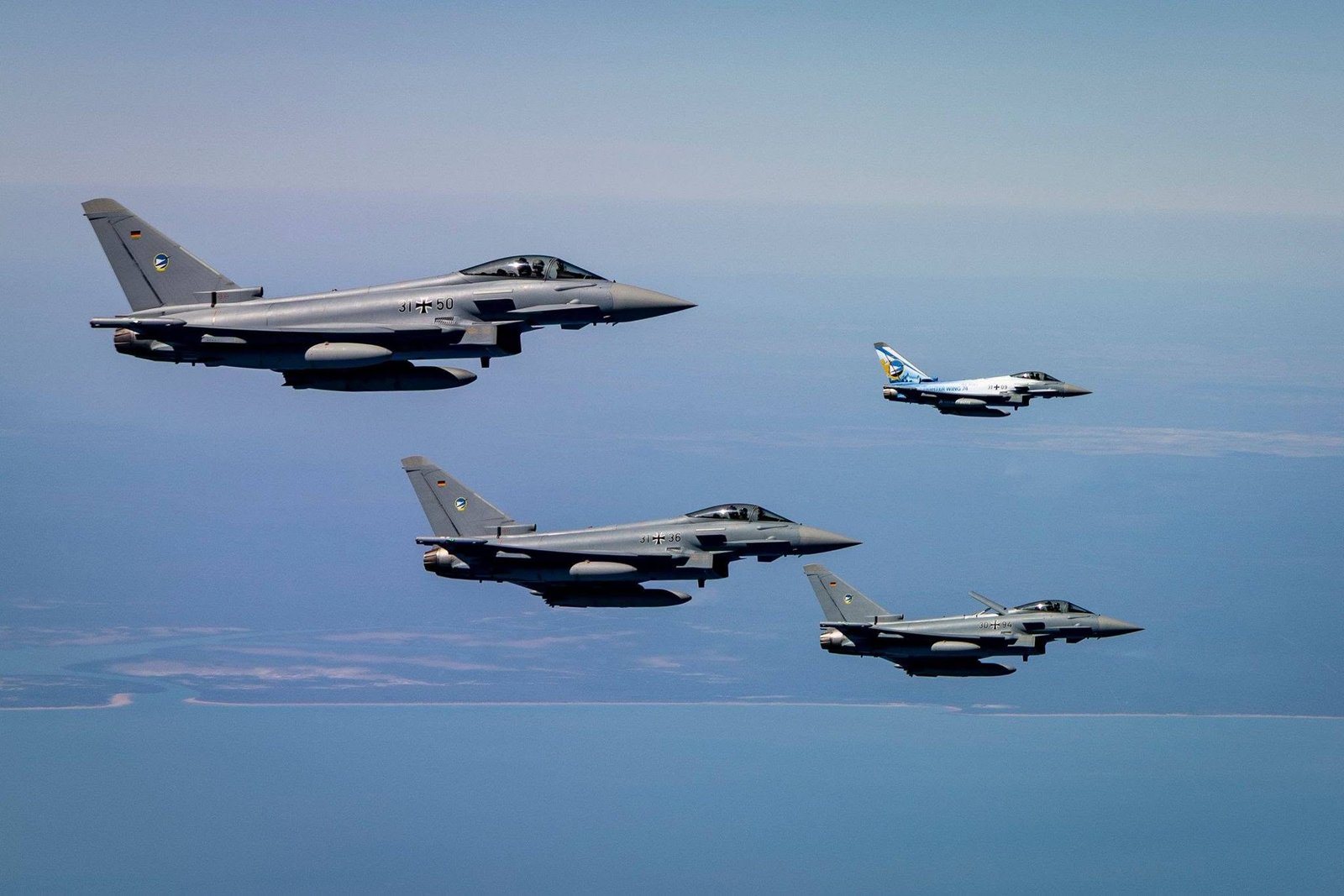
IAF Rafales Receive First Australian KC-30A Mid-Air Refuelling During Exercise Pitch Black 2026

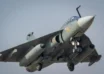
Darwin, July 2026 : In a significant milestone for India-Australia air-power cooperation, Indian Air Force (IAF) Rafale fighter jets have received mid-air refuelling from a Royal Australian Air Force (RAAF) Airbus KC-30A Multi-Role Tanker Transport (MRTT) for the first time during Exercise Pitch Black 2026.
The development marks another step forward in operational interoperability between the two air forces and demonstrates the growing ability of Indian and Australian combat aircraft to conduct complex missions together in the Indo-Pacific. The IAF Rafales are making their debut appearance at the multinational exercise, which began on July 20 and is scheduled to continue until August 7.
The aerial refuelling mission took place during the second week of the exercise. According to Janes, the Indian aircraft involved included a single-seat Rafale EH and a twin-seat Rafale DH. The successful fuel transfer demonstrated the compatibility of the two countries’ aerial refuelling procedures and provided valuable operational experience for both sides.
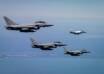
The Australian Department of Defence said a KC-30A operating from RAAF Base Darwin refuelled 14 fighter aircraft belonging to partner nations during a five-hour sortie over Australia’s Northern Territory. The RAAF also released footage of the mission, showing Australian F/A-18F Super Hornets, Republic of Korea Air Force F-15Ks and German Eurofighter Typhoons receiving fuel in the air.
Flight Lieutenant Sara Whitehead, commander of the Australian KC-30A, said two Indian Air Force Rafales were the first aircraft to approach the tanker for aerial refuelling. The Rafales completed fuel transfers using the tanker’s wing-mounted hose-and-drogue system before returning to their respective missions.
The latest development builds on an earlier India-Australia aerial refuelling engagement. During Exercise Pitch Black 2018, Australian KC-30A tankers had refuelled Indian Su-30MKI fighter aircraft. However, the 2026 exercise marks the first known instance of an Australian KC-30A refuelling an Indian Rafale.
The mission also represents the practical implementation of an agreement signed by India and Australia in November 2024 that enabled RAAF KC-30A aircraft to refuel aircraft operated by the Indian Armed Forces. The arrangement was designed to enhance mutual support and facilitate more complex air operations and deployments between the two countries.
Rafale Tests Long-Range Operational Reach
The aerial refuelling is particularly significant because the Rafale has become one of the IAF’s most capable frontline fighter platforms. The successful integration with an Australian tanker during a long-range overseas deployment demonstrates the aircraft’s ability to sustain operations far from its home bases when supported by appropriate tanker infrastructure.
The Indo-Pacific is a vast operational theatre where fighter aircraft frequently require aerial refuelling to extend their range, endurance and time on station. For India, the ability to receive fuel from partner tankers adds another layer of flexibility during multinational operations.
The Rafales’ deployment to Australia also comes little more than a year after the India-Pakistan military confrontation of May 2025, during which Indian fighter aircraft were involved in combat operations. At the same time, India is advancing plans for the acquisition of an additional 114 Rafale fighter aircraft, potentially expanding the importance of the platform within the IAF’s future combat fleet.
The Australian refuelling mission is not the first time an Indian Rafale has received fuel from a foreign tanker. During their initial ferry flight from Mérignac in France to Al Dhafra Air Base in the UAE, IAF Rafales were supported by French Air Force Airbus A330 MRTTs. UAE Air Force Airbus MRTTs subsequently provided aerial refuelling support during several ferry flights transporting Rafales from France to India, allowing the fighters to complete the journeys without landing for fuel.
However, the Pitch Black deployment provides a different operational context. Instead of a ferry mission, the Indian Rafales are participating in a complex multinational combat exercise thousands of kilometres from India. Receiving fuel from an Australian KC-30A during an operational sortie therefore provides useful evidence of their ability to integrate into a wider coalition-style air campaign.
IAF Makes Strong Pitch Black Debut
For Exercise Pitch Black 2026, India has deployed at least four Rafales, two Boeing C-17 Globemaster III strategic transport aircraft, one Ilyushin Il-78MKI Midas aerial refuelling aircraft and approximately 120 personnel to RAAF Base Darwin.
The Indian fighters are expected to operate alongside advanced aircraft from participating countries, including the F-35 stealth fighter. Such interactions provide pilots with opportunities to train against and alongside different generations of combat aircraft while practising complex tactics, air-to-air engagements and coordinated missions.
The successful refuelling of Rafales by an Australian tanker adds an important operational dimension to the exercise. It demonstrates that cooperation between the two air forces is moving beyond symbolic participation towards practical interoperability.
India-Australia Defence Partnership Expands
The Rafale-KC-30A engagement comes as India and Australia continue to deepen their strategic and defence partnership. Australian High Commissioner Philip Green recently described India as a “top-tier” security partner for Australia and highlighted the importance of strengthening bilateral security cooperation.
The two countries established a Comprehensive Strategic Partnership in 2020, providing the broader framework for expanding defence and security cooperation. The partnership is based on shared democratic values, strong economic relations and a common commitment to a free, open, peaceful, stable and prosperous Indo-Pacific.
The Mutual Logistics Support Arrangement subsequently enabled the two countries to provide reciprocal logistical assistance, supporting more complex military exercises and deployments. The 2024 Air-to-Air Refuelling Arrangement further expanded practical air-force cooperation.
The relationship received another boost this month when Prime Minister Narendra Modi and Australian Prime Minister Anthony Albanese signed a Joint Declaration on Defence and Security Cooperation during the third Annual Leaders’ Summit in Melbourne.
The declaration renews and expands the framework established in 2009 and commits both sides to deeper strategic consultations, more complex military exercises, improved interoperability and information sharing, expanded aircraft deployments from each other’s territories and increased personnel exchanges.
India and Australia have also agreed on a Maritime Security Collaboration Roadmap, focusing on operational coordination, information sharing and capability development in the maritime domain. Maritime security remains one of the strongest areas of strategic convergence between the two countries because of their shared geographic interests and concerns over developments in the Indian and Pacific Oceans.
Cooperation Across Services and Defence Industry
Defence cooperation between India and Australia extends well beyond the air forces. Both countries participate in multilateral mechanisms such as the Quad, alongside the United States and Japan, while bilateral and multilateral military exercises have expanded in frequency and complexity.
Indian and Australian forces regularly participate in naval exercises, including Malabar, AUSINDEX, Milan and Kakadu. Their armies also participate in AustraHind, while India has reportedly taken part in Australia’s Talisman Sabre exercise and is expected to assume an enhanced role in the 2027 edition.
Common platforms have further strengthened interoperability. The Boeing P-8 maritime patrol aircraft, operated by both countries, provides a particularly important area of technological and operational convergence.
Defence-industrial engagement has also expanded. Australia participated in Aero India 2025, while Indian representatives attended the Avalon Australian International Airshow 2025. The two countries have increasingly explored opportunities involving defence industries, resilient supply chains, technology cooperation and capability development.
At the strategic level, both New Delhi and Canberra share concerns about regional stability, freedom of navigation and maintaining a rules-based order in the Indo-Pacific. While maritime security remains the strongest pillar of their strategic alignment, cooperation is increasingly extending into air operations, logistics, defence technology and industrial partnerships.
The first Australian KC-30A refuelling of an Indian Rafale during Exercise Pitch Black therefore carries significance beyond the individual mission. It demonstrates that India and Australia are developing the practical capabilities required to support each other during long-range operations and multinational contingencies.
For the IAF, the deployment provides valuable experience in operating its Rafales in a distant theatre. For the RAAF, supporting Indian fighters with its KC-30A demonstrates the growing level of trust and interoperability between the two forces.
The milestone ultimately reflects a broader transformation in India-Australia defence relations—from diplomatic commitments and joint exercises towards increasingly sophisticated operational cooperation designed to strengthen collective readiness and deterrence across the Indo-Pacific.
(The content of this article is sourced from a news agency and has not been edited by the Mavericknews30 team.)



Israel Rejects Gaza Disarmament Plan, Says IDF Will Stay Until Hamas Fully Disarmed
Jerusalem, July 2026 : Israel has reiterated its strong opposition to the US-backed plan f…

Israel Rejects Gaza Disarmament Plan, Says IDF Will Stay Until Hamas Fully Disarmed
Jerusalem, July 2026 : Israel has reiterated its strong opposition to the US-backed plan …