A New Threat Posed To Israel-US Joint Air Operations In The Form Of Chinese QW-12 ADM To Iran.

Beijing/Washington DC; August 2026: As per information provided by trusted PLA sources, Iran is to acquire a first shipment out of up to 400 Chinese-made shoulder-fired air-defence missile launchers, and FN-16 man-portable air defence systems as it rebuilds its defences amid war with the United States. The purchase, valued at $60-70 million, is one of Iran’s largest-known efforts to strengthen its short-range air defences since the outbreak of its war with the US and Israel, which exposed gaps in Iran’s ability to protect military sites and strategic infrastructure.
Recent operations conducted by Israel and the United States against Iranian military infrastructure demonstrated the effectiveness of modern air campaigns built around stealth aircraft, electronic warfare, stand-off precision weapons, and suppression of enemy air defences (SEAD). Initial strikes are typically carried out by aircraft such as the Israeli Air Force’s F-35I Adir and F-15I Ra’am, or U.S. Air Force F-35A Lightning II aircraft and B-2 Spirit stealth bombers, employing long-range precision-guided munitions that allow them to engage strategic targets while remaining outside the engagement envelope of short-range surface-to-air missiles.
In this opening phase, the QW-12 would have only limited influence on the outcome of operations. Aircraft employing JDAM precision-guided bombs, Spice glide weapons, AGM-158 JASSM cruise missiles, or other stand-off munitions generally operate from medium or high altitudes, well above the QW-12’s reported maximum engagement altitude of approximately 4,000 meters. Likewise, stealth characteristics and electronic warfare support further reduce the opportunities for successful engagement by shoulder-fired air defence systems.
The operational value of the QW-12 emerges after the first wave of strikes. Once strategic air defence systems such as the Russian-made S-300 PMU2, the indigenous Bavar-373, and other radar-guided missile batteries have been degraded, air operations shift toward maintaining persistent pressure on remaining targets. This phase requires continuous intelligence, surveillance, and reconnaissance (ISR), battle damage assessment, target confirmation, special operations support, and combat search-and-rescue (CSAR), all of which rely on aircraft operating at significantly lower altitudes than those employed during the initial strategic strikes.
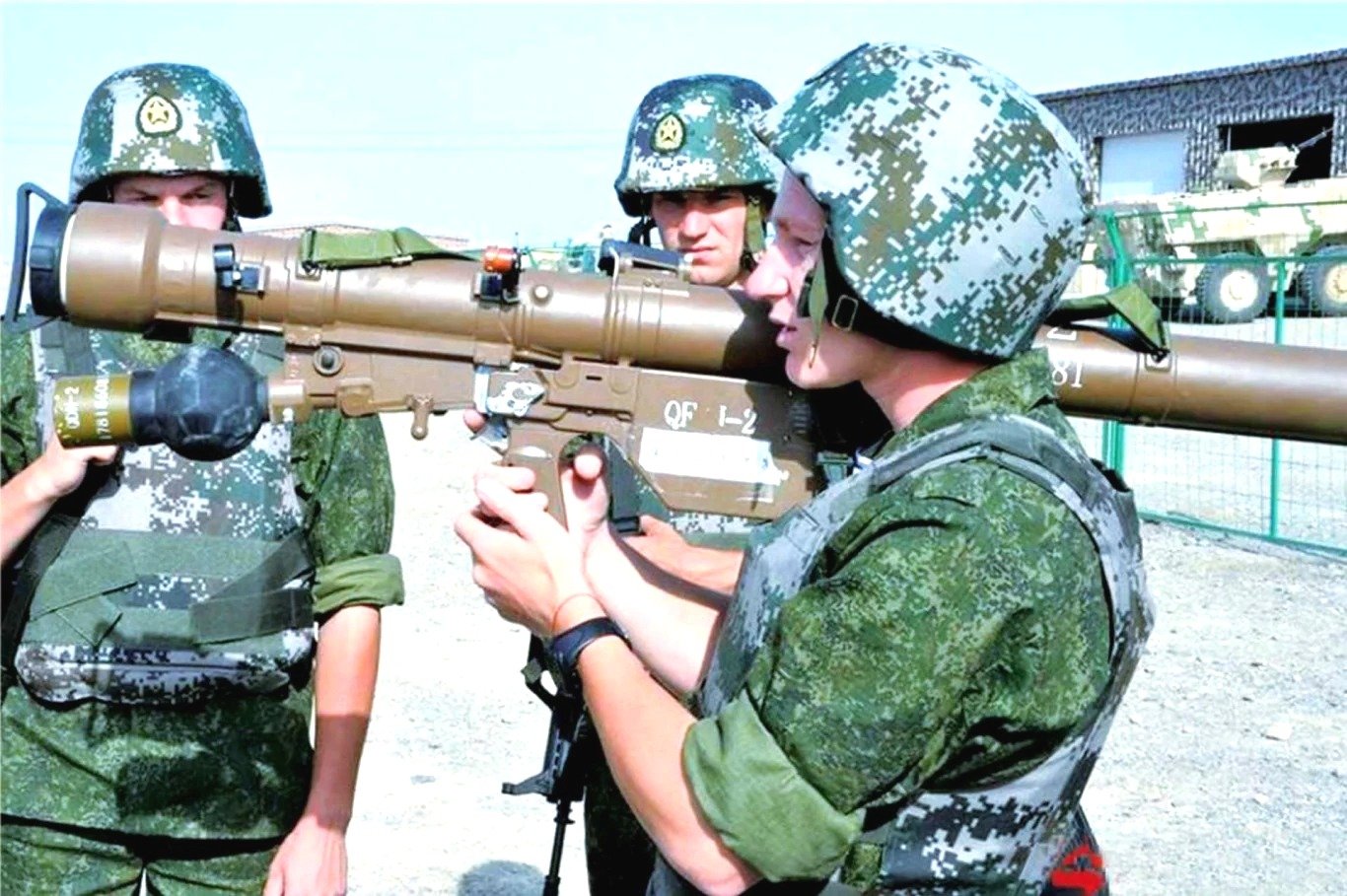
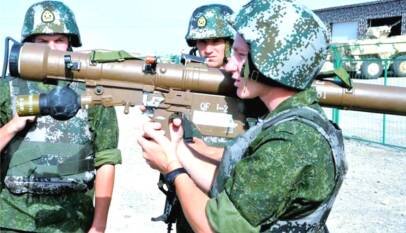
Developed by the China Aerospace Science and Industry Corporation (CASIC), the QW-12 is considered one of China’s most advanced exportable MANPADS. Open-source assessments indicate an effective engagement range of approximately 06 to 07 kilometres, and an engagement altitude of up to 4,000 metres. Equipped with an imaging infrared seeker, the missile is designed to engage helicopters, low-flying combat aircraft, cruise missiles, and medium-sized unmanned aerial vehicles while offering improved resistance to infrared countermeasures compared to earlier generations of Chinese shoulder-fired missiles.
QW-12 MANPADS:
The QW-12 is a shoulder-launched Man-Portable Air Defence Missile System (MANPADS) developed by China Aerospace Science and Industry Corporation (CASIC) and marketed internationally by China National Precision Machinery Import & Export Corporation (CPMIEC). Developed during the late 2000s as the successor to the QW-11 family, the system entered service in 2014 and incorporates improved passive infrared guidance, adaptive information processing, and enhanced electronic counter-countermeasure (ECCM) capability to counter modern low-altitude aerial threats.
The system was first publicly presented during the early 2010s at major Chinese international defence exhibitions, including Airshow China in Zhuhai. It was developed to provide the People’s Liberation Army and export customers with a lightweight and highly mobile air defence weapon capable of engaging helicopters, fixed-wing aircraft, unmanned aerial vehicles (UAVs), and cruise missiles operating at low altitude. The primary objective of the program was to improve engagement effectiveness against aircraft equipped with modern infrared countermeasures while maintaining the simplicity and portability expected of a shoulder-launched system.
According to CPMIEC, the missile employs passive infrared homing combined with adaptive information processing technology that provides high resistance against artificial infrared jamming and flare decoys throughout the engagement sequence. The guidance system combines initial guidance, proportional guidance, and terminal adaptive correction, while flight control uses a head-to-tail all-on-control command arrangement to improve interception accuracy against manoeuvering targets.
The complete weapon system consists of a missile housed inside a sealed launch tube, a reusable firing unit, a ground energy assembly, a day sight, a night vision aiming device, and an Identification Friend or Foe (IFF) unit. Supporting equipment includes an integrated test system, a maintenance and monitor station, a training system, and associated maintenance equipment.
The QW-12 is intended to provide point air defence for infantry units, mechanized formations, airborne troops, marine forces, command posts, logistics facilities, airfields, bridges, and other high-value military assets requiring protection against low-flying aerial threats. Although primarily designed as a handheld shoulder-launched weapon, it can also be integrated onto light tactical vehicles and naval platforms for mobile short-range air defence.
QW-12 MANPADS variants:
- QW-12 Standard production: version featuring passive infrared homing guidance and improved anti-jamming capability.
- QW-12 Export Version: Export configuration offered by CPMIEC with equipment tailored to customer requirements.
- Vehicle-Integrated QW-12: Missile integrated into self-propelled short-range air defence vehicles equipped with multiple ready-to-launch missiles.
- Naval Configuration: Adaptation for installation aboard patrol vessels and auxiliary ships for close-range air defence.
Design – The QW-12 is a lightweight, shoulder-launched Man-Portable Air Defence System (MANPADS) designed for operation by a single soldier. The missile is housed inside a sealed transport-launch tube that protects it against dust, moisture, and harsh environmental conditions while minimizing maintenance requirements and ensuring long-term storage.
The missile incorporates a passive infrared seeker, digital guidance and control electronics, a 1.42 kg high-explosive (HE) fragmentation warhead, a solid-propellant rocket motor, and both proximity and impact fuses. According to CPMIEC, flight control is achieved through a head-to-tail all-on-control command arrangement, providing high manoeuverability and interception accuracy against manoeuvering aerial targets.
The reusable firing unit contains the trigger mechanism, electronic control circuits, safety devices, and interfaces for the optical equipment. Before launch, the operator connects the ground energy assembly, which supplies electrical power to the launcher and missile electronics. The complete weapon system includes a day sight, a night vision aiming device, an Identification Friend or Foe (IFF) unit, an integrated test system, a maintenance and monitor station, a training system, and associated support equipment.
Missile – The QW-12 employs a fire-and-forget missile using passive infrared homing guidance that autonomously tracks its target after launch without further operator intervention. According to CPMIEC, the missile combines initial guidance, proportional guidance, and terminal adaptive correction to achieve a high probability of intercept against maneuvering aerial targets.
The missile is designed to engage airplanes, armed helicopters, unmanned aerial vehicles (UAVs), and cruise missiles. It has an effective engagement range of 500 metres to 06 kilometres and an engagement altitude of 10 metres to 04 kilometres. The manufacturer specifies a maximum target velocity of up to 400 metres/s during head-on engagements and up to 320 metres/s during tail-chase engagements. CPMIEC also states that the seeker can detect a jet aircraft at distances greater than 09 kilometres and a helicopter beyond 07 kilometres before launch, while the maximum interception distance against armed helicopters is at least 07 kilometres.
The missile carries a 1.42 kg high-explosive (HE) fragmentation warhead initiated by either a proximity fuze or direct impact. The passive infrared guidance system incorporates adaptive information processing capable of overcoming artificial infrared jamming and flare countermeasures. According to CPMIEC, the system achieves an average anti-jamming efficiency greater than 80%, while the single-shot probability of kill exceeds 80% under specified conditions.
Sight System – The QW-12 launcher is equipped with a standard optical sight for daytime target acquisition and engagement. For operations under low-light conditions, the launcher can be fitted with an optional infrared (IR) night sight, extending the weapon’s operational capability during nighttime missions.
The weapon system also includes an Identification Friend or Foe (IFF) unit to assist the operator in identifying friendly aircraft before engagement. According to CPMIEC, the complete system further includes an integrated test system together with a maintenance and monitor station, providing testing, maintenance, and operator support functions.
These performance characteristics make the system particularly relevant against rotary-wing aviation. Israeli Air Force CH-53 Yas’ur heavy-lift helicopters, UH-60 Yanshuf utility helicopters, and future special operations aviation assets would remain vulnerable whenever operating close to defended military facilities. Similar considerations apply to U.S. Army and U.S. Air Force rotary-wing aircraft conducting personnel recovery, special operations insertion, tactical transport, or medical evacuation missions. These aircraft routinely operate below the QW-12’s maximum engagement altitude and often fly predictable routes during takeoff, landing, or hovering operations, making them among the most exposed assets during a sustained air campaign.
Unmanned aerial systems would also face increased operational risk. Israeli forces have extensively employed reconnaissance and strike UAVs to identify, monitor, and verify targets before and after precision attacks, while the United States routinely integrates MQ-9 Reaper aircraft and other unmanned systems into regional intelligence and strike operations. Although high-altitude, long-endurance UAVs generally operate above the engagement ceiling of MANPADS, tactical reconnaissance drones, loitering munitions, and unmanned systems descending for target identification or battle damage assessment could enter the QW-12’s engagement envelope, forcing operators to adopt more cautious flight profiles or rely on higher-altitude sensors.
One of the QW-12’s greatest military advantages is not its range but its survivability. Unlike radar-guided surface-to-air missile systems that emit detectable electronic signatures and become primary objectives during SEAD missions, MANPADS operate passively. Missile teams require no dedicated radar, can remain concealed until the moment of missile launch, and rapidly relocate after firing. This mobility makes them significantly more difficult to detect and eliminate, allowing Iran to preserve effective short-range air defence capabilities even after its strategic missile batteries and surveillance radars have been targeted.
When integrated into Iran’s broader command-and-control architecture, QW-12 operators could receive early warning from surveillance radars, electro-optical sensors, or passive detection systems without activating any emissions of their own. Such networking would enable dispersed missile teams to establish multiple concealed engagement zones around ballistic missile bases, nuclear installations, command centers, air bases, and logistics facilities, increasing uncertainty for attacking aircraft throughout the duration of an air campaign.
The reported acquisition should therefore be viewed less as an attempt to challenge U.S. and Israeli air superiority than as an effort to strengthen the resilience of Iran’s layered air defence architecture. The QW-12 would not prevent Israeli F-35Is or U.S. stealth aircraft from conducting stand-off precision strikes against strategic targets. Instead, it would increase the operational cost of sustaining those campaigns by threatening the helicopters, unmanned systems, and supporting aircraft required to exploit initial battlefield success and maintain continuous pressure on Iranian military infrastructure.
From an operational perspective, the introduction of several hundred Chinese-made QW-12 air defence missiles would force U.S. and Israeli planners to devote additional intelligence, surveillance, electronic warfare, and suppression resources to locating and neutralizing dispersed missile teams before follow-on operations could be conducted safely. While the system would not alter the regional balance of air power, it would complicate the execution of prolonged air campaigns by increasing the risks faced by aircraft operating below approximately 4,000 m, precisely where many of the most critical supporting missions are conducted after the first wave of strategic strikes.
Team Maverick.







US Navy Thriving A Submarine Launched Anti-Air Missile.
Washington DC; August 2026: The US Navy has shared details about its vision for a new fami…
A New Threat Posed To Israel-US Joint Air Operations In The Form Of Chinese QW-12 ADM To Iran.
Beijing/Washington DC; August 2026: As per information provided by trusted PLA sources, Iran is …