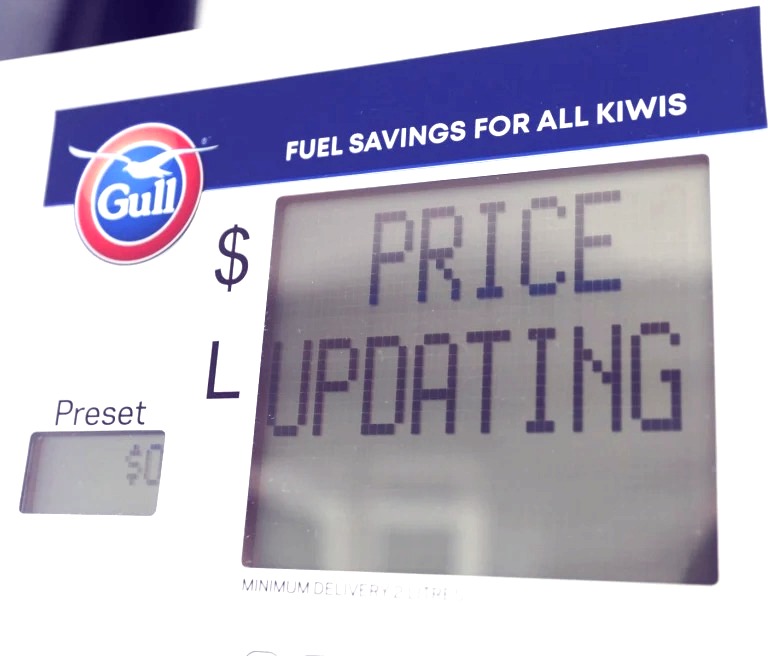
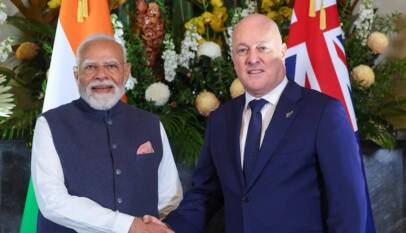
Prime Minister Christopher Luxon Has Affirmed That New Zealand Would Consider Fuel Rationing In Extreme Exigency.

Wellington; May 2026: Prime Minister Christopher Luxon while addressing the Press Conference today (11th May 2026) early morning (IST) has said: “It is better to have a plan you don’t use, than to need one and be caught short”. Significant fuel rationing will only come into force if the country moves into the highest “phase” of its fuel response plan, the government says. Emergency services, hospitals, banks, transport operators and electricity generators were among those who would have prioritised access to fuel if the ongoing crisis worsened.
The New Zealand Government optimised – The National Fuel Plan announced on 17th March 2026 has four phases, ranging from minor to severe impacts in the first and second phase, while phase three encompasses major impact on the fuel sector, and phase four the ultimate one dela with severe impact on the fuel sector.
The government today has announced serious rationing would only take place in phase four, which is a “major and ongoing fuel supply disruption”. It was ‘highly unlikely’ New Zealand would ever reach phase three or four, Finance Minister Nicola Willis said. The country had sufficient fuel stocks and the plan reflected the government’s prudence, she said.
Fuel access conditions under Phase Four:
- Critical users – priority and uncapped access. This includes emergency services, health, schools, courts, money services and lifeline utilities.
- Food and freight – uncapped access to fuel, subject to demand reduction requirements based on fuel‑saving plans. The government would monitor adherence to fuel-saving plans through spot checks.
- Commercial and community users – same access as food and freight, but higher savings targets in their fuel-saving plans. This includes businesses and organisations other than food and freight.
- General public – transaction limits at the pump aimed at reducing overall fuel use by an amount greater than what is expected for other groups.
“In the unlikely event we ever need to move to phase four, it is critical that business and industry have a clear understanding of the objectives and measures, and can put them into action”, said Finance Minister Nicola Willis. She further reiterated, “That is why we have taken the time to consult, and the feedback we received has shaped the revised plan. We heard that the earlier proposed approach, particularly around the priority bands, was too complex and needed simplifying”.
While PM Luxon has said, “Food, freight and logistics companies had their own category because they could carry a range of goods, for example, food and medicine, on one truck. The PM has further said, “the categories were clear and simple to avoid. Covid 2.0, where there were absolutely crazy machinations of a butcher outside a supermarket is a no-go, but a butcher inside a supermarket is”.
Fuel rationing is a high trust regime –
There had been “deep consultation” with businesses, communities, social agencies, iwi, and others on the plan’s practicality, Willis said. “The feedback was clear: prioritisation or rationing should be a last resort”, she said.
The phase four response would be “self-managed but compulsory” rather than the state allocating fuel, Willis said, with Luxon calling it a “high trust regime”. The government would set reduction targets and operating rules, but businesses and fuel suppliers would manage how they meet that through mandatory fuel-reduction plans, Willis further said, “Businesses and social organisations themselves are best placed to manage day-to-day operational decisions within clear, government-set rules. New Zealanders could still buy fuel under phase four, but there would be a purchase limit which is yet to be specified”, said Willis.
However, as per the Finance Minister, it was not practical for the government to have a team of police monitoring petrol pumps. Compliance and enforcement arrangements like spot-checks and penalties were not yet finalised, and limits would be influenced by the level of reduction required. “We would be asking New Zealanders to apply common sense and to do well by their fellow New Zealanders”, she said.
The government had also finalised a previously announced deal with Z Energy to secure an extra 90 million additional litres of diesel which is about 09 day’s supply, which could arrive by the end of June.
A jet fuel plan had also been developed alongside the aviation industry, “recognising that the types of users and demand for jet fuel are different to those for petrol and diesel”, the government announcement said.
Phase 4 prioritisation groups –
Critical users:
- Emergency management response,
- Fuel and energy continuity,
- Health, disability, and care services,
- Social services,
- Utilities, infrastructure, and public health protection,
- Financial systems continuity,
- Other health and safety – enabling works,
- National security, border integrity, and international obligations,
- Public and passenger transport,
- Airport operations,
- Ports, shipping, and border trade,
- Animal welfare,
- Other core state functions,
- Education continuity,
- Corrections, custodial services, justice sector,
- Broadcasting and media.
Food and Freight:
- Freight, logistics, and distribution,
- Farming and Food production,
- FMCG production, processing, storage and distribution,
- Supply chains that support food production,
- Retail to consumer food distribution networks,
- Export facilitation.
Community and Commercial users:
- Commercial passenger transport (non-critical),
- Long-term biosecurity activities,
- Manufacturing and processing of non-food products,
- Construction and trades,
- Retail, hospitality, and office-based activities,
- Tourism and events,
- Wildlife management activities,
- Tertiary education,
- Other commercial and community users.
General public:
- Private motorists,
- Recreational marine users,
- Other personal users.
Team Maverick.




Alvarez, Lautaro Fire Argentina Past 10-Man Switzerland in Extra Time, Set Up Blockbuster World Cup Semi-final Against England
Score: Argentina 3 (Alexis Mac Allister 10′, Julian Alvarez 112′, Lautaro Mart…

Alvarez, Lautaro Fire Argentina Past 10-Man Switzerland in Extra Time, Set Up Blockbuster World Cup Semi-final Against England
Score: Argentina 3 (Alexis Mac Allister 10′, Julian Alvarez 112′, Lautaro Martinez 120+1′) beat …