Switzerland Considers European Air Defence Systems After US Patriot Delays Over Iran War.

Switzerland; May 2026: Switzerland is reassessing its future air defence architecture after the United States warned that deliveries of the Patriot air defence missile system would face further delays due to the war in Iran, forcing Switzerland to consider French, German, Israeli, and South Korean alternatives. Announced on May 13, 2026, the move reflects growing European concern that reliance on US defence supply chains could leave critical air-defence capabilities vulnerable during simultaneous global crises.
The Swiss review includes:
- Germany’s IRIS-T air defence missile systems,
- Franco-Italian SAMP/T,
- Israel’s Arrow-3,
- South Korea’s Cheongung II M-SAM.
While Switzerland was signalling a preference for European-made solutions, this decision could accelerate Europe’s push for more autonomous missile-defence networks as nations seek faster procurement, greater supply security, and reduced dependence on American systems during high-intensity conflicts.
The 05 US Patriot air defence missile systems ordered by Switzerland in 2022 were initially expected to be delivered between 2026 and 2028, but the timeline had already delayed by 4 to 5 years due to production pressures linked to the war in Ukraine. Swiss authorities expect feedback from the competing suppliers by the end of May, as Switzerland reassesses how to maintain the modernisation schedule of its Air2030 integrated air-defence program and preserve national readiness against evolving missile and aerial threats.
The development reflects mounting pressure on the global production capacity of advanced ground-based air-defence systems. Since the start of the Ukraine war, demand for Patriot systems has increased sharply among NATO members and US allies seeking protection against ballistic missiles, cruise missiles, drones, and high-performance combat aircraft. Additional operational requirements generated by the conflict involving Iran have further strained US missile-defence resources, forcing Washington to reprioritize deployments and export deliveries.
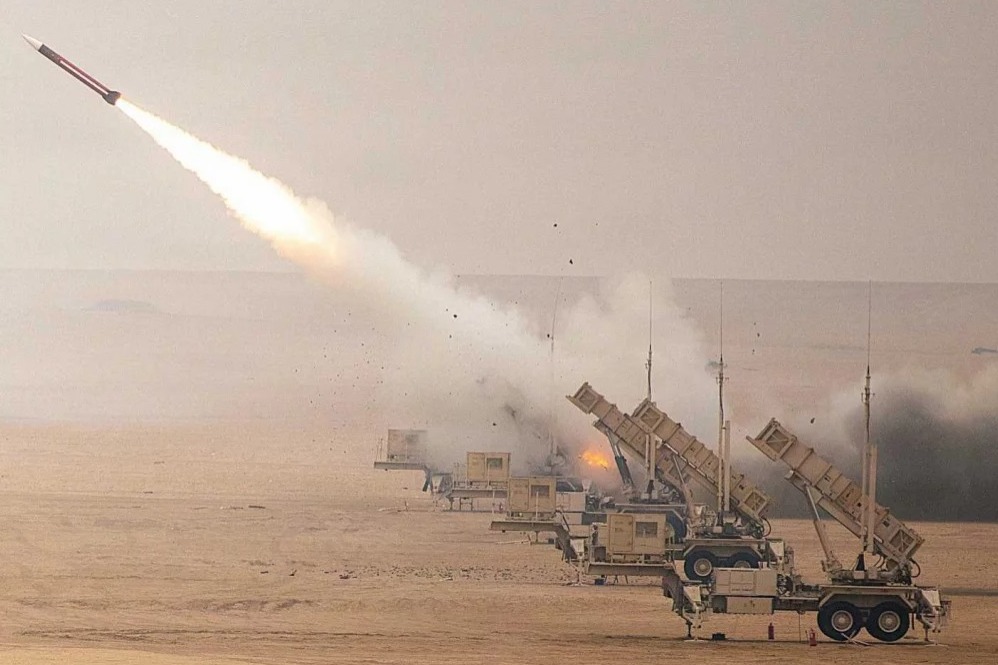
Patriot systems remain among the most operationally valuable air-defence assets in the Western arsenal because of their multi-layered interception capabilities. The system combines AN/MPQ-series phased-array radars, advanced command-and-control networks, and PAC-3 interceptors capable of engaging tactical ballistic missiles and manouvering aerial threats. However, sustained deliveries to Ukraine, expanded NATO deployments in Eastern Europe, and reinforcement requirements in the Middle East have significantly extended production queues for foreign customers.
For Switzerland, the delays directly affect the Air2030 modernisation effort, which aims to replace aging Rapier air-defence systems and integrate national airspace protection with the future F-35A fleet. The Swiss concept relies on creating a layered defensive architecture capable of detecting and intercepting hostile aircraft, cruise missiles, ballistic threats, and unmanned aerial vehicles operating in increasingly contested European airspace.
Among the alternative systems under review, the Franco-Italian SAMP/T equipped with Aster 30 missiles offers one of the closest operational equivalents to Patriot within Europe. The system provides area air defence and limited ballistic missile interception while maintaining full NATO interoperability. SAMP/T has gained operational credibility through deployments supporting European air-defence missions and reinforcement efforts connected to the Ukraine conflict.
Germany’s IRIS-T family represents another increasingly influential European air-defence solution. Initially developed from the IRIS-T air-to-air missile, the ground-launched variant has demonstrated strong effectiveness against drones and cruise missiles during combat operations in Ukraine. Germany is also promoting expanded long-range variants as part of broader European missile-defence initiatives aimed at strengthening continental industrial autonomy.
Israel’s Arrow-3 introduces a significantly different capability profile centered on exo-atmospheric ballistic missile interception. Developed jointly by Israel and the United States, the system is optimised to destroy ballistic missiles outside the Earth’s atmosphere before warheads can descend toward defended targets. Germany’s selection of Arrow-3 under the European Sky Shield Initiative has elevated the system’s strategic profile across Europe, although its specialisation in upper-tier missile defence may require complementary lower-layer systems for comprehensive national coverage.
South Korea’s Cheongung II M-SAM has emerged as a serious competitor in the global missile-defence market due to its combination of advanced interception technology, comparatively rapid production timelines, and competitive acquisition costs. The system integrates multifunction radars with hit-to-kill interceptors designed to counter aircraft and ballistic missile threats. South Korea’s expanding defence-industrial capacity has already enabled major export agreements in Poland and the Middle East, positioning South Korea as an increasingly influential supplier of advanced air-defence equipment.
Switzerland’s preference for European-produced systems reflects a broader strategic shift underway across Europe. Governments are increasingly seeking procurement models that reduce dependence on external supply chains vulnerable to geopolitical crises and competing operational demands. The Ukraine war exposed major weaknesses in European missile stockpiles and industrial capacity, prompting accelerated investment in domestic missile production and multinational air-defence cooperation. Related developments are explored in our coverage of the European Sky Shield Initiative, Patriot missile production delays, and Europe’s expanding integrated air-defence market.
The Swiss reassessment could influence future procurement strategies across Europe. If Switzerland ultimately restructures or diversifies its missile-defence acquisitions away from Patriot, other European states may accelerate efforts to balance US, European, Israeli, and Asian suppliers to secure faster deliveries and greater industrial sovereignty. The situation also demonstrates that production capacity, supply-chain resilience, and geopolitical flexibility are becoming as strategically important as raw missile-defence performance in modern procurement decisions.
Team Maverick.



Argentina vs England World Cup Semifinal Declared Highest-Risk Match as Security Tightens in Atlanta
July 16: The FIFA World Cup 2026 has entered its most dramatic stage, but ahead of the blo…

Argentina vs England World Cup Semifinal Declared Highest-Risk Match as Security Tightens in Atlanta
July 16: The FIFA World Cup 2026 has entered its most dramatic stage, but …