To Bolster South China Sea Defence; Japan To Transfer Type 88 Anti-Ship Missile to Philippines.

Tokyo; May 2026: Japan is considering the transfer of Mitsubishi Heavy Industries Type 88 anti-ship missiles to the Philippines, a move that could significantly strengthen Philippine’s ability to counterfeit threatening’s from hostile naval forces across key maritime approaches in the South China Sea. The potential deal, discussed after Philippine interest emerged earlier this month and confirmed by Japanese Defence Minister Shinjiro Koizumi on May 15, reflects Tokyo’s growing willingness to support regional deterrence through direct defence cooperation.
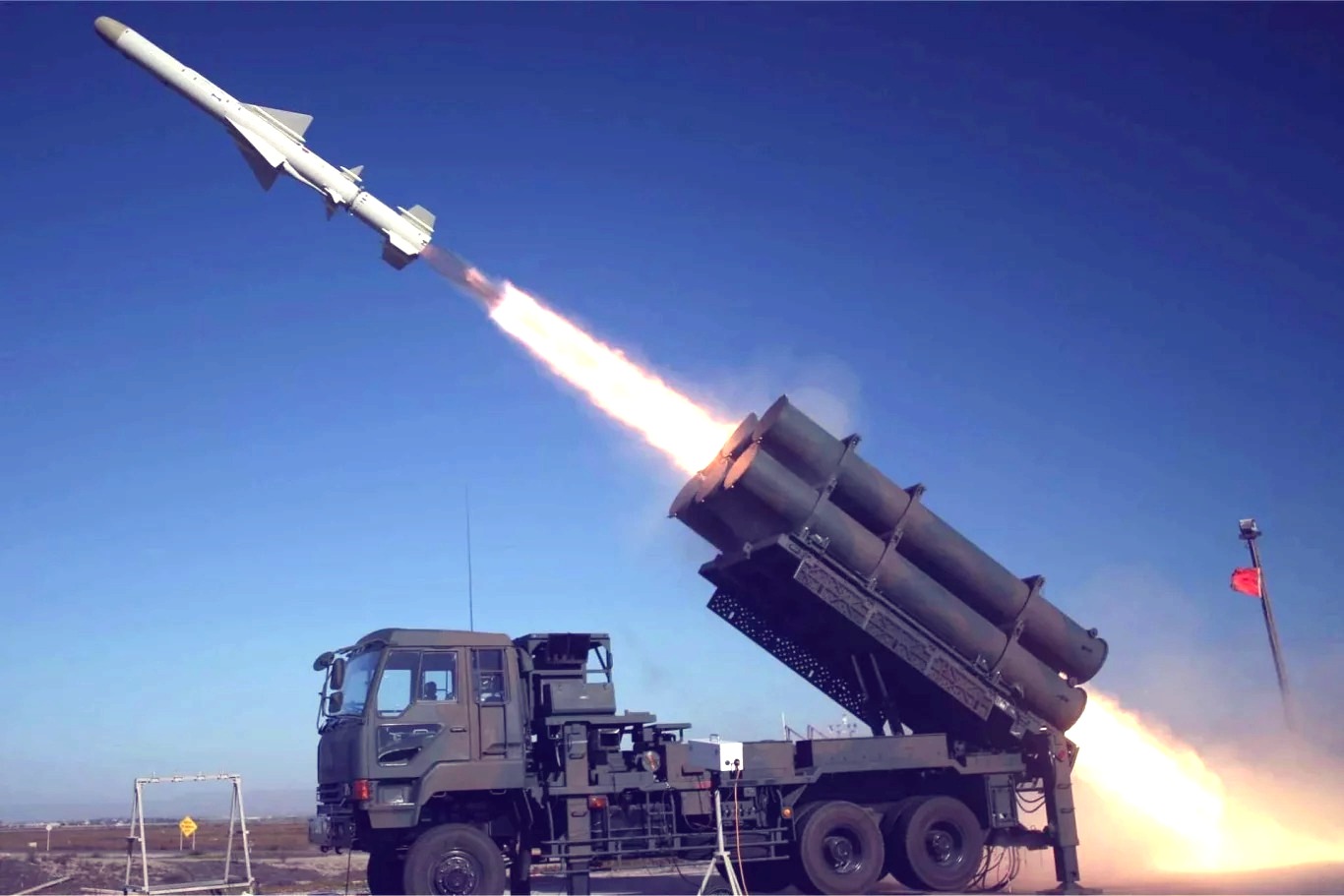
The truck-mounted Type 88 gives coastal defence units the ability to strike surface targets at ranges exceeding 100 kilometres while remaining mobile and difficult to target. If approved, the missile would expand the Philippines’ anti-access capabilities and deepen Japan-Philippines military coordination as both countries respond to rising security pressure in the Indo-Pacific.
The Type 88, also known as SSM-1, is an older but still relevant coastal defence missile designed for one narrow mission: denying enemy warships safe movement inside a defended maritime zone. It is a truck-mounted anti-ship missile system manufactured by Mitsubishi Heavy Industries and progressively being replaced in Japanese service by the Type 12, which MHI identifies as the Type 88’s successor for the Japan Ground Self-Defence Force. The Type 88 missile is about 5.08 m long, carried in 06 launch tubes on a 6×6 launcher vehicle, with a listed range of about 180 km, high-subsonic speed, and a 225 kg high-explosive warhead. A more conservative operational description places the range at more than 100 km, which is sufficient for many Philippine coastal-defence scenarios.
The armament is built around a conventional anti-ship cruise missile profile rather than a ballistic trajectory. A booster accelerates the missile after launch, after which the weapon flies toward a programmed maritime target area at low altitude before using terminal active radar homing to acquire and strike a ship. The 225 kg warhead is large enough to damage propulsion spaces, rupture fuel and machinery compartments, disable combat systems, or force a mission kill against corvettes, landing ships, auxiliaries, and older frigates. Against a modern destroyer with layered air defence, the missile would be more effective in salvos, from multiple bearings, and in combination with decoys, electronic attack, drones, naval missiles, or air-launched weapons.
The Type 88’s value lies less in missile speed than in mobility, dispersion, and the ability to complicate an adversary’s maritime planning. A launcher with 06 ready missiles can move along coastal roads, fire from a surveyed position, and relocate before counter-battery fire, aircraft, or unmanned aerial vehicles identify the launch point. The full firing chain would require search radars, command-and-control vehicles, communications links, target classification procedures, and reload vehicles. For the Philippines, the most important variable would not be the missile itself but the sensor network behind it: coastal radars, patrol aircraft, unmanned aerial vehicles, naval sensors, and allied intelligence feeds would determine whether a battery can engage a moving ship before the target exits the firing envelope.
Balikatan 2026 provided a practical demonstration of that kill chain. On May 06th 2026, a JGSDF Type 88 launcher fired during the Joint Task Force Maritime Strike event at Culili Point Sand Dunes near Paoay in Ilocos Norte, with U.S., Philippine, Australian, and Japanese forces participating. 02 Type 88 volleys struck the former BRP Quezon about 75 km off the coast within six minutes of launch, while more than 17,000 troops joined this year’s exercise, including around 1,400 from Japan and 10,000 from the United States. A U.S. HIMARS launcher also fired a GMLRS rocket at the target, while U.S. Marine Corps NMESIS launchers carrying Naval Strike Missiles were present but did not fire.
For Philippines, a Type 88 transfer would not only support the BrahMos coastal defence missile acquired from India; it would change the force structure by adding missile mass and launcher density. The Philippines signed a 2022 agreement for 03 BrahMos shore-based missile batteries, and the BrahMos missile offers a 290 km range. The Type 88 is slower and shorter-ranged, but it could serve as a secondary coastal-defence layer, a training asset for missile crews, or a way to cover specific approaches where a 100–180 km engagement zone is adequate.
The political context matters because this would be one of the clearest early tests of Japan’s revised defence export rules. Japan’s April 2026 overhaul removed the 05 previous categories that had largely restricted exports to rescue, transport, warning, surveillance, and minesweeping equipment, while retaining screening, third-country transfer controls, and restrictions on sales to countries involved in conflict. Japan is considering Type 88 missiles from current GSDF stocks because the service plans to phase them out as it moves to a newer missile model. That creates a practical transfer pathway: Japan could reduce older inventory while the Philippines receives a usable coastal missile system without waiting for a new production line.
There are operational limits: the Type 88 was designed in the late Cold War, and a subsonic sea-skimming missile must contend with shipborne radar, electronic warfare, hard-kill interceptors, close-in weapon systems, and decoys. Its effectiveness would depend on salvo size, seeker performance in cluttered littoral waters, secure communications, and the ability of Philippine crews to displace quickly after firing. Sustainment would also be a decisive issue: spare parts, canister life, missile storage, battery-level maintenance, Japanese technical support, and software or radar compatibility could determine whether the weapon becomes an operational asset or a small stock of difficult-to-maintain legacy missiles.
The strategic implication is measured but significant. A Philippine Type 88 inventory would not by itself control the South China Sea or the Luzon Strait, but it would add another layer to a growing network of land-based maritime strike weapons along the First Island Chain. For Japan, the transfer would show that its new export framework can support partners with complete lethal systems, not only radars, aircraft, or patrol vessels. For the Philippines, the value would be concrete: more launchers, more firing positions, more trained missile personnel, and more uncertainty for any naval force planning operation near Luzon, Palawan, or other defended coastal areas.
Team Maverick.





Argentina vs England World Cup Semifinal Declared Highest-Risk Match as Security Tightens in Atlanta
July 16: The FIFA World Cup 2026 has entered its most dramatic stage, but ahead of the blo…
Argentina vs England World Cup Semifinal Declared Highest-Risk Match as Security Tightens in Atlanta
July 16: The FIFA World Cup 2026 has entered its most dramatic stage, but …