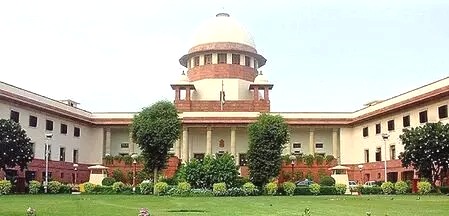
Supreme Court Rules Mediclaim Benefits Cannot Be Deducted from Motor Accident Compensation Under MVA

New Delhi, May 2026 : In a significant ruling that reinforces the principle of “just compensation” under motor accident law, the Supreme Court on Friday held that amounts received by accident victims under medical insurance policies cannot be deducted from compensation awarded under the Motor Vehicles Act (MVA).
A bench comprising Justices Sanjay Karol and Vipul M. Pancholi dismissed an appeal filed by New India Assurance Company Limited, which had challenged a Bombay High Court decision. The High Court had earlier ruled that reimbursements received by a claimant under a Mediclaim policy cannot be set off or deducted while computing compensation in motor accident claims.
Upholding the High Court’s view, the apex court made it clear that insurance benefits arising from a Mediclaim policy are entirely independent of statutory compensation payable under the Motor Vehicles Act. The court observed that both arise from distinct legal foundations and therefore cannot be mixed for the purpose of reducing liability.
Delivering the judgment, the Justice Karol-led Bench categorically stated, “In fine, we hold that the amount received as part of Mediclaim/medical insurance is not deductible from compensation as calculated by the concerned Tribunal.” The court further clarified that compensation under the MVA and benefits arising out of a Mediclaim policy “stand on a different footing.”
Explaining the legal distinction, the bench said that one form of compensation is statutory in nature, arising from legislation intended to protect victims of road accidents, while the other is contractual, based on a private agreement between an insured individual and an insurance company after payment of premiums.
“One is statutory while the other is a contractual and the latter is only a sequitur of premiums having been paid in the past while the other is an entitlement as a consequence of an accident or death in a motor vehicle accident,” the court observed.
The case arose due to conflicting judgments from various High Courts on whether claimants should be allowed to receive both Mediclaim benefits and MVA compensation without any deduction, or whether such dual receipt would amount to “double benefit.”
The insurance company argued that allowing claimants to retain both amounts would lead to duplication, resulting in unjust enrichment. It contended that once a claimant has already been reimbursed for medical expenses through a Mediclaim policy, the same amount should not again be awarded under motor accident compensation.
However, the Supreme Court firmly rejected this argument. It noted that Mediclaim policies are purchased by individuals by paying regular premiums, often over many years, to safeguard themselves against unforeseen medical expenses. Such policies form part of a person’s financial planning and cannot be treated as a substitute for statutory compensation.
“A Mediclaim policy is a policy that is purchased by a person, accounting for the uncertainties of life and preparing a financial base for an unfortunate possible eventuality,” the court observed.
The bench also highlighted the realities of rising healthcare costs in the country, noting that sudden medical expenses are often beyond the financial capacity of ordinary citizens. It said that insurance policies serve as a crucial safety net and should not be undermined by reducing statutory compensation.
“In today’s time, when medical expenses are skyrocketing for a variety of reasons, the ability to meet such expenses suddenly as and when they may arise is not something that rests with all,” the judgment stated.
The court further reasoned that accepting the insurance company’s argument would unfairly benefit the insurer of the offending vehicle, as it would reduce the compensation liability merely because the victim had independently purchased insurance coverage.
“It would also amount to an unjust benefit to the insurer of the offending vehicle if they are not required to compensate under one of the heads of medical expenses solely on account of the fact that the claimant had received the benefit of a policy for which they had been paying premiums for years on end,” the bench added.
The Supreme Court also elaborated on the legal principle of “double benefit,” clarifying that it applies only in cases where two payments are made for the same loss from the same legal source. In this case, however, the court held that Mediclaim benefits and MVA compensation originate from entirely different legal frameworks and therefore cannot be treated as duplicative.
“The primary consideration… is whether the additional benefit is a substitute for the same loss, in which case it is liable to be deducted, or whether it is independent,” the court said.
Reiterating the distinction between statutory and contractual rights, the bench observed that compensation under the Motor Vehicles Act is a welfare-oriented legal remedy provided by the State, whereas Mediclaim benefits arise from private contractual arrangements voluntarily entered into by individuals.
“The distinction, put simply, is that a statutory benefit flows from the authority of law, while a contractual benefit flows from the will and agreement inter se parties,” the judgment explained.
The apex court also referred to earlier rulings to reinforce its conclusion that benefits such as insurance proceeds, provident fund accumulations, and pension entitlements are generally not deductible from accident compensation unless there is a direct legal connection with the loss being compensated.
In a broader institutional observation, the bench expressed concern over inconsistent rulings by different High Courts on similar legal issues. It noted that such inconsistencies create confusion in the legal system and undermine certainty in the application of law.
“When such inconsistencies are left unaddressed, it leads to various problems, primary among them being that it leads to judicial inconsistency and uncertainty,” the court said, emphasizing the need for uniformity in judicial interpretation.
The Supreme Court also underscored the responsibility of both lawyers and judges in ensuring consistency in legal reasoning. It reminded members of the legal fraternity that it is their duty to bring relevant judgments, whether supportive or contrary, to the attention of the court to enable a balanced decision-making process.
“It is this duty towards the court which requires them to bring to the court’s notice judgments both that aid their case and also those that do not,” the bench observed.
Ultimately, the Supreme Court dismissed the insurance company’s appeal and remanded the matter back to the Bombay High Court for fresh consideration in accordance with the legal principles laid down in its judgment.
The ruling is expected to have wide implications for motor accident compensation cases across the country, strengthening the rights of accident victims while clarifying the legal distinction between contractual insurance benefits and statutory compensation under Indian law.
Disclaimer: Maverick News is not responsible for claims or statements made by external sources or individuals mentioned in this article.
(The content of this article is sourced from a news agency and has not been edited by the Mavericknews30 team.)





World Cup Heavyweights England and Argentina Set for Blockbuster Semi-final Showdown
Atlanta, July 2026 : The stage is set for one of the biggest matches of the 2026 FIFA Worl…

World Cup Heavyweights England and Argentina Set for Blockbuster Semi-final Showdown
Atlanta, July 2026 : The stage is set for one of the biggest matches …