Robert Gates Warns China Poses Greater Strategic Challenge Than Soviet Union Ever Did

Washington, May 2026: Former US Defence Secretary Robert Gates has warned that the United States is entering one of the most dangerous geopolitical phases in its modern history, cautioning that China represents a far more complex and powerful strategic challenge than the Soviet Union during the Cold War era.
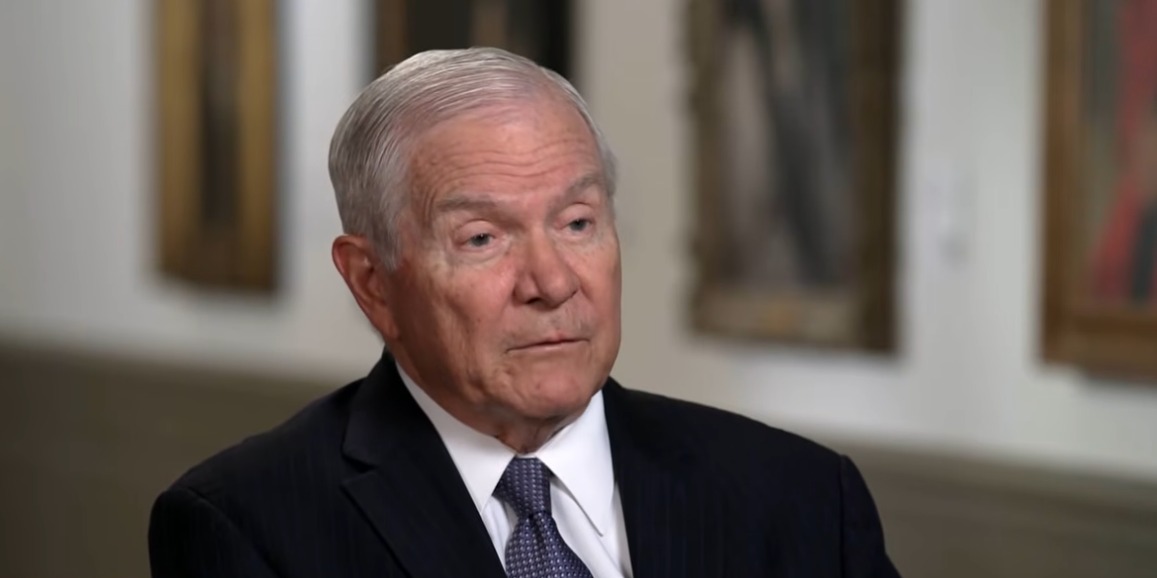
Speaking in an interview with CBS News on Sunday, Gates said the US is now confronting an unprecedented global security environment shaped by the combined rise of China and Russia — both nuclear powers increasingly aligned against Washington’s interests.
“For the first time in our history, we face nuclear-armed adversaries in both Europe and Asia,” Gates said, underlining the seriousness of the current geopolitical situation.
The former Pentagon chief argued that China’s rapid advances in technology, industrial production, military capability and global influence have created a challenge unlike any America has faced before. According to Gates, Beijing’s rise is fundamentally different from the Soviet Union because China competes with the United States across multiple sectors simultaneously.
“We have not faced a country that was as technologically advanced as we are, ahead of us in a few areas, behind us in a few areas, and roughly even in others,” he noted.
Gates stressed that China’s influence now extends far beyond military power. He pointed to Beijing’s expanding footprint in trade, infrastructure development, strategic communications and diplomatic engagement across Africa, Asia, Latin America and Europe.
“Whether it’s strategic communications, development assistance, trade or investment, the Chinese are active all over the world,” Gates said.
The remarks came shortly after President Donald Trump returned from a summit in Beijing with Chinese President Xi Jinping. During the visit, Trump described the United States and China as a possible “new G2”, suggesting that the two countries now dominate global politics and economics.
While acknowledging China’s rapid rise, Gates maintained that the US still retains an overall military advantage, although the gap is narrowing quickly.
“I think our military power remains greater than theirs, but they are catching up,” he said.
At the same time, Gates highlighted China’s significant lead in certain strategic sectors, particularly shipbuilding capacity, which he described as an area where Beijing already possesses a substantial advantage over Washington.
A major part of the discussion focused on Taiwan and the growing tensions in the Indo-Pacific region. Gates urged the Trump administration to proceed with previously delayed weapons sales to Taiwan, arguing that strengthening Taiwan’s defence capabilities is essential to maintaining regional deterrence against China.
“I think we should go forward with what we’ve agreed with Taiwan,” he stated.
However, Gates also suggested that a direct full-scale Chinese invasion of Taiwan may not be Beijing’s immediate strategy. Instead, he warned that China could adopt what Taiwanese officials often describe as an “anaconda strategy” — gradually tightening economic, military and diplomatic pressure around Taiwan without launching an outright invasion.
“They could impose a blockade or quarantine around Taiwan anytime they wanted,” Gates cautioned.
The former CIA Director also expressed concern about the current state of America’s military preparedness. He said ongoing conflicts involving Iran and Ukraine have exposed weaknesses in US weapons stockpiles, particularly in precision-guided munitions and missile defence systems.
“We do need to replenish,” Gates said, while calling for a major expansion of America’s defence manufacturing capabilities.
He argued that the US must significantly increase production of advanced weapons systems, drones and military equipment to prepare for future large-scale conflicts.
Gates warned that future wars would increasingly depend on industrial strength, technological innovation and rapid weapons production, adding that America must adapt quickly to remain competitive against emerging global threats led by China.
(The content of this article is sourced from a news agency and has not been edited by the Mavericknews30 team.)






China Open: Lakshya, Sindhu and Ayush Shetty Advance to Second Round After Gritty Wins
Changzhou (China), July 2026 : India’s top badminton stars Lakshya Sen, P.V. Sindhu …

China Open: Lakshya, Sindhu and Ayush Shetty Advance to Second Round After Gritty Wins
Changzhou (China), July 2026 : India’s top badminton stars Lakshya Sen, P.V. Sindhu and …